

Audio By Carbonatix
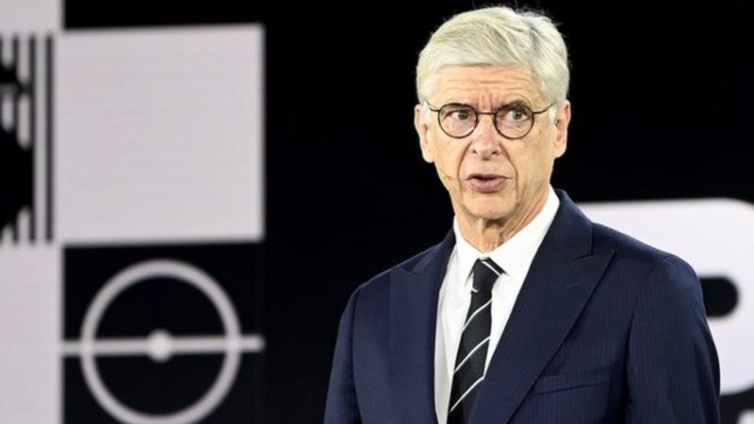
One afternoon last week at the Home of FIFA, a group of U-14 players were gathered in a huddle. In their midst, an ‘over-age’ player could be spotted, linking arms with players less than half his height. FIFA’s Chief of Global Football Development, Arsène Wenger.
Players from FC Zurich’s junior teams were supporting the final preparations of FIFA’s latest Technical Development programme to be launched, which will see Talent Coaches spend two years each, working together with twenty-five of FIFA’s member associations (MAs).
The FIFA Talent Coach Programme is another important pillar under the umbrella of the Talent Development Scheme, following a six-month pilot involving seven countries (Kyrgyz Republic, Costa Rica, Venezuela, Benin, South Africa, Fiji, and Finland).
"We want to develop elite players in countries where there is potential for further development. There are many children in the world who don’t get the chance to develop their talent, and the quality of our work can change this” explained Wenger.
Observing the different coaching sessions taking place, Wenger’s engagement was clear. From passing on a tip to one of the coaches, to sharing his philosophy on the game. It felt pertinent to ask: what lies behind his motivation?
"Arsenal is known for giving players a chance, but I knew that was not the case everywhere. One of my worries was always to give people who deserve it, a chance in life.
"When I joined FIFA, we analysed football around the world, and realised that the main deficit in football is education, in many, many countries. Look at the FIFA Women’s World Cup 2023. It shows you how quickly women’s football has developed at the top level, and what is possible.
"If you love football, you don’t just love it at the elite male level. After my competitive career, I had a chance to create a legacy for developing talented children. This doesn’t make headlines, but that’s not important. What is important is that we are efficient. That we help develop children between the ages of 12-16, to ultimately make football globally more competitive."
In December 2022, the FIFA Council approved a funding allocation of USD 200 million to cover the 2023-2026 operational lifecycle of this ground-breaking initiative, and in March 2023, the Council also approved a set of regulations laying out the principles and distribution of funding and the process of approval, as well as the rights and obligations of member associations.
Participating member associations may apply for funding under one or more of the annual bespoke FIFA talent programmes to support specific projects related to their strategic long-term development plan.
Patricia Gonzalez, FIFA’s Team Lead of the Talent Coaches Programme admitted that on paper, the key objectives of the programme look simple.
1. To put the best young players with the best in each country
2. Increase the contact time
3. Improve the processes of planning, talent identification and coach education
"By having a dedicated coach on the ground, working in partnership with our MAs, we believe together we can enhance the high-performance environment in each country, giving more talents a chance” said Gonzalez.
“Over the last three years, FIFA conducted a ‘global ecosystem analysis’ to understand the challenges and strengths of more than 200 countries, supporting each MA to shape a strategy for long-term talent development. It’s clear that nations competing for, or winning trophies are offering more and more meaningful contact time to players. This creates a big competitive advantage."
One important focus of the Talent Development Scheme will be to invest in academies. The objective is that every member association has at least one academy or centre of excellence to develop the most talented players by 2026.
"The majority of Talent Coaches will work in countries where the programme can have more of an impact" Gonzalez explained. "This player age group – 12-15 – is where a player’s brain has a very high plasticity. It’s a crucial stage for their development, if they hope to become professional players of the future."
The Talent Coaches must have a minimum A Licence and relevant prior experience e.g., having previously worked with youth national teams or at academies in a talent development role. Equally important are cultural and personality traits; the selected Talent Coaches in the words of Gonzalez are ‘people who can develop others by coaching, by mentoring. Who care about making other people better.’
"Player Development is very complex, and we need the Talent Coaches to put the process above themselves and their ego. You are the coach and the architect of the environment but cannot influence everything. So, they need to possess ‘soft skills’ too," she expanded.
Ulf Schott, FIFA Head of High-Performance programmes concurred, whilst underlining the importance of an additional quality.
"We want these Talent Coaches to be role models,” he said. “Through the ecosystem analysis, it was clear that many MAs don’t have enough systems to find their most talented players, so this is the first step. Once you find the players, you can bring them together. By having that role model, it will create a ‘ripple effect.’ We don’t want the Talent Coaches organising admin. We want them on the pitch, showing what high-performance means, inspiring other coaches. We want them to show a dedication to elite football.”
Only a small percentage of talented youngsters will go on to have a professional career. Yet as Schott underlined, in many countries, that possibility is not even currently an option.
"Through this programme, we want to give talented players the chance to live their dream. It’s clear not everyone will be able to do that, but the aim is to give everyone a pathway. This will look completely different all over the world. What we really want, is to have a shift in the way of thinking when talking about high performance.
"We are talking about 5-7 training sessions a week for the most talented players, whilst ensuring a holistic approach to the education as a player and personality. Fundamentally, this is about players who have a high dedication to high-performance football.”
The majority of the 25 MAs will be focused on developing boys and girls, though some have requested to specialise. Bhutan for example, are planning a female-only academy.
"We want to work with MAs who are ‘ready, willing and able’ said Gonzalez in conclusion. “MAs who have a Technical Department, youth national teams, domestic minimum playing opportunities and basic Coach Education in place. If you don’t have these things in place, you are not ‘willing’ and will not be ‘able’ to bridge that gap to the top."
Latest Stories
-
GNFS contains fire outbreak at Teshie Lekma Road near Lekma Hospital
4 hours -
Samia Nkrumah rejects the narrative that Ghanaians were happy after Nkrumah’s overthrow
6 hours -
A Mother’s pain: Tribute by Ivan Baidoo’s mother
6 hours -
‘Forgive us for staying away’ — Samia Nkrumah leads family back to Nkroful, pledges to preserve Nkrumah’s legacy
6 hours -
Ernest Nuamah scores twice as Lyon beat Rennes
6 hours -
‘My dear Ivan’ – A father’s tribute to a son tragically killed
6 hours -
GNPC Explorco advances Voltaian Basin drilling preparations with 13.5km access road
6 hours -
Cabinet approves facility manager for Borteyman Sports Complex – Kofi Adams
7 hours -
Sanitation is improving; critics may be ‘living in another world’ – Salaga South MP replies Bekwai MP
7 hours -
Government must do more to tackle sanitation crisis – Bekwai MP
7 hours -
World Cleanup Day: GFF begins sanitation education in local communities
7 hours -
EU Ambassador, IGP discuss stronger cooperation on policing and security
8 hours -
Africa Nations Volleyball Championship: Ghana set up quarterfinal clash with Cameroon after beating Chad
8 hours -
Meet Dr Benjamin Appiah Osei — Ghana’s three-time tourism awards winner
8 hours -
UEFA & CONCACAF demand Fifa pays $10m to all 211 members
8 hours