

Audio By Carbonatix
Over 120 toilet facilities are expected to be handed over to public basic schools in the Greater Kumasi Metropolitan Area in November this year.
The initiative under the Sanitation and Water Project is to improve access to toilet facilities at the over 1,000 public primary schools in the region.
Accessibility to convenient toilet facilities still remains elusive to many communities across the country, especially in schools.

A 2017 report by the Ghana Education Service showed more than 7,400 public basic schools out of the over 20,000 lacked toilet facilities.
Out of the number, nearly 1,500 schools in the Ashanti region are without toilet facilities.
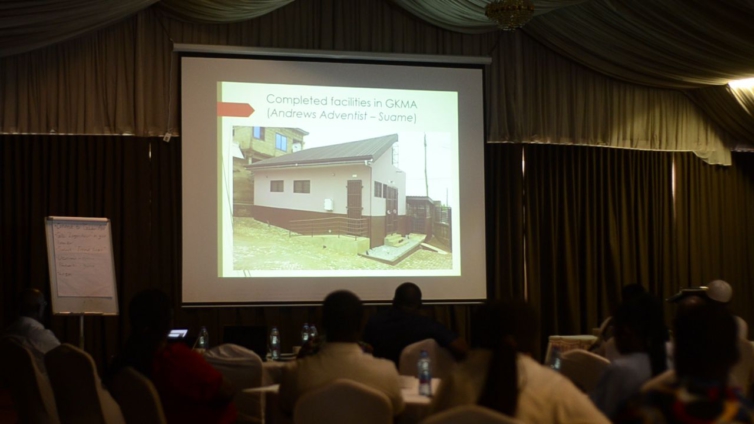
Under the Greater Kumasi Metropolitan Area – Sanitation and Water project, over 120 toilet facilities have been built for public basic schools in the metropolis awaiting commissioning in November.
The Project Coordinator of GAMA-GKMA Sanitation and Water Project, Ing. George Asiedu emphasised the need for accessing an improved toilet facility.

“If we are to achieve SDG 6, we must ensure that everyone has access to improved toilet facilities. We are working to provide household facilities to everyone,” he said.
Mr. Asiedu says the new facilities have user-friendly features for the physically challenged among other consumables to support girls during menstruation.
“The new toilet facilities have been made friendly for everyone including people with disabilities. At least 15-seater facilities have been built for each of the schools. Ladies can conveniently change their pads during their monthly flows,” he said.
To ensure the sustainability and maintenance of the facility, the Ministry of Sanitation and Water Resources held a three-day stakeholder forum with School Management Committees and Parent-Teacher Associations in the metropolis.

Programme Manager at the Sanitation Ministry, Charlotte Adjei advises a strict adherence to maintaining the facilities.
“It is important that school managers keep these facilities in good shape. This would help the girl child to have a sound mind for education during their periods. If these places aren’t kept well, the girls cannot access them,” she said.
The World Bank-funded initiative is aimed at providing household and institutional toilet facilities.
Latest Stories
-
NSMQ 2026: Edinaman SHS storms to nationals with highest opening score in Central region qualifiers
50 seconds -
‘It’s not just an inconvenience’: We’ve underestimated the health impacts of heavy periods
18 minutes -
Sonzele Community Bank works to meet BoG’s GH₵5m capital requirement, declares 25.8% dividend
23 minutes -
Bohyen chief appeals for fire station
32 minutes -
Martin Kpebu says legal vacation could delay Wontumi’s bail application
41 minutes -
Duncan Amoah renews call for Ofori-Atta to account for stewardship
55 minutes -
Researchers urged to make academic work useful beyond journals
1 hour -
Unemployed man gets six-month jail term for committing three offences
1 hour -
Chaos mar NDC branch elections in Assin Central Constituency
5 hours -
Wontumi knew he would be convicted – Appiah-Kubi
5 hours -
GIMPA graduates tasks to master modern digital tools to be competitive
5 hours -
Oti High Court adjourns NPP Krachi East Organiser election dispute to October
5 hours -
Court issues bench warrant for man accused of threatening EOCO staff
5 hours -
Vice President Opoku-Agyemang engages Ghanaians in Maryland, United States
5 hours -
UG graduates urged to uphold integrity, excellence
5 hours