

Audio By Carbonatix
The scheme has over the years served as a good intervention. However, there have been instances where NHIS subscribers purchase medicines that should be covered under the scheme.
Complaints about the quality of services provided under the NHIS include underfunding, compelling facilities to charge extra medical fees ordinarily covered by the scheme.
The Vice President, Dr Mahamudu Bawumia, confirmed over 61% increase in NHIS registration since 2017.
But, do these numbers mean anything at all, especially, with the quality of services provided in various hospitals across the country?

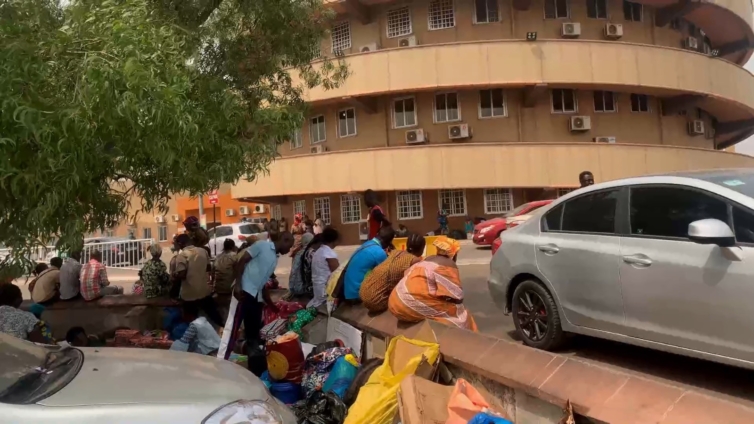
Outside of the imposing gates of the Accident and Emergency Unit of the Komfo Anokye Teaching Hospital, and the waiting room of the KNUST Hospital, a restless crowd gather with their faces imprinted with worry and desperation.
These are not just visitors earnestly waiting for good news concerning their sick relatives, but patients and family members perturbed with medical bills they cannot foot.
Gifty Boakye almost shed a tear, talking about her sick mother.
She has spent days at the hospital, banking hopes on the National Health Insurance Scheme, which she describes as ‘stale’.
“The health insurance scheme has become stale. Now if you don’t have enough money, you won’t receive quality health care. Why should we suffer like this?” she quizzed.

There have been several complaints about the quality of NHIS service provided by some health facilities across the Ashanti region.
Some individuals are reporting long delays in receiving treatment due to not having a health insurance card.
They disclose instances of lack of essential medications due to inadequate coverage of expenses.
These required subscribers to purchase medicines that they expected should be covered under the scheme.
“This small illness. Look at the number of drugs they have prescribed for me. The health insurance is not working. Why will we be buying all sorts of drugs if it’s working?” a subscriber said.
“They took 20 cedis before giving me a bed in the ward here in Kumasi South Hospital. And this was without receipt. I don’t even know what the scheme covered,” said another subscriber.
“I brought my mother but we have paid a bribe of 100 cedis before getting a bed. And I could see people in wheelchairs receiving treatment in their chairs. The health insurance is not working here. I have bought all sorts of drugs for about 2,000 cedis,” Kwame Dawu said.

For these aggrieved individuals, the struggling health insurance scheme is not just a health administrative obstacle, but a point of evidence of poor health systems and the inflicting realities of the poor.
This is Samuel Tei Wayo.
“The ones I have been given for free are not expensive, but the expensive ones are the ones we have to buy. The waiting period for health insurance to take effect is long and unnecessary” he said.

According to the 2023 medicine list of the national health insurance, appraised by a specialist group, the currently reviewed Medicines List contains a total of Five Hundred and Forty-eight (548) formulations.
Childhood immunizations, tuberculosis, HIV-AIDS and mental health care are exempted from the scheme.
The document disclosed that executive management of the NHIA has directed and approved a 20% increase in prices of medicines as a stop-gap measure to mitigate the recent increases in prices of medicines on the open market.
A health official who pleaded anonymity, explains the hospitals are compelled to top up prices of drugs and medical consumables due to price disparities in the open market price and the bench price covered by the NHIS.
The situation seemingly grants profit-seeking hospitals a chance to charge patients more than required as top-ups.
“Let’s say Paracetamol Tablet, 500 mg is supplied to the hospital at Ghc1, but the scheme pays hospitals Ghc0.50p, it means hospitals will make up for the extra by writing it as cost for patients to bear. Even the government-supplied medicines at the Central Medical stores, have disparities in pricing,” said the health worker.

He further disclosed underfunding of several hospitals and bureaucratic hurdles of NHIS medicine administering guidelines are engulfing several facilities.
“The insurance money doesn't come, so it is the top-ups that hospitals use to be able to constantly stock their pharmacies. Premium drugs are high-quality drugs yet expensive. The authority rejects treatment costs that are against their treatment coverage guidelines, and the costs are borne by hospitals.
“Health institutions are just sticklers of NHIA rules. If the scheme allocates a specific treatment cost to a patient, and there is an emergency where extra treatment is required, the hospital supper to bear it,” he said.

Efforts to reach the Ashanti Regional Health Insurance Office have proven unsuccessful, but health officials are proposing an increase in premium drugs covered by the NHIS.
“Premium drugs are drugs of high quality but are expensive. Sometimes patients need those drugs but we have to give them ‘NHIS-covered ones’ which are not so high grade, because it's free and the hospital doesn't want to incur losses. I'd appeal to the scheme to increase its quota for such drugs,” he said.
Latest Stories
-
Glasner suffers loss on Selhurst return as Palace beat Forest
55 minutes -
WAFU B U17: ‘We won but I expected more from my boys’ – Kassim Ocansey
59 minutes -
Man City cruise to statement win over 10-man Liverpool
1 hour -
Be careful with cross-border lending, foreign currency exposures – BoG to financial institutions
3 hours -
GPL 2026/27: Medeama go three clear as Hearts of Oak recover and Bechem stage stunning comeback
4 hours -
Ntiamoah Foundation launches “BEYOND 20” anniversary campaign
4 hours -
Credit Risk Management Directive: BoG to begin implementation for banks, others from July 1, 2027
4 hours -
Ghana Brands Awards 2026: Leading brands, business trailblazers to shine on November 20
5 hours -
T-bills auction: Demand improves as government exceeds target by about 76%; interest rates soften
5 hours -
Ziope undertakes initiative to build a technologically inclined community, commissions self-help ICT lab
5 hours -
ECG announces power outage in parts of Tema, Central Region due to network fault, maintenance
5 hours -
When the Gospel Becomes a Weapon: The church, blackmail and the abuse of faith
6 hours -
JoyNews’ Jacqueline Ansomah Yeboah selected for UK Media Excellence for Emerging Technologies Fellowship
6 hours -
Mental Health Alliance urges government to operationalise Mental Health Fund
6 hours -
Ghana–Holy See agreement heads to Parliament after Cabinet approval
6 hours