

Audio By Carbonatix
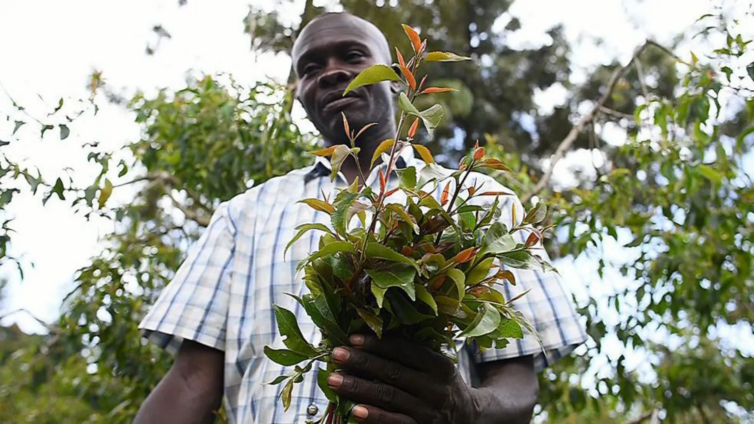
Kenya's President William Ruto has reversed a contentious ban imposed in parts of the country on muguka, a variety of the popular stimulant known as khat or miraa.
The consumption of the freshly plucked buds and soft leaves has been blamed for a rise in mental health issues and increased social ills, including crime.
Three county governors from the coastal region banned its sale and use last week, sparking anger in the areas where the crop is grown.
President Ruto on Monday said the muguka crop was legal and its sale should not be prevented.
Muguka, a cheaper, more potent and addictive variety of the plant, is popular in the coastal counties of Mombasa, Kilifi, Taita Taveta and Kwale.
Last week, Mombasa Governor Abdulswamad Shariff Nassir banned the entry, transportation, sale and consumption of muguka citing its harmful effects, especially on young people.
Governor Nassir said more than half the people recovering in Mombasa rehabilitation centres were muguka addicts.
A similar directive was issued by the governors of Kilifi and Taita Taveta counties who vowed to crack down on its sale and use.
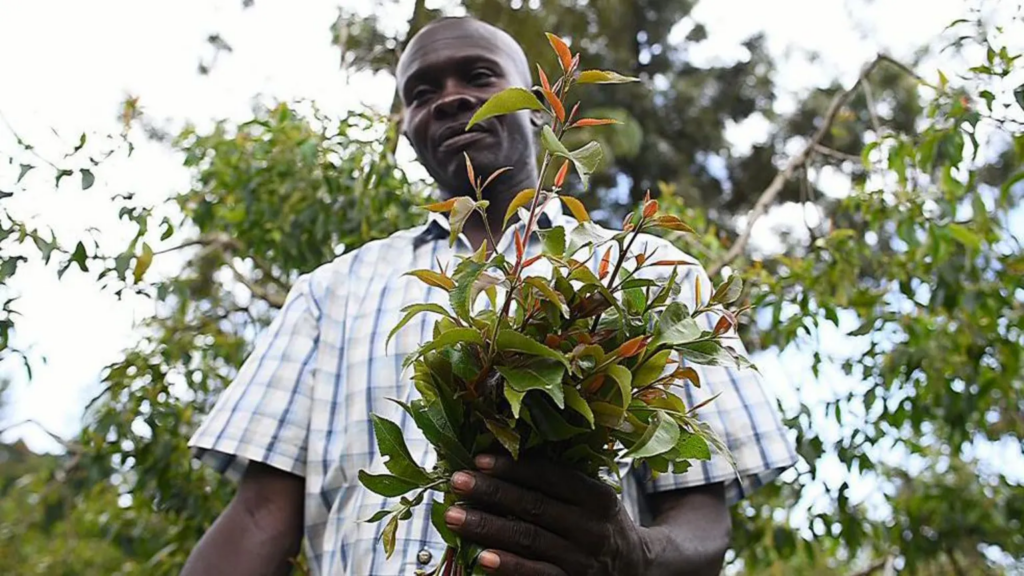
It sparked protests in the muguka-growing county of Embu, with farmers and traders decrying the risk of closing businesses due to the ban on the lucrative crop.
On Monday, President Ruto held a meeting with local leaders from Embu in an effort to end the muguka row.
“With muguka having been recognised by national legislation, any other laws or orders that contradict national legislation is null and void,” Mr Ruto said in a statement issued by the president's office.
President Ruto said muguka was a legal crop under the Crops Act 2013 and the Miraa Regulations 2023.
He said the government would allocate $3.7m (£3m) in this financial year to expand khat farming in the country.
Two activists had also challenged the muguka ban in court.
More than 10 traders were arrested last Friday in the main coastal city of Mombasa as the ban on the stimulant took effect, local media reported.
The ban had gained widespread support from religious organisations, with Muslim leaders in Mombasa calling for muguka to be categorised as a restricted drug.
Although the National Agency for the Campaign Against Drug Abuse has not banned muguka, it has classified it as a harmful substance based on the stimulants cathinone and cathine found in the plant.
"The amounts of cathinone and cathine are very high in muguka because you are chewing the leaves, where the potency resides," John Mututho, the former chief of the anti-drug abuse agency, told a local TV station.
He said the chemicals in muguka had impaired normal body functions.
"Let's invest in other herbs like rosemary. Farmers will be very rich, and we will not have zombies," Mr Mututho added.
Latest Stories
-
ECG procurement is where politicians ‘milk’ the company – Ben Boakye
33 minutes -
IPPs’ contractual arrangements partly to blame for energy sector problems – TUC’s Dr Otoo
45 minutes -
Like Benzema & as good as Haaland – Alonso on Joao Pedro
48 minutes -
Check out 41 countries Ghanaians can visit without a visa on ordinary passports
58 minutes -
I disrupted pre-season travel plans to prepare players – Arteta
1 hour -
Richarlison’s move to Vasco da Gama falls through
1 hour -
Dictator meme shows lack of human awareness – Mbappe
1 hour -
2030 World Cup: Moroccan official told to stop making 2030 final promise
1 hour -
Mourinho compares Mbappe and Vini Jr to fruit trees after boos
2 hours -
Lewis Hall signs new contract with Newcastle until 2031
2 hours -
Signed instead of Rashford, Gordon is proving worth at Barca
2 hours -
2026 BECE automatic placement rate hits 87.3%, highest since 2021 — CSSPS data
2 hours -
Ghanaian youngster Zayan Omar joins Spanish side Málaga
2 hours -
New Man City signings desperate to win – Dias
2 hours -
Morocco rejects Spain blame game, warns against using kingdom as political pawn
2 hours