

Audio By Carbonatix
Many Ghanaians will experience hunger and malnutrition by 2030 due to anticipated drop in national fish production, Professor Berchie Asiedu, the Dean, School of Natural Resources, University of Energy and Natural Resources (UENR) has hinted.
He said the nation’s fish consumption was expected to reach 888,096 tonnes by 2030; however, total fish production was anticipated to constitute only about 43 per cent of the total fish requirement.
“This clearly shows that demand for fish consumption is expected to outweigh the national supply,” Prof Asiedu explained.
At the current growth rate, per capita fish consumption is predicted to decline from 28 kg in 2018 to 23.9 kg in 2030, Prof Asiedu, stated saying, “fish consumption would increase, but people would be eating less fish.”
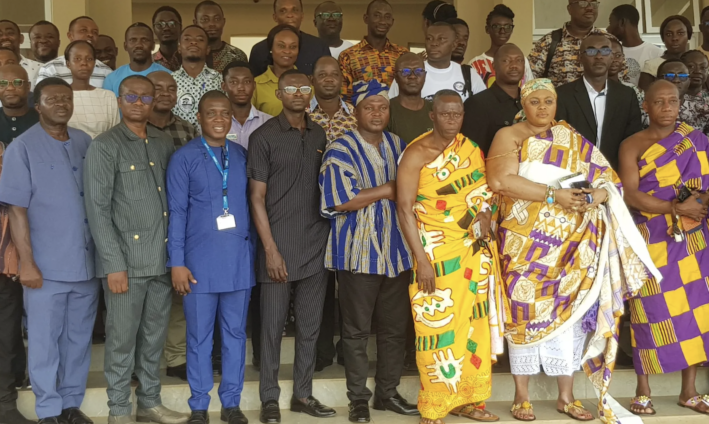
Prof Asiedu made this known when speaking on a research update session, organised by the School of Natural Resources of the University in Sunyani on the theme “Managing our Natural Resources: Academia-Industry Partnership for Sustainable National Development.”
The session was attended by natural resources experts.
Prof Asiedu explained that as the cheapest and most consumed animal protein (60 percent) in the country, fish demand had increased rapidly over the past few years, growing from 960,000 tonnes in 2010 to 1.1 million tonnes in 2020.
Within the same period, per capita fish consumption increased from 24.2 kg to 27.9 kg at a rate of 1.6 percent per annum.
Following the gaps in the trends of production and consumption, Prof Asiedu called for an urgent need for policies to accelerate aqua-culture development in the country.
He also underlined the importance of ensuring general improvement in the fisheries management practices, as well as exploration of adaptive strategies and thereby improve the adaptive capacity of fishers to climate change.
Later in an interview, Mr. Hanson Kodzo Dzamefe, the Bono Regional Director of the Fisheries Commission, expressed concern about the nation’s over-reliance on marine fishes, and called for private sector collaboration to develop the nation’s aqua-culture sector.
He said aquaculture had huge potential for job creation and food security, saying the inland fishing value chain could create millions of jobs if investments were put into the sector.
Mr Dzamefe said aquaculture remained a lucrative business, and therefore, called on the unemployed youth and graduates to engage in commercial fish production to better their lots and advance national food security too.
Latest Stories
-
Finance Minister advises African governments to strengthen regional tax cooperation
34 minutes -
NPP accuses NDC of master-minding demolition of Ho regional office fence
34 minutes -
Ghana plans stronger regional power trade with Nigeria
35 minutes -
GRA Commissioner-General calls for stronger tax cooperation to boost regional revenue mobilisation
36 minutes -
NACOC needs more personnel to tackle drug trafficking – Toobu
39 minutes -
Railway workers resist KMA eviction order, demand consultation
41 minutes -
Legacy Leadership Africa Institute to host boardroom women’s leadership programme
53 minutes -
Ghana needs a law to sustain constitutional reforms – CDD-Ghana
4 hours -
COVID fumigation audit: Auditor-General has a lot of questions to answer – Akwatia MP
4 hours -
Stranded Ghanaian medical graduates in Cuba appeal to Mahama for immediate return
4 hours -
GNFS contains fire outbreak at Teshie Lekma Road near Lekma Hospital
10 hours -
Samia Nkrumah rejects the narrative that Ghanaians were happy after Nkrumah’s overthrow
12 hours -
A Mother’s pain: Tribute by Ivan Baidoo’s mother
12 hours -
‘Forgive us for staying away’ — Samia Nkrumah leads family back to Nkroful, pledges to preserve Nkrumah’s legacy
12 hours -
Ernest Nuamah scores twice as Lyon beat Rennes
12 hours