

Audio By Carbonatix
The introduction of the Free Senior High School (Free SHS) policy in 2017 marked a significant milestone in Ghana’s education landscape. Ushering in a golden era in education, the policy has been instrumental in increasing access to secondary education, with student enrollment soaring from approximately 800,000 in 2016 to over 1.4 million students in 2024.
Convincing evidence also points to a remarkable improvement in learning outcomes, generally due to the interventions that are part of the Free SHS policy – providing core textbooks to all students, paying for academic intervention grants for all students, increased contact hours, intentional professional development for staff and subject-specific training for teachers.
Consequently, a growing number of students are now eligible for tertiary education, placing immense pressure on existing universities. To address this mushrooming demand and cater to the diverse needs of students, the establishment of an Open University in Ghana is imperative.
An Open University is a unique institution that delivers higher education primarily through distance learning. Unlike traditional universities with fixed campuses, open universities offer flexible learning opportunities that accommodate students’ varied circumstances. Students can study at their own pace, combining work, family, and academic pursuits. This model is particularly beneficial for working adults, individuals with disabilities, and those living in remote areas.
The proposed Open University in Ghana has the potential to revolutionize higher education by providing access to a broader population and propelling Ghana into overdrive in our quest to fully participate in the fourth industrial revolution.
It can serve as a catalyst for lifelong learning, empowering individuals to acquire new skills and knowledge throughout their lives. By offering a diverse range of programs, from diploma and certificate courses to undergraduate and postgraduate levels, the Open University can cater to the evolving needs of the Ghanaian workforce.
Moreover, an Open University can play a crucial role in addressing the skills gap in the country. By offering programs aligned with industry demands, can equip graduates with the necessary competencies to contribute to national development. Industry-specific needs and demands can rapidly be developed through the appropriate accreditation bodies with the Open University providing a platform for quick delivery of the needed certifications. Additionally, the university can focus on research that addresses pressing national challenges, contributing to evidence-based policymaking.
The establishment of an Open University in Ghana is not merely about expanding access to higher education; it is about creating a more inclusive and equitable society. By breaking down barriers to education such as geographical, financial and time constraints as well as disability and gender inequity, the university can empower individuals from all walks of life to reach their full potential. It can also serve as a platform for social mobility, providing opportunities for those who may have been excluded from traditional higher education.
Even more exciting is that the Open University can serve as a platform for existing Ghanaian universities to expand their reach and offer programs to a wider audience. By partnering with the Open University, traditional universities can leverage technology to deliver their courses to students across the country and beyond. It can also become a source of revenue generation for Ghana as it will offer the opportunity to increase the number of international students from our West African Sub-region as well as across the continent while decreasing expenditures that are typically associated with brick-and-mortar institutions.
In an era characterized by rapid technological advancements, the Open University can play a pivotal role in preparing Ghana's youth for the future. By offering programs in Artificial Intelligence, Coding, Robotics, and STEM education, the university can equip students with the skills needed to thrive in the digital age. These programs will be essential in driving innovation and economic growth, putting Ghana on a trajectory of rapid ascension to social and economic transformation.
As a response to the exponential growth experienced by the forward-looking educational policy of Free SHS which answered the question of access, quality, equity and relevance, the Open University is the next educational frontier in Ghana’s education. It promises to unleash the potential of hundreds of thousands of Ghanaians to fully participate in society, allowing the country to benefit from the innovation, ingenuity and creativity of its citizens. With the Open University, Ghana is presented with a game changer in tertiary education, shepherding us into a future of immense possibilities for a diverse student population.
The success of the Free SHS that is presenting us with an increasing number of students qualifying for tertiary education, coupled with the diverse needs of the Ghanaian population, underscores the urgent need for an Open University. By offering flexible, accessible, and high-quality education, the Open University can contribute significantly to Ghana’s human capital development and economic growth.
Dr Bawumia has demonstrated with his proposal for the establishment of the Open University that he is truly a forward-looking, future-ready and digital man who wants to lead Ghana to embrace this innovative model of higher education and unlock the potential of its citizens.
We stand a chance to see the quantum leap in education that is required for Ghana to fully participate in the digital age and fourth industrial revolution with the Open University.
-
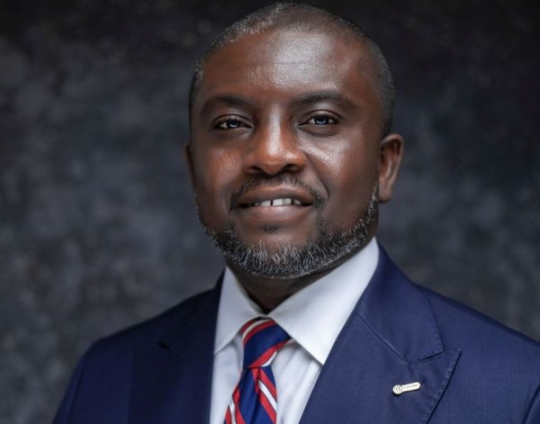
The Author, Dr Kwabena Bempah Tandoh is the Deputy Director-General for Quality and Access of the Ghana Education Service (GES).
Contact email: drkbtandoh@gmail.com
Latest Stories
-
President Mahama ends Resetting Ghana tour of Ahafo Region
2 hours -
African negotiators seek delivery of climate commitments at COP31
2 hours -
BoG develops AI rules for financial sector
2 hours -
‘Big Push’: Government assures contractors of prompt payments
2 hours -
Court fines miner for breaking into gold buying shop
2 hours -
Tarkwa court jails labourer for three years over GH¢123,000 theft
3 hours -
GAEC must retain nuclear scientists for Ghana’s nuclear ambitions – Minister
3 hours -
Man reportedly mistaken for game and shot by hunter dead in forest
3 hours -
19-year-old mason jailed 15 years for defiling seven-year-old pupil
3 hours -
Ghana’s banking sector assets rise 20.47% to GH¢500.2bn – BoG Governor
3 hours -
22 injured as Sprinter bus overturns at Sege after tyre burst
3 hours -
UN housing expert urges Ghana to strengthen Rent Control Department amid housing affordability concerns
4 hours -
Delta-BCI partnership reaches 166,000 people with breast cancer education
4 hours -
Power restoration fault suspected in Kumasi Central Market fire
9 hours -
The 7-foot giant of Ngleshie Amanfro: Seven-foot Ghanaian Ephraim Saawa dreams of joining the national basketball team
10 hours