

Audio By Carbonatix
• And other associated health hazards
This is the season—the much-awaited political season. The tirades before the storm proper are in full swing. The steamy campaigns have started with relish, and the usual seasonal promises abound in heavy doses. But, then, why are the pertinent issues affecting the environment so blatantly missing in the campaign speeches? Why are the elephants in the room not featured in those promises?
Deadly experiences
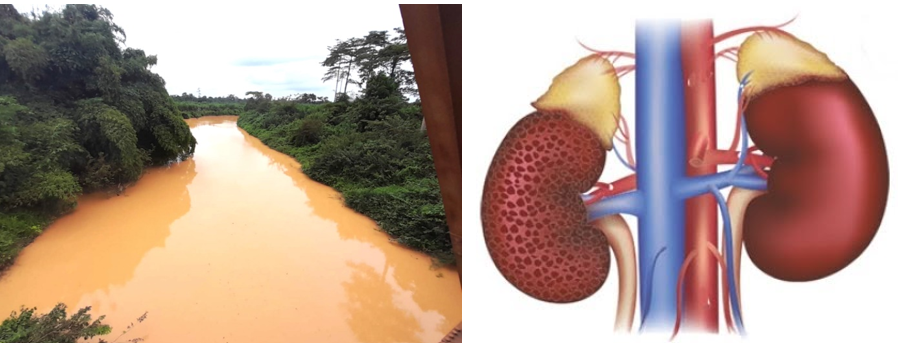
A few months back, driving towards Obuasi from Kumasi, I bought some boiled corn but just as I was about to peel off the sheath we got to the Oda river. A cursory look at the brownish noxious stream left a most horrifying imprint to this day. How on earth could the people in that area survive for long using – for cooking and drinking – such contaminated water teeming with cyanide and mercuric oxides? The appetite for the corn left me on the spot.
A few years back, noticing and alarmed by a gaping sore on the wrist of a taxi driver I had hired from Kumasi airport to Krofrom, I queried him, “That’s a bad sore; what happened?” Without hesitation, he voluntarily pulled his long sleeve shirt up from the wrist to show me some hideous gangrenous sores that migrated all the way into his shoulders.
Recounting the devastation of the rivers around his cocoa farm, he had escaped from the village to now drive a taxi in Kumasi.
Ghana Water Company
It was lately reported that the Ghana Water Company had been on the verge of shutting down operations in the Ashanti region due to the activities of illegal mining. The cost involved in treating water, according to the company, was taking a toll on its finances.
An official was to announce on a radio that “We were first using aluminum sulphate which is called ‘Alum’ which after the process, you will get your clean water. But the Alum is not able to treat the water anymore which almost made us shut down our pumps,”
He said “We have to serve Ghana so we have bought polymer which is an advanced form of Alum and it is ten times ,more expensive than the alum. It is too expensive for us. If it gets to a time when the polymer is not able to treat the water, we may have to shut all our plants down which means no one gets water”.
He was to add that “When you mention galamsey I get scared. It is like an act of terrorism that some people are using to sabotage us. Sometimes I ask myself if the people involved do think about the people of the country or they want us all to die. The water bodies have been destroyed which is so worrying.”
Notes from medical doctors
From notes that I sent out to some medical friends, asking why our doctors were quiet about such dangers to the delicate human organs, like kidneys? one replied, “I gave a talk at KNUST about 7 years ago about the upsurge in non- communicable diseases in Ghana. I mentioned that our polluted water bodies, was a constant threat to our well-being, especially the amplification of mercury on catfish species that appear to survive in galamsey muddy waters.”
He noted that, “Now, we read of the upsurge in kidney diseases among the youth especially around the galamsey areas. Although it is recognized that galamsey could not be the only cause of kidney failures yet to my mind, it is a major culprit.”
Another said that the medical doctors have been talking, but they strongly believe that they are ‘refused’ to be heard, because of vested interests. “Hmmm … they are shouting oh … but they are so few and the herbalists are so many” and that the Ghana Medical Association have come out with many statements but as the saying goes, ‘There is none so deaf as the one refusing to hear nor so blind as the one refusing to see’ “.
Yet another response noted that, “After watching what happened to Prof Frimpong Boateng the doctors have adopted a policy of self-preservation noting that nothing will happen even if you shout from the highest roof tops!” They asked, “Why can’t the government of Ghana stop galamsey?”
Other deadly effects
A particular specialist noted that “In addition to the Galamsey, other deadly culprits are: 1. Bitters: There are about 50 different brands on sale in the country, I’m sure the FDA can’t tell us the active ingredients in any of these; 2. Sodium glutamate, widely used in cooking, including kenkey; 3. Changes in diet from large portions of pork consumed; 4. Plastics used in cooking causing cancers; and processed foods, etc.”
The kidney and the liver are responsible for getting rid of these toxins from our system, and dialysis machines are in very short supply in our hospitals, though one governmental V8 can get you some.
They added that “Young men in their twenties are on dialysis and dying from renal failure. The government has no plan or programs to deal with these because they DON’T give a damn!”
Another contributed that the herbal medicines being sold widely are without serious FDA certification of their efficacy!
Email: anishaffar@gmail.com
Latest Stories
-
Kurt Okraku doesn’t like criticism, but Ghana football is beyond him – Nana Baffour Awuah
2 minutes -
Ghana’s Liquidity Paradox: Why capital is not reaching productive businesses
10 minutes -
Ghana football has collapsed under Kurt Okraku – Manhyia South MP
17 minutes -
Mr John Blankson Adu Otu
48 minutes -
Prof. D. K. Yeboah-Amankwah
52 minutes -
AFCON 2027Q: Queiroz ‘proud’ of Black Stars performance despite defeat to Cote d’Ivoire
1 hour -
Your next home could be here: 3rd JoyNews Republic Bank Habitat Clinic opens at Junction Mall today
1 hour -
GCAA assures safety won’t be sacrificed to attract more airlines
1 hour -
AFCON 2027Q: Queiroz furious with ‘joke’ penalty awarded Cote d’Ivoire in Black Stars defeat
1 hour -
GCAA backs more domestic airlines to drive down airfares
2 hours -
SHC launches nationwide audit, gives occupants 21 days to regularise property interests
2 hours -
Manhyia South MP describes EOCO arrest attempt as ‘provocation’
2 hours -
Appiagyei appeals to Lordina Mahama, Jane Naana over detention of Ghana Jollof accused
2 hours -
New regional hospitals will bring specialist care closer to Oti, Savannah and Western North – Health Ministry
2 hours -
Yellow Card appoints former Monzo finance leader Ross Everett as Group CFO
2 hours