


Audio By Carbonatix
Experts are urging greater collaboration between the private and public sectors to bridge the gap between technical, vocational training and Ghana’s job market.
This was highlighted at a roundtable discussion for the Africa Skills Week event organised by the Deutsche Gesellschaft für Internationale Zusammenarbeit (GIZ).
The Government of Ghana established the Technical and Vocational Education and Training (TVET) programmes to equip the country’s youth with employable skills that would attract greater industrialization and a thriving economy.
However, its implementation has faced many challenges, with a gap in the requisite skills development being one of them. Sectors such as manufacturing, technology and construction are deeply affected, driving many to seek alternative solutions to their employment gap.
The consensus shared between the experts at the roundtable event was the belief that the private sector involvement in TVET programmes would close the skills gap.
Professor Humphrey Danso, Dean of the School of Graduate Studies of the Akenten Appiah-Menka University of Skills Training and Entrepreneurial Development (AAMUSTED) indicated that training institutions and industries in Ghana had different requirements, leading to an incompatibility between the skills gained by TVET beneficiaries and the job industry.
“In the past, training institutions and industries had different requirements, leading to a mismatch between the skills students were trained in and what industries needed. By involving the private sector at every stage of the training process, we can ensure that the skills students acquire match industry requirements, thereby closing this gap”, he said.
The Chairperson for the Sector Skills Committee of the Commission for Technical and Vocational Education and Training (CTVET), Madam Constance Swaniker pointed to a lack of communication between businesses and technical institutions as a contributing factor to the low success rate.
She also stressed the need for private-sector tax breaks to attract more participation.
“It’s essential for institutions to sit down with private sector representatives and understand their needs before expecting them to absorb students”, she stated.
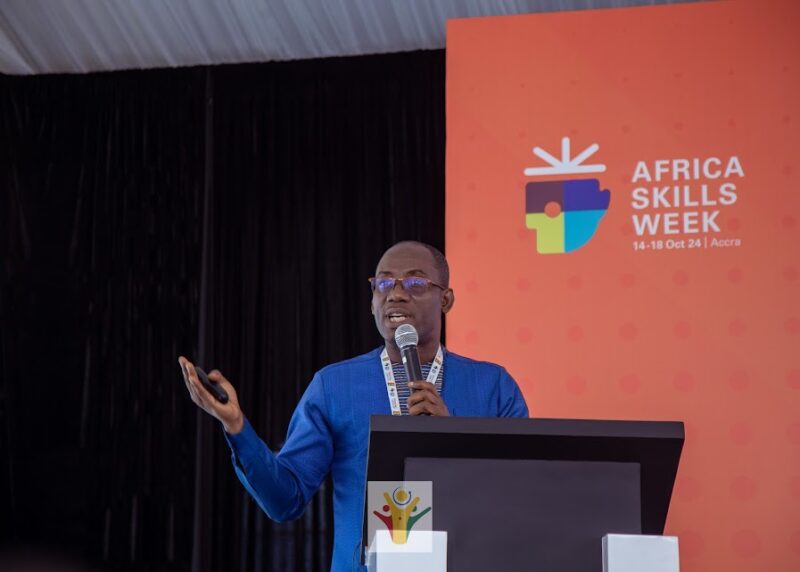
“I studied the dual [TVET] training system in India, where private sector tax breaks are provided to encourage industry participation. To encourage work experience learning and other initiatives for young people, the private sector needs to see clear benefits”, she stressed.
Gideon Murenga, a Senior TVET and Labour Markets Advisor working with GIZ in Kenya shared some successful examples adopted by his home country. He revealed that though collaboration had its challenges in its formative years in Kenya, it eventually paid off when the private sector witnessed the attending benefits.
“In Kenya, for instance, when the conversation about industry participation in training began, there was pushback. However, it is essential to convince them of the need to create a competent workforce. This is a journey that takes time, especially since many industries are smaller and the additional cost of training, such as consumables, can be a challenge”, he stated.

Mr Murenga also revealed that industries in Kenya participate in the selection of students for training, including aptitude tests and interviews to ensure students are placed in the right courses. He added that 50% of training takes place in the industry, where students receive practical exposure and mentorship from company employees.
Another expert, Benedict Mensah highlighted the gains his institution had made in bridging the gap between TVET institutions and industries. He revealed that his institution, Don Bosco, pairs Job Service Officers with TVET institutions to guide trainees through their TVET journey.
“They [Job Service Officers] help students choose the right skills, provide soft skills training, and collaborate with industries to ensure that what is taught in TVET centers meets the demands of the labor market”, he said.
About Pact for Skills Support to the Transformation of the TVET System Project
The Pact for Skills Support to the Transformation of the TVET System in Ghana project is co-funded by the German Ministry for Economic Cooperation and Development and the European Union and implemented by the Deutsche Gesellschaft für Internationale Zusammenarbeit (GIZ).
The project aims to reform and strengthen Ghana’s Technical and Vocational Education and Training (TVET) system by fostering public-private partnerships, strengthening the capacities of state agencies, digitalization and integration of green skills into the technical education, while developing industry-relevant curriculums, and equipping the workforce with future-ready skills. This project is designed to create a demand-driven TVET system that aligns with market needs, supporting sustainable economic growth and youth empowerment in Ghana.
About Deutsche Gesellschaft für Internationale Zusammenarbeit (GIZ) GmbH
GIZ has over 50 years of experience in a wide variety of areas, including economic development and employment, energy and the environment, and peace and security. We work with businesses, civil society actors, and research institutions, fostering successful interaction between development policy and other policy fields and areas of activity.
Latest Stories
-
30 NDC aspirants file nominations in Upper West as regional election approaches
1 minute -
UPSA launches laptop assembly plant, requiring new students to assemble their own devices
7 minutes -
UCC sociologist calls for action on gender inequality to end child marriage
8 minutes -
LSN questions Ghana’s proposed five-year presidential term and DCE election reforms
9 minutes -
AFCON 2027Q: Bjorkegren to lead Black Stars for Somalia doubleheader with Tanko and Attram as assistants
11 minutes -
AMA completes road repairs on Kwame Nkrumah Avenue
17 minutes -
Law Students’ Network warns executive dominance could undermine constitutional review
20 minutes -
Mahama to meet relevant stakeholders over concerns about the new Customs Act
27 minutes -
CHASS demands a 20% increase in SHS funding and payment of outstanding debts
29 minutes -
Investigation launched after male body found in County Cork
31 minutes -
We have been scammed by NDC, government is only doing PR – Abanga Fuseini
31 minutes -
Tamale Teaching Hospital records 44 new breast cancer cases in six months
33 minutes -
GES declares October 30 CPD day for private school teachers; learners to observe holiday
33 minutes -
South Korea to support Ghana’s forts and castles restoration with $4.5m over five years
35 minutes -
School headscarf ban sparks rare protests in Azerbaijan and row with Turkey
43 minutes