

Audio By Carbonatix
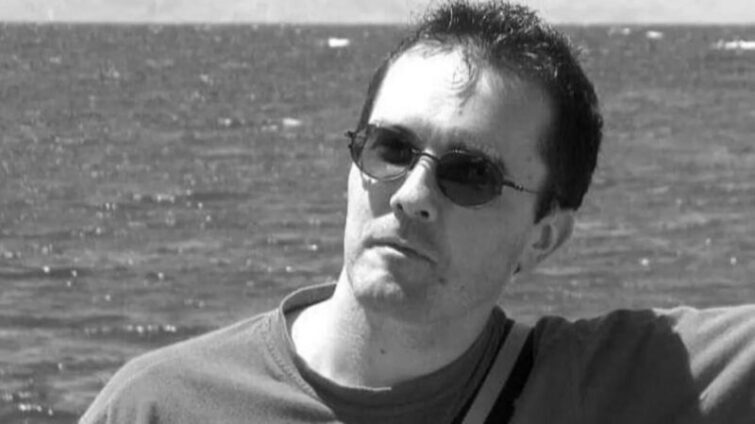
Eight people have gone on trial in Paris accused of encouraging the killer of Samuel Paty, the teacher who was beheaded on the street outside his school four years ago.
Abdoullakh Anzorov, the young man of Chechen origin who wielded the knife, is dead – shot by police in the minutes after his attack.
So the trial is less about the murder itself and more about the circumstances that led to it.
Over seven weeks, the court will hear how a 13-year-old’s schoolgirl lie went out of control thanks to social media, triggering an international hate campaign, and inspiring a lone mission of vengeance from a self-styled defender of Islam.
On trial are two men accused of identifying Mr Paty as a “blasphemer” over the Internet, two friends of Anzorov who allegedly gave him logistical help, and four others who offered support on chatlines.
Mr Paty’s murder horrified – and petrified – France.
He was a conscientious and much-liked history teacher in a secondary school in Conflans-Sainte-Honorine, in the prosperous western suburbs of Paris.
On 6 October 2020, he gave a lesson on freedom of speech – the same lesson he had given several times before – to a class of young teenagers.
Drawing on the tragically famous episode of Charlie Hebdo magazine – how the publication of cartoons of the Prophet Muhammad had led to the 2015 murder of most of its staff – he briefly showed an example of the cartoons.
Before doing so he recommended that those who feared being offended avert their eyes.
The next day one of his pupils – the 13-year-old girl – was asked by her father why she was not going to school.
She told him she had been disciplined because she dared to stand up to Mr Paty when he told Muslims to leave the class so he could show a naked picture of the prophet.
It was a triple lie.
Mr Paty had not told Muslims to leave the class. The girl had been disciplined, but not for the reason she said. She had not even been in the room on the day Mr Paty gave the lesson on freedom of speech.
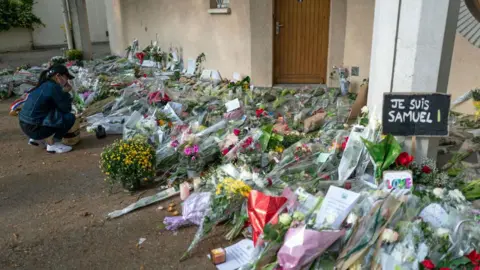
But with the Internet to send it on its way, the lie spread... and spread.
First the girl’s father – Brahim Chnina - made her repeat the claim in videos, which he posted on Facebook, naming the teacher.
Then, a local Islamist - Abdelhakim Sefrioui - created a 10-minute online video entitled “Islam and the Prophet insulted in a public college.”
Within a couple of days, the school was inundated with threats and messages of hate from around the world. Paty told colleagues that he was living through a difficult time because of the campaign against him.
Meanwhile, the denunciation had reached the attention of an 18-year-old Chechen refugee living in Rouen, 80km (50 miles) to the west.
Anzorov made an initial note on his telephone that read: “A teacher has shown his class a picture of the messenger of Allah naked.”
Anzorov then sought the help of two friends, who are now on trial.
One of them was allegedly present when he bought a knife in a Rouen shop. The other helped him buy two replica pistols on 16 October, the day of the attack and then drove him to the school.
The four last defendants - including one woman - are people with whom Anzorov conversed on Snapchat and Twitter and who allegedly encouraged him.
The defendants admit their connection to the case, but they contest the charges of "terrorist association" or "complicity to commit terrorist murder".
Lawyers for the girl’s father and the Islamist preacher will argue that though they publicly condemned Mr Paty, they never called for his murder.
In a similar vein, lawyers for Anzorov’s friends – actual and online – will say they had no notion he planned a killing.
For the prosecution, context is key. Samuel Paty’s murder took place at a time of heightened awareness of the jihadist threat. In October 2020, Charlie Hebdo had just re-published some of the cartoons, to mark the start of a trial resulting from the original attack.
The internet was full of new Islamist threats against France, and in late September a Pakistani man had wounded two people with a machete at Charlie Hebdo’s former offices.
In that climate, publicly denouncing a man for blasphemy was tantamount to designating a terrorist target, prosecutors will argue.
A year ago the girl at the heart of the case was convicted in a minors’ court of making false accusations and given a suspended prison term.
Five other pupils were also convicted of identifying Mr Paty for Anzarov in return for money.
The trial is set to run until late December.
Latest Stories
-
NPP must elect strong parliamentary candidates to reclaim Greater Accra seats – Patrick Boamah
3 minutes -
Abdul-Aziz Abdu-Rahaman elected NPP Upper West Regional Chairman
7 minutes -
Iddrisu Sulemana edges Clifford Braimah to become NPP Savannah Regional Chairman
9 minutes -
‘Arrogance of power’ is driving voters back to NPP in Ashanti Region – Paul Adom-Otchere
19 minutes -
They demolish buildings and tell us they’re building 24-hour markets – Paul Adom-Otchere
33 minutes -
NPP’s 2024 Bolgatanga Central Parliamentary Candidate elected Upper East Regional Chairman
45 minutes -
Incumbent Northern NPP Chair wins as new faces break through in party executive elections
49 minutes -
Former Health Minister Okoe Boye elected NPP Greater Accra Regional Chair
1 hour -
Joseph Kobinah Esibu elected NPP Central Regional Chairman
1 hour -
Fernandez booed by Chelsea fans as Alonso offers glimpse of blueprint
1 hour -
PSG sign World Cup winner Torres from Barcelona
2 hours -
Odeneho Kwaku Appiah beats former EPA boss Kokofu, to emerge NPP Ashanti chair
2 hours -
TDC defends statutory mandate, says its authority to develop Tema predates TMA
2 hours -
Ignatius Kwesi Afrifa elected NPP Western Regional Chairman
2 hours -
Galamsey will be a key issue for NPP’s 2028 campaign – Annoh-Dompreh
2 hours