

Audio By Carbonatix
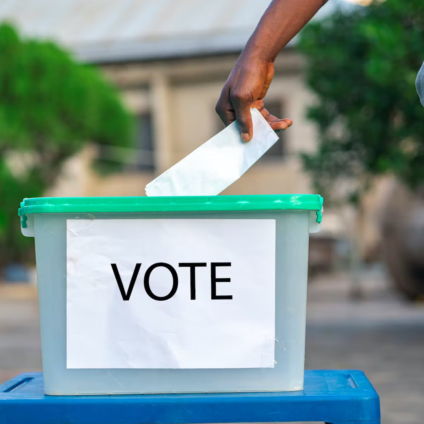
In just a few hours, Ghanaians will head to the polls to elect a President and Members of Parliament. As expected, political parties have rounded-up their campaigns, leaving many undecided voters grappling with choices. While some believe the outcome is divinely preordained, others argue that hard work and strategic planning win elections. However, one undeniable truth remains: the ultimate decision lies in the hands of the people going to vote—the electorate.
Ghanaian voters are a fascinating group. For many, their choice of candidate can hinge on the most unconventional reasons. Some base their decision on ancestral dreams featuring party colours, while others, including university graduates, are swayed by a candidate’s physical appearance. Regardless of the criteria, Ghanaians will vote.
The faces at the polls
The 2024 General Election is set to draw a mix of voters—those who are satisfied, angry, happy, disappointed, and undecided. This diverse group reflects the sentiments of a population that has experienced significant socio-economic changes in recent years. Many will travel great distances to vote, particularly those returning to their constituencies. These returning voters represent a critical demographic that candidates cannot afford to overlook. Yet, the question remains: are they all going to vote?
Apathy among the electorate
For some voters, apathy stems from disillusionment. They feel let down by political parties whose policies have failed to impact their lives. Fuseini, a young man from a rural community, sums it up: “The roads are still bad, our water sources are unreliable, and farming is exhausting. Why waste time voting when nothing changes?” He asserts that no amount of monetary incentive could persuade him to vote—only tangible development for his community would.
Others, like Tweba from Essaman, have specific grievances. “I vowed to vote for anyone who would fix the streetlights on the Cape Coast-Takoradi highway. No one has done it, so I have no reason to vote,” she laments.
Barriers to voting
For some, the cost of voting is a deterrent. Despite offers from candidates to provide free transport to their constituencies, many voters cite additional expenses, risks, and even personal safety concerns. Some fear encountering adversaries back home who might jeopardise their return to their workplaces.
A common question arises: why didn’t these individuals transfer their votes to their current locations? Many admit they were unaware of the option. This lack of awareness highlights gaps in voter education, leaving some disenfranchised due to logistical challenges.
Broken loyalty
Another subset of voters—former party loyalists—feels abandoned by their political parties. Disappointed by unfulfilled promises and policies that exclude them, they have chosen to abstain. A bus driver expresses his frustration: “For years, those in my profession have been ignored when it comes to national planning. If I can’t vote for my party, I won’t vote at all.”
Hope and determination
Amidst the apathy, there are glimmers of hope. Many first-time voters are eager to exercise their franchise, seeing it as an opportunity to influence Ghana’s future. For them, the elections represent a chance to address critical issues such as unemployment, corruption, and Ghana’s economic independence.
Ultimately, those willing to invest their resources and effort to vote are driven by a desire for change and progress. As the country prepares for this pivotal moment, it is clear that the people going to vote will play a decisive role in shaping Ghana’s future.
Their voices, choices, and aspirations will echo long after Election Day, determining the trajectory of the nation in the years to come.
Read also: Election 2024: EC ready for polls, election materials deployed
Latest Stories
-
‘I was born in South Africa’, says beauty queen Chidimma Adetshina facing legal bid to deport her
34 minutes -
Prince Harry and Meghan moving back to UK
44 minutes -
Ghana’s output expansion largely driven by labour, capital rather than innovation – Opoku-Afari
46 minutes -
Ghana is ready for nuclear power adoption – Gov’t affirms
51 minutes -
GJA@77: Media-government partnership vital to Ghana’s democracy – Shamima Muslim
1 hour -
LUV FM High School Debate: Opoku Ware and St. Hubert Seminary book quarterfinal spots
1 hour -
Stronger research, industry linkages needed to build a competitive digital economy – Deloitte Technology Senior Manager
1 hour -
Economy experience high but unbalanced growth from mid-2000 to 2022 debt crisis – Former 1st Deputy Governor
1 hour -
Tell Your Story: Political, business and industry leaders to share journey with young Ghanaians
2 hours -
‘Gold cannot save you at 2am’ – Obuobia Darko challenges mining giants to invest in healthcare
2 hours -
Wontumi’s incarceration will not stop his chairmanship bid – Palgrave
2 hours -
Eurobond borrowings over 2007-2021 used for budget financing; Ghana borrowed US$15.59bn – Opoku-Afari
2 hours -
Newborn baby found in dustbin at Kasoa Main Station toilet
2 hours -
Ghanaian skincare brand KAEME wins DHL ESG Excellence Exporter of the Year award
3 hours -
Ho Communique: Democracy Not for Sale
3 hours