

Audio By Carbonatix
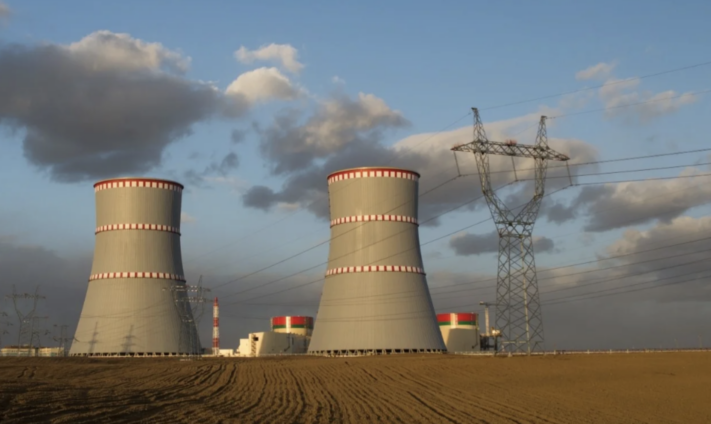
Ghana has selected the United States and China as vendors for its first nuclear power plants, though no formal contract has been signed.
The U.S.-based NuScale Power and Regnum Technology Group, in partnership with Japanese firms, will construct Small Modular Reactors (SMRs), while China National Nuclear Corporation will build a Large Reactor (LR).
This was disclosed by Dr. Stephen Yamoah, Executive Director of Nuclear Power Ghana, to the Ghana News Agency on the sidelines of a media engagement in Accra Wednesday.
He said LR will have a capacity of 1,200 megawatts, while the SMRs will comprise 12 modules, each generating 77 megawatts, totaling 924 megawatts.
Dr. Yamoah said the LR would follow a Build, Operate, and Transfer (BOT) financial model with local equity participation, and the SMRs would be financed through Public-Private Partnerships (PPP).
Ghana has signed a framework agreement with the vendors, and experts are gathering environmental and oceanic data to determine the plant’s location.
Mr. Archibold Buah-Kwofi, Acting Director of the Nuclear Power Institute, underscored the need for stable and affordable electricity for national development, noting that Ghana’s energy mix relied heavily on fossil fuels and hydro, with renewables contributing just one per cent.
“We need to fast-track the adoption of nuclear power to secure our energy future,” he said, highlighting the importance of robust regulatory frameworks and skilled manpower.
Nuclear power is expected to reduce reliance on fossil fuels, mitigate climate change, and enhance energy security.
The government plans to integrate one gigawatt of nuclear power into the grid by 2034.
The plant will support industrialisation, compensate for declining hydro sources, lower tariffs for industries, enable desalination, and create jobs.
The vendor selection followed a thorough process, starting with 16 responses to the government’s call.
A technical team, guided by the Energy Ministry, shortlisted five before choosing the final two.
Ghana’s nuclear ambition, disrupted by a coup in the 1960s, was revived in 2006 with International Atomic Energy Agency (IAEA) support.
It is among several African nations pursuing nuclear energy to tackle power challenges and drive economic growth.
Latest Stories
-
UHAS halts semester exams over administrative, logistical issues
1 hour -
ECG announces planned maintenance outages in parts of Ashanti Region
1 hour -
Sexual harassment has no place in educational institutions – Education Ministry
2 hours -
The growing culture of vacation classes in Ghana: Should students rest or continue schoolwork?
3 hours -
E.P. Church secures radio frequency, prepares to launch Bremen Radio
3 hours -
Two dead and hundreds evacuated as twin fires break out on Greek island
3 hours -
EPCG clears over GH¢11.7m in debt as outgoing moderator calls for tighter controls on borrowing
3 hours -
Mövenpick Ambassador Hotel Accra marks 15 years of premium hospitality
3 hours -
T-bills auction: Government exceeds target by 88%, interest rates tumble
4 hours -
Western North: Confusion erupts over NPP chairmanship election results
4 hours -
Bawumia congratulates newly elected NPP regional executives
4 hours -
Bawumia urges unity after NPP regional elections ahead of 2028
5 hours -
Russia says at least seven killed in largest Ukrainian attack of 2026
5 hours -
Ghana and Netherlands sign pact to combat illicit drugs and drug markets
5 hours -
Akandoh warns Boards against interfering in day-to-day management of health institutions
5 hours