
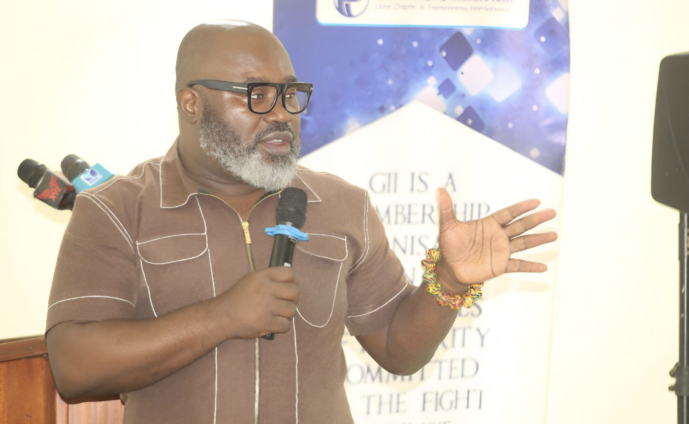
Kofi Asare, Executive Director of Africa Education Watch

Audio By Carbonatix
In 2017, Kenya rolled out a free sanitary pads programme for schoolgirls after an initial pilot in 2011. These six (6) challenges from Kenya are useful to Ghana as President Mahama launches a similar one:
- Delayed supplies: In Kenya, sanitary pads sometimes arrive late in the term, leaving some girls without pads for days or weeks. This defeats the essence of the program, as poor girls may still stay at home for 4-5 days during menstruation. In Ghana, unlike free uniforms or free exercise books in secondary schools, which can be delayed for a year, pads are useless for the month when they arrive late. Timely distribution is critical to convert the sanitary pads from a procurement activity into an education intervention.
- Unreliable Funding: In Kenya, the free sanitary pad programme relies on annual budget allocations that have repeatedly been cut or delayed. In Ghana, the Program is projected to cost GHC 292 million this year. While there is a GETFund allocation of GHC 25 million, over 90% of the funding is expected from the Government of Ghana (GoG), which is unpredictable and unreliable. Reliable funding is key to program relevance and sustainability. The Minister for Education should explore corporate support.
- Decisions on distribution not sufficiently guided by data: In Kenya, there were instances where distribution lists did not match actual school enrolment data. When this happens, some schools receive more, while others receive less or none. Credible school enrolment data from GES must be used to guide the distribution plan.
- Weak Monitoring & Accountability: In Kenya, there is no robust system to track the number of pads distributed, making accountability difficult. In Ghana, similar weak manual record-keeping systems exist in the GES at the district level. Similar opacity exists under the Ghana School Feeding Programme. It is important to develop a digital inventory distribution system that allows for independent tracking of sanitary pads within the supply chain.
- Poor Quality of Supplied Pads: In Kenya, evaluations found that many of the pads provided were too thin, tear easily, or lack adequate absorbency, leading girls to discard them and revert to unsafe alternatives (cloth rags, mattress foam). There are two factories producing pads in Ghana. Quality assurance by the Food and Drugs Authority is key.
- Inadequate WASH Infrastructure: In Kenya, even when pads are available, most rural and peri-urban schools lack adequate Water And Sanitation and Hygiene (WASH) facilities-single sex toilet facilities, changing rooms for girls, water points, or disposal bins. Many girls stay home during their periods without safe spaces to change and dispose of used pads. In Ghana, about 60% of basic schools lack usable single sex toilets, including urban schools like Pantang Basic School near Adenta, where pupils visit the bush. The Ministry of Education must be deliberate in implementing a complementary plan to provide single sex toilet facilities with water and changing rooms for girls in all schools.
Conclusion
There is ample evidence in Africa suggesting that sanitary pads positively impact girls’ retention and improve menstrual health, especially in poverty-endemic areas. However, their effectiveness can be undermined by poor funding, supply chain breakdowns, infrastructure deficits, quality deficits, and weak oversight.
-
The author, Kofi Asare, is the Executive Director of Ghana's foremost education-sector CSO, Africa Education Watch.
DISCLAIMER: The Views, Comments, Opinions, Contributions and Statements made by Readers and Contributors on this platform do not necessarily represent the views or policy of Multimedia Group Limited.
DISCLAIMER: The Views, Comments, Opinions, Contributions and Statements made by Readers and Contributors on this platform do not necessarily represent the views or policy of Multimedia Group Limited.
Latest Stories
-
ECG procurement is where politicians ‘milk’ the company – Ben Boakye
21 minutes -
IPPs’ contractual arrangements partly to blame for energy sector problems – TUC’s Dr Otoo
32 minutes -
Like Benzema & as good as Haaland – Alonso on Joao Pedro
35 minutes -
Check out 41 countries Ghanaians can visit without a visa on ordinary passports
45 minutes -
I disrupted pre-season travel plans to prepare players – Arteta
53 minutes -
Richarlison’s move to Vasco da Gama falls through
1 hour -
Dictator meme shows lack of human awareness – Mbappe
1 hour -
2030 World Cup: Moroccan official told to stop making 2030 final promise
1 hour -
Mourinho compares Mbappe and Vini Jr to fruit trees after boos
1 hour -
Lewis Hall signs new contract with Newcastle until 2031
2 hours -
Signed instead of Rashford, Gordon is proving worth at Barca
2 hours -
2026 BECE automatic placement rate hits 87.3%, highest since 2021 — CSSPS data
2 hours -
Ghanaian youngster Zayan Omar joins Spanish side Málaga
2 hours -
New Man City signings desperate to win – Dias
2 hours -
Morocco rejects Spain blame game, warns against using kingdom as political pawn
2 hours