

Audio By Carbonatix
A normally bustling border crossing between Tanzania and Malawi was noticeably quieter than usual on Thursday as a result of an escalating regional trade row.
From midnight, Tanzania banned the entry of all agricultural imports from Malawi and South Africa in response to what it sees as restrictions on some of its exports.
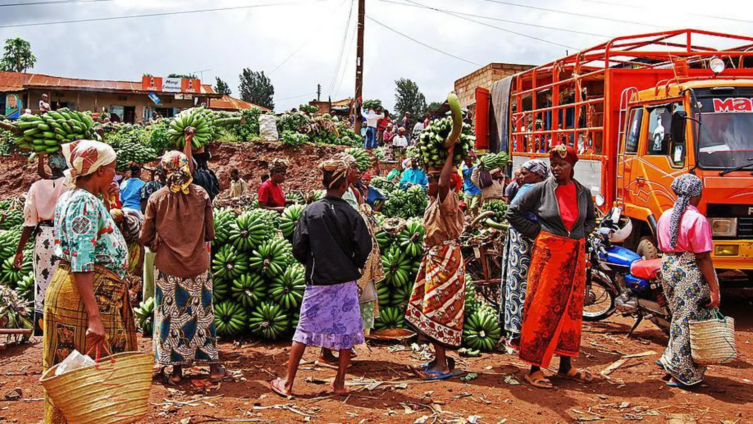
South Africa has for years prohibited the entry of bananas from Tanzania. Malawi last month blocked imports of flour, rice, ginger, bananas and maize from its northern neighbour.
"We are taking this step to protect our business interests... in business, we must all respect each other," Tanzania's Agriculture Minister Hussein Bashe said on Wednesday, confirming the ban.
Diplomatic efforts to resolve the trade issues have so far failed but Bashe said fresh talks were ongoing.
The row comes at a time when Africa is supposed to be moving towards greater free trade through the establishment of a continent-wide free-trade area, which began operating four years ago.
South African exports of various fruits, including apples and grapes, to Tanzania will be hit. Meanwhile, landlocked Malawi, which has relied on Tanzanian ports to carry its exports such as tobacco, sugar and soybeans to the rest of the world, will have to reroute its goods.
Malawi's ban on the import of certain produce, announced in March, was designed as a temporary measure covering goods from all countries to protect local producers, according to the authorities in Lilongwe.
"It is a strategic move to create an environment where local businesses can thrive without the immediate pressure of foreign competition," Malawi's Trade Minister Vitumbiko Mumba said at the time.
Tanzania's agriculture minister said Malawi's move had "directly affected" his country's traders and described the restrictions as "unfair and harmful".
While confirming the import ban, Bashe assured Tanzanians that it would not threaten their food security.
"No Tanzanian will die from a lack of South African grapes or apples," he said, adding that, "we are taking these actions to protect Tanzanian interests".
Neither South Africa nor Malawi have commented on Tanzania's move.

At the Kasumulu crossing, through which most Tanzania-Malawi trade passes, only a handful of lorries transporting cargo such as fuel were spotted on the Tanzanian side.
On a normal day, more than 15 lorries loaded with agricultural produce would cross the frontier, drivers told BBC.
On the Malawian side, many lorries that should be transporting bananas and tomatoes through Tanzania were parked and empty.
"[The drivers] are now trying to find alternative products to transport. It's been very difficult for them because they are used to carrying agricultural goods, and now they can't carry not just bananas and tomatoes, but even maize and potatoes," Happy Zulu, a business person, told BBC.
Trade flows between Tanzania, Malawi and South Africa - all members of the Southern African Development Community (Sadc), a regional political, security and economic body - were already being affected last week.
On Saturday Bashe posted a social media video showing a pile of rotten bananas in a truck stranded at the border with Malawi, saying it was hard for Tanzania to tolerate the trend.
Tonnes of tomatoes also spoiled at the border recently after lorries from Tanzania were denied entry into Malawi.
Malawi has become an increasingly important market for Tanzanian goods in recent years, with exports trebling between 2018 and 2023, according to official Tanzanian figures.
But while Tanzania can seek alternative markets such as in Kenya, Namibia and South Sudan, landlocked Malawi may find it harder to get its goods out of the country.
Much of its exports go through the Tanzanian port of Dar es Salaam, as well as essential imports such as fuel and machinery.
Losing access to Dar es Salaam would likely force Malawi to move shipments through the Mozambican ports of Beira and Nacala - options that may be more expensive.
Bashe argued the ban was not meant to provoke a trade war but to protect Tanzania's interests.
"Tanzania will not continue to allow unequal market access to persist at the expense of its people," he said.
Latest Stories
-
Ghana’s borrowing costs plunge as inflation eases sharply – World Bank
3 minutes -
Unnecessary appeals delaying justice – Sophia Akuffo calls for tighter Supreme Court limits
9 minutes -
Breastfeeding can reduce breast cancer risk – but it does not rule out the disease
16 minutes -
GNFS rolls out automated fire compliance system
29 minutes -
Aspiring NPP national first vice chairman pledges hard work to return party to power
36 minutes -
Gov’t seeks additional funding for Damongo Science and Technology University
46 minutes -
Suame Municipal Assembly constructs police station at Maakro
52 minutes -
ECG customers in Ketu South protest alleged overbilling, demand accurate bills
1 hour -
Mahama Ayariga pushes for unified Christian front to revive National Cathedral project
1 hour -
Banking sector faces fresh risk if cedi starts sliding again, Dr Atuahene says
1 hour -
TOR, GOIL explore further strategic collaboration
1 hour -
State Enterprises’ GH¢282bn debt overhang threatens economic stability – Dr Atuahene
1 hour -
Conflicting figures raise fresh questions over credibility of SIGA Report on SOEs, says Prof Boadi
2 hours -
UPSA Dean questions SIGA Report over contradictory SOE figures
2 hours -
Cameroon’s Eto’o says African federations should support Infantino
3 hours