

Audio By Carbonatix
Nigeria is planning to repatriate its nationals in South Africa willing to return home voluntarily, amid growing fears that recent attacks on foreigners there could escalate.
Foreign Minister Bianca Odumegwu-Ojukwu said 130 applicants had already registered for the exercise, adding that the number was expected to rise.
She expressed President Bola Tinubu's concern about the attacks in the southern African nation, and condemned the violence against foreign nationals and demonstrations characterised by "xenophobic rhetoric, hate speeches and incendiary anti-migrant statements".
Nigeria has summoned South Africa's acting High Commissioner over the issue.
Nigeria will formally convey its "profound concern" at a meeting later on Monday over the incidents in South Africa, saying they could affect existing relations between the countries, according to a foreign ministry statement.
The meeting will focus on recent marches held by anti-immigrant groups and "documented instances of mistreatment of Nigerian citizens and attacks on their businesses", it said.
On Sunday, Nigeria's foreign minister said: "Nigerian lives and businesses in South Africa must not continue to be put at risk, and we remain committed to working to explore with South Africa ways to put an end to this."
She cited the killing of two Nigerians in separate incidents involving local security personnel, insisting that her government was demanding justice.
She said the Nigerian president's priority was for the safety of citizens and "consequently, arrangements are currently under way to collate details of Nigerians in South Africa for voluntary repatriation flights for those seeking assistance to return home".
Four Ethiopian nationals have also been killed in recent weeks, local media reported, while there have been attacks on citizens of other African countries.
Peter Odike, a Nigerian naturalised in 2006, told the BBC there was fear among immigrants in South Africa: ''Business is totally down. Most of us are shutting down because it's not safe to stay here,'' he said.
As Africa's most industrialised country, people from elsewhere in the continent have long travelled to South Africa to seek work.
South African President Cyril Ramaphosa has condemned the attacks but also cautioned foreigners to respect local laws.
He used his Freedom Day address last week - marking the country's first democratic elections in 1994 - to remind South Africans of the support other African nations had given in the struggle against the racist system of apartheid.
But some South Africans accuse foreigners of being in the county illegally, taking jobs from locals and having links to crime, especially drugs trafficking.
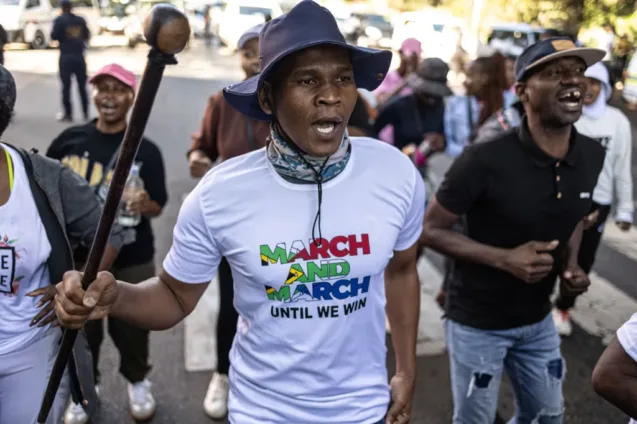
Anti-immigrant groups have been stopping people outside hospitals and schools demanding to see their identity papers.
During a march by one such group in the capital, Pretoria, last week, foreign-owned businesses were urged to close in case of violence.
At the time, one Nigerian man told BBC Pidgin: "It is not okay because we are blacks, we are brothers... everybody comes here just to survive."
A security guard, who was unable to go to work because of the protest, told the BBC: "It's not what we expected as fellow Africans."
"It's just making us scared - imagine if we're scared in our own African continent - what if we go to Europe?" he asked.
Last month, Ghana summoned South Africa's top envoy after a video was widely shared showing a Ghanaian man being challenged to prove he had the correct immigration papers.
Anti-immigrant sentiment rose earlier this year after reports that the head of the Nigerian community in the port city of KuGompo (formerly East London) had been installed in a traditional role that can be translated as "king". Some South Africans in the local area saw this as an attempt to grab political power.
South Africa is home to about 2.4 million migrants, just less than 4% of the population, according to official figures. However, many more are thought to be in the country unofficially.
Most come from neighbouring countries such as Lesotho, Zimbabwe and Mozambique, which have a history of providing migrant labour to their wealthy neighbour. A smaller number come from Nigeria.
Latest Stories
-
Ignite Social Enterprise to partner Ghanaian watch manufacturer to boost global sales
12 minutes -
Ignite Social Enterprise does not condone fraud – Bola Ray
15 minutes -
Mr Eazi returns with new single ‘Comfort’ featuring Moliy
37 minutes -
‘I don’t hire coaches, and I don’t fire coaches’ – Kofi Adams
1 hour -
NPP sets up 31 voting centres to speed up national executive elections
2 hours -
Demolition begins at La Pleasure Beach amid heavy security presence
2 hours -
Senyocue: Highlife will dominate global music in the next 20 years
2 hours -
Innovare Limited congratulates Ahantaman Community Bank PLC on ISO/IEC 27001:2022 certification urges others to follow suit
2 hours -
Today’s front pages: Friday, October 2, 2026
3 hours -
GPL 2026/27: Opoku Agyemang strike sends Kotoko third after Karela win
3 hours -
Government ‘cannot dissolve’ GFA – Sports Minister Kofi Adams
3 hours -
“Every genre we create doesn’t have to be ‘Afro’ something” – M.anifest
4 hours -
GMTF marks first anniversary with lifesaving equipment for 9 more hospitals
4 hours -
NAIMOS seizes 10 excavators in raid on illegal mining sites blocking River Pra’s flow
4 hours -
Pump prices may stay unchanged as government holds TOR, Sentuo prices
4 hours