

Audio By Carbonatix
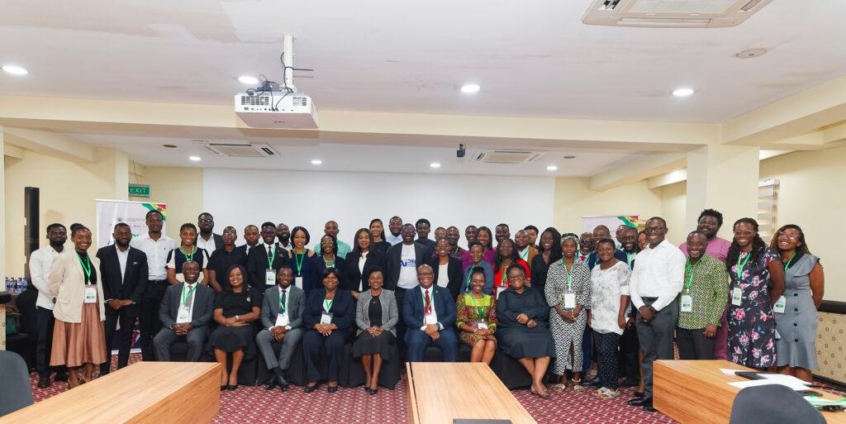
Stakeholders from Ghana’s judiciary convened at the AH Hotel in East Legon for the third National AI Strategy Consultation, a pivotal step toward finalising Ghana’s blueprint for artificial intelligence (AI) development.
The event underscored the need for an inclusive, ethical, and legally sound AI framework to drive innovation while safeguarding national interests.
Science and Innovation Officer at the British High Commission in Accra, Johnson Masagotin Singir emphasised AI’s global impact, stating that it “transforms how we live and work.”
He highlighted AI’s potential to revolutionise key sectors, including agriculture, health, education, and public service delivery, particularly in the justice system.
“Imagine judges and lawyers using AI to swiftly analyse vast legal documents, saving time and enhancing efficiency,” he said. He reaffirmed the UK’s commitment to supporting Ghana’s AI journey, stressing that AI must be open, responsible, secure, and resilient to be genuinely transformative. He also emphasised the importance of locally driven AI solutions tailored to Ghana’s unique needs.
Mr. Elikplim Sabblah, Technical Advisor for GIZ Ghana’s FAIR Forward initiative, outlined efforts to strengthen Ghana’s digital innovation ecosystem. FAIR Forward supports AI policy development in Africa and Asia, having contributed to Rwanda’s AI Policy and Kenya’s National AI Strategy.

He stressed the judiciary’s critical role in addressing AI ethics, human rights, and legal risks: “Engaging legal experts ensures AI aligns with Ghana’s data protection, privacy, and intellectual property laws. Their insights will help mitigate risks in AI deployment.”
Dickson Tweneboa-Koduah, Esq., representing the Ghana Bar Association, described the AI strategy as a bold step to ensure Ghana shapes its technological future rather than being shaped by it. While acknowledging AI’s benefits, he warned of risks like bias, misinformation (“hallucinations”), and threats to justice if left unchecked.
“AI must not roll out unregulated. We need constitutional fidelity, democratic oversight, and investment in local datasets,” he asserted, pledging the Bar Association’s support in shaping AI legislation and public education.

Dr. Arnold Karvaapuo, representing Hon. Samuel Nartey George, Ghana’s Minister of Communication, Digital Technology and Innovations, reiterated AI’s potential to reduce case backlogs, enhance legal research, and improve judicial efficiency.
“Your expertise is crucial in shaping AI tools that reflect Ghana’s values,” he told judicial stakeholders.
Mr. Darlington Akogo, CEO of MinoHealth AI Labs, said his presentation on AI is to make AI one of the country’s top three focus areas.
He explained what AI and Machine learning are and made a compelling case for AI’s economic potential, estimating a $20 billion boost to Ghana’s GDP by 2030. He called for an AI National Fund of $ 500 million to $ 1 billion and urgent prioritisation of AI development. He cited some AI systems in the legal field and said AI is a multiplier which requires effort.
Prof. Jerry John Kponyo, Principal Investigator of the Responsible AI Lab (RAIL), affirmed that Ghana’s AI strategy remains on track for approval by June 2025. He called for continued stakeholder collaboration to ensure a people-centred strategy that positions Ghana as an AI hub by 2035.
“RAIL recognises the immense importance of a national AI strategy to guide AI activities and their implementation and has worked with all relevant agencies over the past 4 years to ensure the completion of this process”
During discussions, participants raised critical points, including:
- Human oversight for high-risk AI decisions.
- Shortening the AI strategy timeframe from 10 to 5 years due to rapid AI advancements.
- Establishing a Ghana AI Institute instead of just a Responsible AI Office.
- Developing a national data strategy alongside AI policies.
- Addressing infrastructure gaps (energy, internet access).
Prioritising education, gender inclusion(women & children), and regional collaboration.
The consultation highlighted the judiciary’s vital role in shaping a fair, ethical, and innovation-driven AI future.
With strong legal safeguards, infrastructure investments, and multi-sector collaboration, Ghana’s AI strategy aims to harness technology for inclusive growth, justice, and global competitiveness.
Feedback on the draft strategy remains open as Ghana moves closer to finalising its landmark AI policy.
Latest Stories
-
Citizens Platform rejects five-year presidential term, demands legal framework for constitutional reforms
41 seconds -
Over GH¢600m COVID audit gap frightening – PAC Vice Chairman
2 minutes -
Coronation Insurance appoints Bridget Puorideme as acting Head of Sales and Distribution
5 minutes -
Manyhia South MP raises alarm over alleged detention of woman whose whereabouts are unknown
6 minutes -
Police officer charged with murder over death of 20-year-old law student
9 minutes -
GRA to roll out Fiscal and Accounting devices in Q4 to improve VAT compliance
10 minutes -
PAC to demand answers on COVID GH¢624m fumigation gap from Audit Service – Davis Ansah Opoku
13 minutes -
NDC youth organiser aspirant calls for stronger grassroots mobilisation ahead of 2028
18 minutes -
6 out of 10 businesses not complying with tax obligations – GRA
28 minutes -
Chamber of Cocoa Marketers warns Cocobod’s GH¢4bn debt could disrupt cocoa purchases in new season
32 minutes -
Gov’t to unveil 1.5GW renewable energy pipeline to cut power costs for industries
34 minutes -
Bullet TV, Atinka journalists allegedly assaulted while covering Laboma Beach demolition
34 minutes -
COVID-19 fumigation gap raises questions about Auditor-General’s work – Senanu
44 minutes -
How TRAFFITECH-GH will detect traffic offences, issue fines and penalise defaulters
45 minutes -
Mahama cuts sod for Sentuo Group’s Airport Garden City project, over 3,000 jobs anticipated
49 minutes