

Audio By Carbonatix
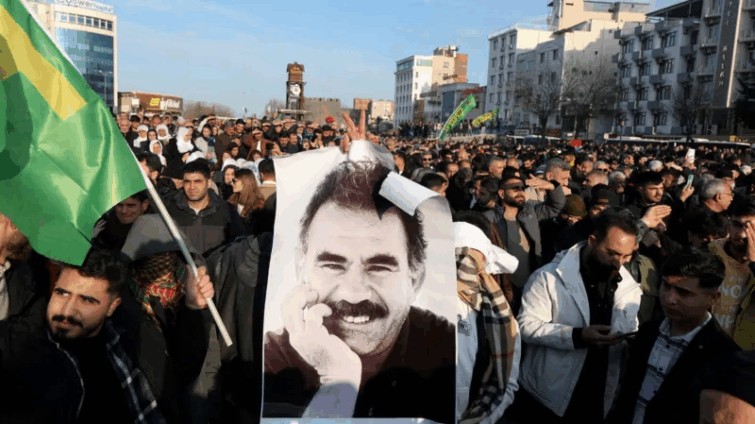
Outlawed Kurdish group the PKK, which has waged a 40-year insurgency against Turkey, has announced it is laying down its arms and disbanding.
The move followed a call in February by the group's jailed leader, Abdullah Ocalan, for the organisation to disband. The group is banned as a terrorist group in Turkey, the EU, UK and US.
The PKK insurgency initially aimed to create an independent homeland for Kurds, who account for about 20% of Turkey's population. But it has since moved away from its separatist goals, focusing instead on more autonomy and greater Kurdish rights.
More than 40,000 people have been killed during the conflict.
In February, Ocalan, 76, called on his movement to lay down its arms and dissolve itself. The PKK leader has been in solitary confinement in prison on an island in the Sea of Marmara, south-west of Istanbul, since 1999.
Ocalan wrote a letter from prison in February saying "there is no alternative to democracy in the pursuit and realisation of a political system. Democratic consensus is the fundamental way."
It is unclear what Ocalan and his supporters will get in return for disbanding but there is speculation that he may be paroled.
Kurdish politicians will be hoping for a new political dialogue, and a pathway towards greater Kurdish rights.
Both sides had reasons to do a deal now.
The PKK has been hit hard by the Turkish military in recent years, and regional changes have made it harder for them and their affiliates to operate in Iraq and Syria.
President Erdogan needs the support of pro Kurdish political parties if he is to be able to run again in Turkey's next presidential election, due in 2028.
The decision to disband was an important step towards a "terror-free Turkey", and the process would be monitored by state institutions, a spokesperson for President Tayyip Erdogan's AK Party said, according to Reuters news agency.
Winthrop Rodgers, from the international affairs think tank Chatham House, said it would take "a major democratic transition by Turkey" to accommodate demands from Kurdish political parties.
There has been "some goodwill" from some Turkish leaders in recent months, Rodgers said, which allowed the PKK disbandment to play out.
He added: "But whether that extends to the major changes needed to ensure full Kurdish participation in politics and society is far less clear.
"In a lot of ways, the ball is in Turkey's court."
Latest Stories
-
KNUST study warns sea defence is shifting coastal threats to unprotected communities
17 minutes -
Telecel Ghana launches 2026 SME Month to drive business growth
30 minutes -
Manya Krobo Community Bank records 131% rise in profit after tax
34 minutes -
Even John Hyde must die – A tribute to my friend
50 minutes -
‘Online pastor’ romance scam cases to be consolidated and moved to High Court
50 minutes -
NPP Ayawaso West Wuogon constituency election dispute escalates into court battle
52 minutes -
What happened to E-Blocks, Agenda 111 should not happen to 24-hour markets – Ahmed Ibrahim urges Ayariga
52 minutes -
VAST Ghana calls for nationwide action against cigarette-shaped lollipop
55 minutes -
Germany says Russia behind Leipzig airport drone attack
57 minutes -
NSMQ 2026: Achimota School shatters Adisadel’s semi-final hopes to book penultimate spot
57 minutes -
NSMQ 2026: Bright SHS makes history as first private school to reach semi-finals
1 hour -
Ghana, Serbia explore deeper cooperation in agriculture
1 hour -
Woman killed in Times Square stabbing, suspect shot dead by police
1 hour -
Hull City sign Ansah and close on Norton-Cuffy
1 hour -
Barcelona complete signing of Arsenal striker Jesus
1 hour