

Audio By Carbonatix
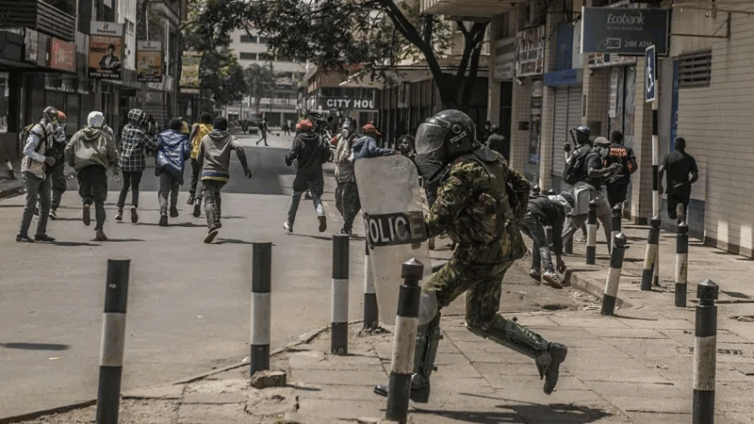
Kenya's security forces have blocked all major roads leading into central Nairobi, ahead of planned nationwide protests.
Much of the city centre is deserted, with businesses shut and a heavy security presence on the streets. Some schools have advised students to stay at home.
Hundreds of early-morning commuters and overnight travellers were stranded at checkpoints, some located more than 10km (six miles) from the city centre, with only a few vehicles allowed through.
Within the city, roads leading to key government sites - including the president's official residence, State House, and the Kenyan parliament - are barricaded with razor wire.
In a statement issued on Sunday evening, the police said it was their constitutional duty to protect lives and property while maintaining public order.
Monday's protests, dubbed Saba Saba (Swahili for 7 July), commemorate the 1990s struggle for multiparty democracy in Kenya.
These demonstrations have been organised primarily by young people, demanding good governance, greater accountability, and justice for victims of police brutality. They are the latest in a wave of anti-government protests that began last year.
On 25 June, at least 19 people were killed and thousands of businesses looted and destroyed in a day of nationwide protests that were being held in honour of those killed in last year's anti-tax protests.
Recent demonstrations have turned violent, with reports of infiltration by "goons", who are accused of looting and attacking protesters. Civil society groups allege collusion between these groups and the police - accusations the police have strongly denied.
On Sunday, an armed gang attacked the headquarters of a human rights NGO in Nairobi. The Kenya Human Rights Commission had been hosting a press conference organised by women calling for an end to state violence ahead of Monday's protests.
This year marks the 35th anniversary of the original Saba Saba protests - a key moment that helped usher in multiparty democracy in Kenya after years of one-party rule.
The response by the then government under President Daniel arap Moi was brutal. Many protesters - including veteran politician Raila Odinga, who is now working with the government, were arrested and tortured, while at least 20 people were reportedly killed.
Since then, Saba Saba has come to symbolise civic resistance and the fight for democratic freedom in Kenya.
Latest Stories
-
ECG procurement is where politicians ‘milk’ the company – Ben Boakye
21 minutes -
IPPs’ contractual arrangements partly to blame for energy sector problems – TUC’s Dr Otoo
33 minutes -
Like Benzema & as good as Haaland – Alonso on Joao Pedro
36 minutes -
Check out 41 countries Ghanaians can visit without a visa on ordinary passports
46 minutes -
I disrupted pre-season travel plans to prepare players – Arteta
53 minutes -
Richarlison’s move to Vasco da Gama falls through
1 hour -
Dictator meme shows lack of human awareness – Mbappe
1 hour -
2030 World Cup: Moroccan official told to stop making 2030 final promise
1 hour -
Mourinho compares Mbappe and Vini Jr to fruit trees after boos
1 hour -
Lewis Hall signs new contract with Newcastle until 2031
2 hours -
Signed instead of Rashford, Gordon is proving worth at Barca
2 hours -
2026 BECE automatic placement rate hits 87.3%, highest since 2021 — CSSPS data
2 hours -
Ghanaian youngster Zayan Omar joins Spanish side Málaga
2 hours -
New Man City signings desperate to win – Dias
2 hours -
Morocco rejects Spain blame game, warns against using kingdom as political pawn
2 hours