


Audio By Carbonatix
President John Dramani Mahama has moved to assuage public concerns over the management of natural resource wealth, assuring that oil revenues earmarked for his ambitious $10 billion "Big Push" infrastructure initiative will be disbursed and managed with utmost efficiency and transparency.
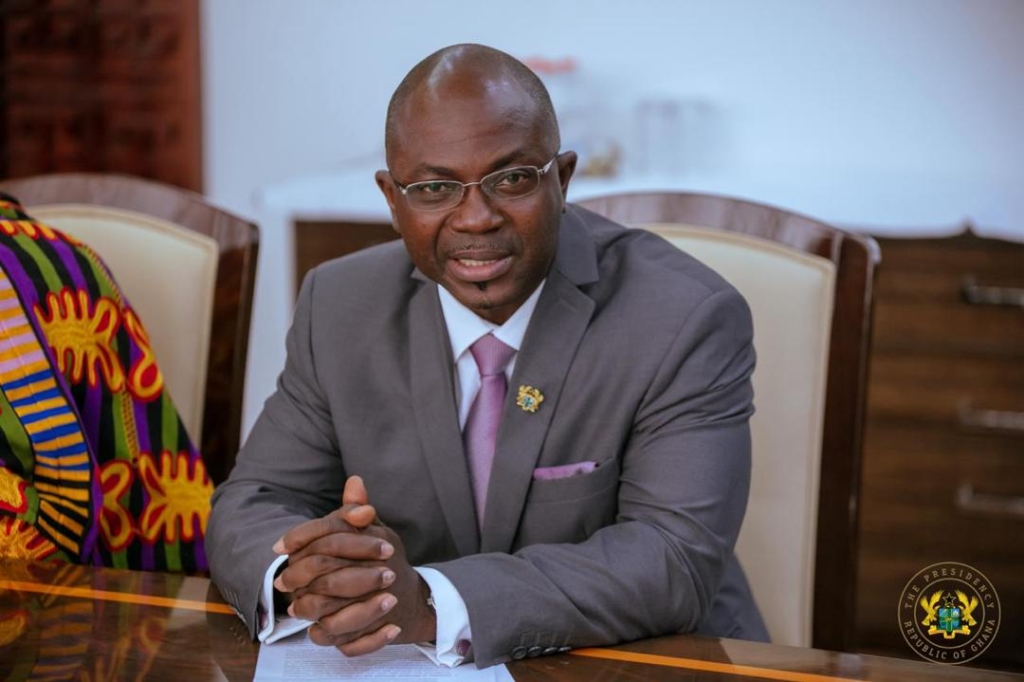
The President's pledge came during a crucial courtesy call from members of the Public Interest and Accountability Committee (PIAC), the independent body mandated to oversee the management and utilization of Ghana's petroleum revenues.
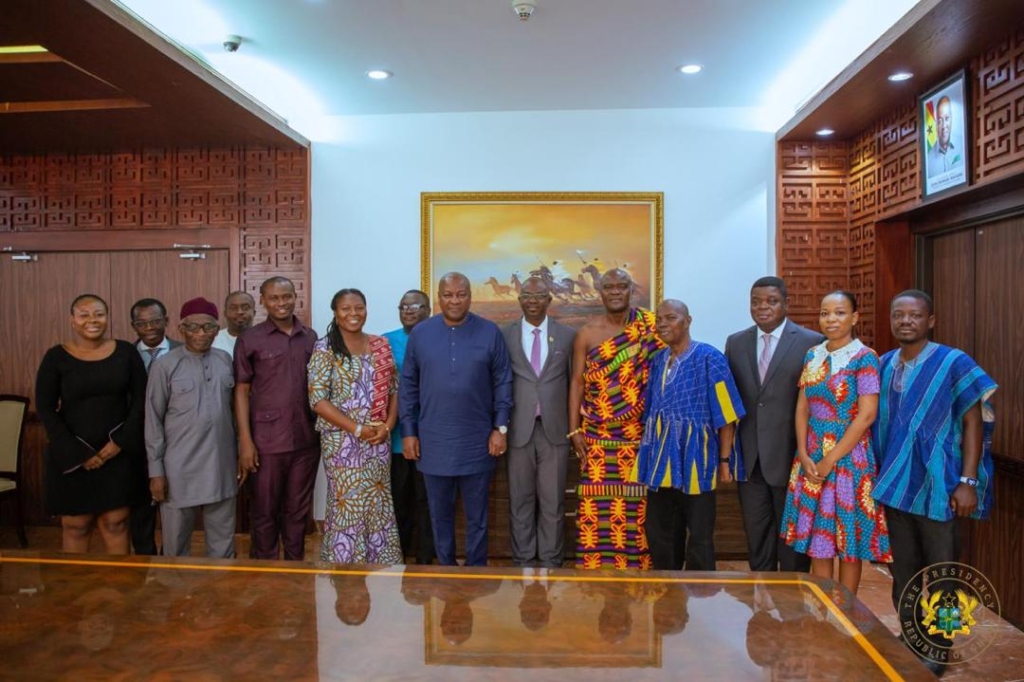
The meeting, held at the Jubilee House, saw PIAC Chairman, Mr. Constantine K.M. Kudzedzi, lead his committee in congratulating President Mahama on his recent election victory and engaging in a focused discussion on the responsible management of the nation's oil revenues – a topic that has historically drawn significant public scrutiny.
President Mahama unveiled the scope of his government's flagship "Big Push" agenda, outlining a plan to inject $2 billion annually over the next five years into transformative infrastructure projects across the country.
"These projects will target key sectors, including roads, major bridges, education, and health infrastructure, as well as areas vital for boosting productivity in the agriculture sector," the President detailed.
Specifically within agriculture, the "Big Push" aims to fund critical interventions such as irrigation schemes, the construction of farmer service centers, and robust support for agribusiness development.
This focus on agriculture aligns with national efforts to enhance food security and reduce the over $2 billion spent annually on food imports.
Crucially, the President reiterated that the primary funding sources for this significant policy initiative would be Ghana's petroleum revenues and mineral royalties.
Since commercial oil production began in 2010, Ghana has accumulated over $10 billion in petroleum revenues by the end of 2023, with a substantial portion allocated through the Annual Budget Funding Amount (ABFA) for development projects.
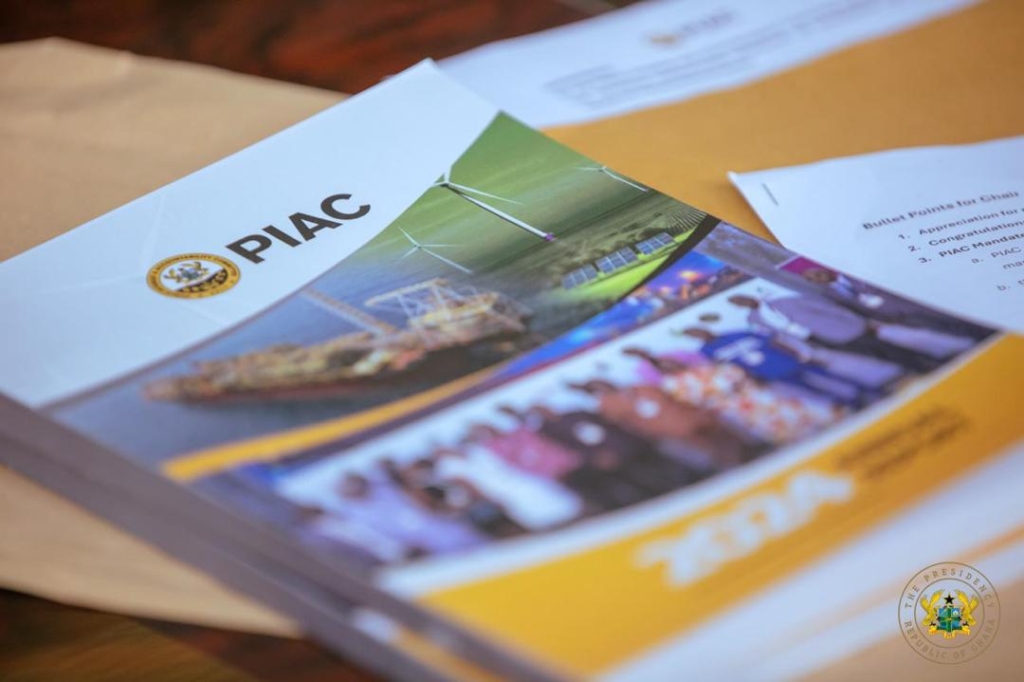
However, the utilization of these funds has often been a point of contention, with PIAC itself frequently flagging discrepancies and misapplications in its annual reports, advocating for stricter adherence to the Petroleum Revenue Management Act (PRMA) of 2011 (Act 815).
It is against this backdrop that President Mahama's emphasis on transparency becomes particularly pertinent. He notably commended PIAC for its "vital role" and praised the Committee’s efforts in monitoring and ensuring accountability in the utilization of Ghana’s petroleum revenues. "
He highlighted PIAC as a commendable model for other countries seeking effective oversight mechanisms," the statement noted, acknowledging the Committee's crucial watchdog function.
Ghana's infrastructure deficit remains substantial. Despite progress in recent years, approximately 60% of Ghana's 78,000-kilometer road network remains unpaved, impacting economic activity and access to markets.
Similarly, challenges persist in education, with many schools still lacking adequate infrastructure, particularly in rural areas, and the health sector continues to grapple with facility shortages and equipment gaps. The "Big Push" aims to directly address these long-standing developmental bottlenecks.
By leveraging petroleum revenue and mineral royalties – Ghana being Africa's leading gold producer, contributing significant royalties to state coffers – the "Big Push" represents a concerted effort to translate natural resource wealth into tangible national development.
President Mahama's assurance to PIAC is intended to build confidence that these revenues will be managed prudently, avoiding past pitfalls and ensuring that the ambitious infrastructure drive delivers its promised impact for all Ghanaians.
The success of the "Big Push" will not only depend on the scale of investment but equally on the transparency and accountability mechanisms governing the use of these critical funds.
Latest Stories
-
Gov’t to spend GH¢2.8bn on secondary infrastructure as Education Minister pushes foundational learning
4 minutes -
This is the result of GoldBod activities – Akim Oda MP demand answers over $1.7bn loss
17 minutes -
Photos: Sammy Gyamfi at Government Accountability Series
31 minutes -
Ghana School of Law SRC President-elect petitions authorities for relief for referred students
39 minutes -
Promasidor Ghana unveils Onga Mix Tomato Paste, names Diana Hamilton brand ambassador
52 minutes -
‘You admitted the loss, now account for the GH¢22bn’ – Minority hits back at GoldBod CEO
53 minutes -
Gender Department raises alarm over rising teenage pregnancy in Ashanti Region
1 hour -
GJA@77: Ethical journalism foundation for strong, resilient democracies – UK Deputy High Commissioner
1 hour -
Police pickup carrying suspects crashes into trotro on KNUST campus, several injured
1 hour -
AMA Mayor apologises to alleged extortion victim, orders refund
1 hour -
Akwatia MP defends GoldBod, says IMF report didn’t blame it for losses
1 hour -
Building community after a merger: What UniMAC’s concord initiative can teach higher education
1 hour -
UN security official meets GoldBod CEO Sammy Gyamfi
1 hour -
Two detained after French influencer’s scorched body found in vineyard
1 hour -
ORAL has been reduced to a tool for political convenience – Kwesi Botchway Jnr
1 hour