

Audio By Carbonatix
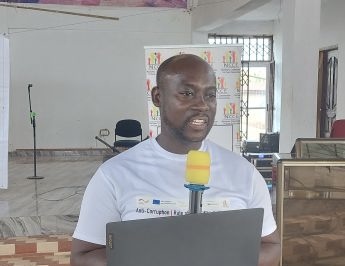
The Wenchi Municipal Director of the National Commission for Civic Education (NCCE), in the Bono Region, Francis Cudjoe, says weak oversight responsibilities at the various public institutions is undermining the nation's fight against corruption.
He stressed the need for the nation to strengthen its accountability systems, saying “the current accountability measures are fragile and must therefore be reinforced to safeguard the integrity of institutions in ensuring that public resources benefit the people”.
Speaking in an interview with the Ghana News Agency (GNA) on the sidelines of a civic education campaign held at Wenchi, Mr Cudjoe said that “individuals lacking moral convictions are more likely to exploit the loopholes in the system for their selfish gains”.
The NCCE organised the campaign in line with its implementation of the “Civic engagement on the rule of law and the fight against corruption project”, being supported by the Deutsche Gesellschaft für Internationale Zusammenarbeit (GIZ) GmbH and co-funded by the European Union (EU).
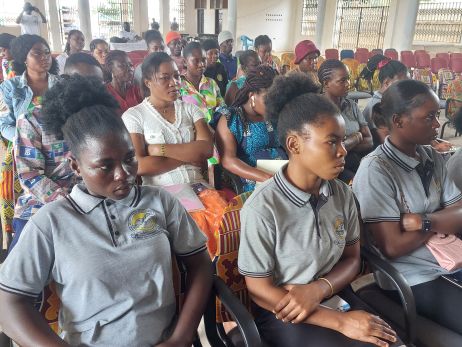
It is a two-year project targeting out-of-school people between the ages of 18 and 35 years and aimed at equipping them with practical knowledge of civic rights, legal protections within the Whistleblower Act and their respective roles in promoting transparency and accountability.
Mr Cudjoe said, “When people act without integrity, they manipulate procedures for personal gains, however the institutions work better when we have principled public officials upholding the process as intended”.
He said the NCCE remained committed to creating awareness and promoting core values like honesty, patriotism, and civic responsibility which were essential to building a better nation, warning that without those values, corruption would persist.
The Registrar of the Wenchi Municipal Commission of the Human Rights and Administrative Justice (CHRAJ), Emmanuel Kwame Sei, called for civic responsibility, citing Article 41(f) of Ghana’s 1992 Constitution which obliged citizens to protect public property and expose misuse of public funds.
He said the Whistleblower Act 2006 (Act 720) was enacted to protect informants who reported the misconduct of public officials, saying despite the Act people reporting alleged corrupt officials remained poor.
Mr Sei said averagely the Wenchi CHRAJ office received about 190 complaints annually, mostly human rights abuses and violations and called on the people to remain watchful and report issues of conflicts of interest and other forms of misconduct to the commission.
Latest Stories
-
Free rabies vaccination campaign targets 25,000 dogs and cats nationwide
4 minutes -
Ghana needs a system to track child protection funding to where risks are highest – ARK Foundation
6 minutes -
AI may not replace humans, but workers who fail to adapt could lose jobs – ALX Enterprise
8 minutes -
Gideon Boako: Bretton Woods is fraying; Ghana has built a bridge
10 minutes -
Ghana’s child protection system failing children despite laws and policies – ARK Foundation
10 minutes -
‘Future of Black Queens is safe for many years’ – Black Princesses boss Charles Sampson
14 minutes -
Titus Glover questions Laboma Beach demolition, proposes widening Kpeshie Lagoon outlet
14 minutes -
NACOC arrests 3 suspects linked to Dutch fugitive drug kingpin
35 minutes -
Workers must complement AI skills with professional expertise to remain relevant – ALX Enterprise
47 minutes -
Companies that delay AI adoption risk losing market opportunities – ALX Enterprise
1 hour -
‘The future is bright’ – Gyan backs Black Princesses squad after U-20 World Cup exit
1 hour -
We should treat AI as an opportunity rather than a threat – ALX Enterprise
1 hour -
Malta and Ghana set sights on practical AI partnership
1 hour -
2026 U-20 WWC: ‘Not all wishes come true’ – Gyan inspires Black Princesses after elimination
1 hour -
‘I am not a magician’ – Zdravko Logarušić on Nations FC exit from Africa
2 hours