

Audio By Carbonatix
In my earlier speech in October 2023, titled “Redefining Leadership and Governance in a Nation in Crisis”, I cautioned against two threats that could derail our democratic governance amidst the wind of military takeovers sweeping across our sub-region. The first was the danger of speculation that was rife that the incumbent government might subvert the will of the people in the 2024 elections.
Thankfully, this did not occur. The second threat—which will pose a clear and present danger—was that if the newly elected government of the NDC, led by President John Mahama, adopts the same business-as-usual approach to leadership, the expectations of the people would once again be dashed, and that would be the trigger point.
Already, Ghanaians are yearning for swift and decisive responses to two major issues: the Operation Recover All Loots (ORAL) initiative, which embodies the demand for accountability and the recovery of misappropriated state resources, and the galamsey menace, which continues to ravage farmlands, poison rivers, and destroy livelihoods. These are not just policy matters; they are existential challenges and moral tests. Failure to act decisively on these two fronts risks igniting the very frustrations that could undermine our democracy and erode confidence in leadership.
A Nation at a Crossroads
President Mahama’s recent remarks at the Democracy Dialogue highlighted a troubling reality: the growing preference among sections of the youth for military rule. This sentiment, born of disillusionment, is a stark reminder that democracy is failing to deliver its promised dividends. Instead of enjoying safety, dignity, and opportunity, citizens are confronted daily with:
• hate, division, and exclusion,
• impunity and corruption,
• economic mismanagement and environmental destruction,
• high rate of youth unemployment, deepening poverty, and inequality,
• social unrest and political tension.
This is not the democracy that Ghanaians fought for. It is precisely why a national reset must move beyond rhetoric to the substance of leadership with moral purpose.
Key Elements of Resetting the Nation
1. Moral Leadership
Ghana’s governance crisis is, at its root, a moral crisis. Resetting the nation requires a return to integrity in public life. Religious leaders, traditional rulers, academia, and the media must act as the nation’s moral compass, holding leaders accountable and safeguarding the values of honesty, justice, and fairness.
2. Ethical Governance
Ethics must be the foundation of political and corporate life. Through stronger laws, ethics education, and enforcement mechanisms, transparency and accountability can be restored. Without ethical governance, trust in institutions collapses, and public cynicism takes hold.
3. Collaborative Approach
The renewal of Ghana cannot be left to government alone. Citizens, civil society, and institutions must share responsibility in redefining the social contract. A culture of collaboration and collective problem-solving is essential for sustainable and inclusive development.
4. Visionary Leadership
Resetting the nation demands leaders who see beyond electoral cycles. President John Dramani Mahama’s flagship initiatives—such as the 24-Hour Economy, the Youth Service & Skills Corps, and the Women’s Economic Resilience Initiative—reflect visionary thinking that creates opportunity, empowers citizens, and lays a strong foundation for national growth.
5. Overcoming Identity Politics
Identity politics—whether ethnic, partisan, or regional—has weakened national unity and undermined progress. Leaders must transcend division and prioritise the national interest, uniting Ghanaians around shared values and collective aspirations.
ORAL and Galamsey: The Trigger Point
The credibility of the reset agenda will be judged first by the government’s ability to act decisively on ORAL and galamsey.
• Operation Recover All Loots (ORAL): Citizens demand justice and restitution. Recovering looted resources is not just about plugging financial gaps; it is about restoring public trust and demonstrating that accountability is more than a slogan. ORAL is the litmus test of whether leadership is willing to confront entrenched interests and act in the national interest.
• The Galamsey Menace: Illegal mining has become both an environmental tragedy and a governance scandal. Fertile farmlands are destroyed, rivers are poisoned, and rural communities are abandoned. If leadership cannot summon the will to end galamsey, then talk of renewal and sustainable development will ring hollow.
Together, ORAL and galamsey stand as the trigger point: either the starting point of a genuine reset or the spark of disillusionment that could threaten Ghana’s democratic stability.
The End of Politics as Usual
Across the globe, politics as usual is proving incapable of addressing existential challenges. Nations are struggling with unemployment and cost-of-living crises, climate change, violent conflicts, pandemics, and resource scarcity. Thinkers increasingly argue for new forms of leadership rooted in collaboration, wisdom-sharing, and collective survival. Ghana must align itself with this global shift.
Resetting the nation, therefore, means breaking free from transactional, divisive, and self-serving politicking, and embracing transformational leadership—one that is self-sacrificing, inclusive, and visionary.
Conclusion: Leadership with Moral Purpose
The reset agenda is not about politics; it is about leadership with moral purpose. Ghana needs leaders who are willing to sacrifice self-interest for the common good, unite rather than divide, and act boldly in the face of entrenched corruption and destructive practices.
By pursuing moral leadership, embedding ethical governance, and taking decisive action on ORAL and galamsey, Ghana can move from a politics of frustration to a leadership of transformation. That is the end of politicking and the beginning of leadership. It is the path to restoring dignity, prosperity, and justice for all Ghanaians.
*******
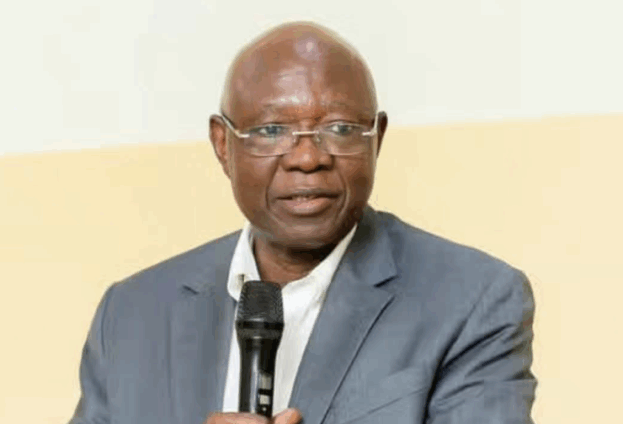
The writer, Akwasi Opong-Fosu, is a governance and public policy analyst and a former Minister of State.
Latest Stories
-
Nkrumah Never Dies: Celebrating the visionary who awakened a continent
44 minutes -
Hassan Ayariga calls for Ghanaian ownership in strategic investment deals
45 minutes -
Black Stars: Thomas-Asante receives late call-up for September-October games
2 hours -
NPP Techiman South demands immediate release of detained Nurse Salomey Awiti Baffoe
2 hours -
‘Let’s stop the politics’ — Dafeamekpor calls for united fight against drug trafficking
2 hours -
Chief Justice Baffoe-Bonnie leads new 11-member Council for Legal Education and Training Board
2 hours -
Decades of silent diplomacy: Baba Issifu Kamara at 70
2 hours -
30% transport fare hike still on the table, talks resume Tuesday – GPRTU
2 hours -
KATH marks 70th anniversary with inter-directorate games
3 hours -
Black Stars: Godwin Attram replaces Desmond Ofei as assistant coach
3 hours -
Nkrumah never dies
4 hours -
CalBank ‘Abakade Promo’ rewards 5 customers with GH¢25,000 in first draw
4 hours -
Ecobank, Joy Business to host financial dialogue on green finance and inclusive agri-growth in Ghana
4 hours -
Nkrumah’s vision remains relevant to Ghana’s future — Mahama
4 hours -
Hitz FM announces Beach Rave for October 31
4 hours