

Audio By Carbonatix
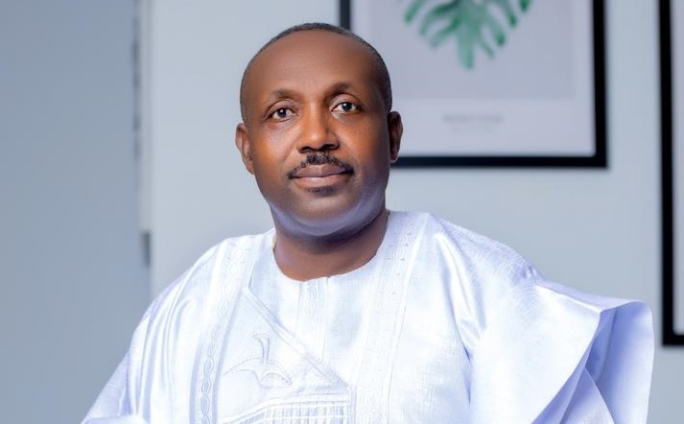
For decades, John Boadu has occupied some of the most important organisational positions within Ghana’s New Patriotic Party (NPP), building a political career that has taken him from the grassroots to the highest levels of the party’s national structure.
His journey is one marked not only by positions held, but also by the experiences gathered along the way experiences that have exposed him to electoral victories, political setbacks, internal party challenges and the continuous task of keeping a large political organisation together.
As the NPP considers its future leadership, Boadu’s record places him among the experienced figures whose understanding of the party’s organisational structure is difficult to overlook.
His political experience stretches across several layers of the party. He has served as Youth Organiser, National Organiser, Acting General Secretary and General Secretary, among other responsibilities. These positions have given him exposure to the practical workings of the party, from grassroots mobilisation and polling-station structures to constituency, regional and national administration.
For a political organisation whose electoral fortunes depend heavily on the effectiveness of its grassroots structures, such experience can be significant.
Boadu’s years in party organisation have also brought him into contact with polling-station executives, constituency leaders, regional executives, national officers, party activists and government officials during periods when the NPP has been in power.
That broad network of relationships is an important part of his political profile.
Politics, however, is not simply about occupying an office. It is also about relationships, communication and the ability to work with people who may not always share the same opinions.
Throughout his political career, Boadu has operated within an environment where disagreements, competing ambitions and differing interpretations of the party’s direction are inevitable. His experience therefore includes navigating the human side of political organisation, engaging individuals and groups across different levels of the party.
That experience has been particularly relevant to his interactions with the grassroots.
The polling station executive remains one of the most important actors in Ghanaian electoral politics. It is at the polling-station level that national political strategies are ultimately translated into votes. Candidates may make speeches at national rallies, but the actual work of mobilising voters, monitoring polling stations and maintaining contact with communities is largely carried out by people at the grassroots.
Boadu’s long association with party organisation has therefore provided him with considerable familiarity with this structure.
His relationship with the youth is another feature of his political profile.
Having served as a Youth Organiser, Boadu has had direct experience working with younger party members and understanding their role in political mobilisation. The youth constitute a significant component of every political organisation, but they also represent one of the groups most interested in questions of employment, economic opportunity, political participation and leadership succession.
His experience has consequently placed him in a position to understand the importance of bringing young people into the party’s organisational and decision-making processes rather than treating them merely as campaign foot soldiers.
Perhaps one of the most significant aspects of Boadu’s political journey is that it has not been confined to one particular phase of the NPP’s history.
He has experienced the party in opposition and has also participated in periods when the NPP controlled government. He has therefore witnessed the contrasting demands that come with political power and opposition.
When a party is in government, expectations from its supporters and grassroots members can be enormous. Constituency and polling-station activists expect communication, recognition and responsiveness, while government officials must simultaneously deal with the responsibilities of governance.
In opposition, the priorities change. Organisation, unity, mobilisation and rebuilding become particularly important.
Boadu’s experience across these different political environments has contributed to his understanding of the relationship between the party organisation and government.
Yet his record should also be viewed within the broader history of the NPP. Like every senior political figure, his career has been associated with both achievements and difficult moments. The party has enjoyed major electoral victories during periods in which he held senior organisational responsibilities, but it has also suffered electoral defeats.
Those contrasting experiences can provide valuable lessons.
Victory can create confidence, while defeat can expose organisational weaknesses that may otherwise remain hidden. A leader who has experienced both is inevitably confronted with questions about what worked, what failed and what must change.
As the NPP looks toward the future, these questions are particularly important.
The challenge before the party is not simply to select individuals for positions. It is to determine what kind of organisational leadership is required to strengthen its structures, rebuild confidence, improve communication and reconnect effectively with members at every level.
That conversation inevitably brings attention to individuals with long institutional experience.
John Boadu’s political profile is therefore rooted in several decades of party service, organisational responsibility and relationships across the NPP’s structures.
His experience from the youth wing to national administration, from grassroots mobilisation to senior party leadership, gives him an understanding of the organisation that has been developed over many years.
Ultimately, the assessment of any candidate for national party leadership must go beyond slogans and promises. It requires consideration of experience, organisational competence, temperament, relationships, understanding of the grassroots and the ability to work with different constituencies within the party.
For John Boadu, the record provides a substantial basis for that assessment.
His political journey represents a long chapter in the organisational history of the NPP, a journey shaped by service, responsibility, electoral campaigns, leadership challenges, relationships and lessons from both success and defeat.
As the party debates its next chapter, that experience will remain an important part of the conversation about the leadership and direction of the NPP.
Latest Stories
-
‘We have turned the tide’ – Ato Forson says Ghana is ready to take off
24 seconds -
Police arrest man captured in viral video assaulting wife in Agona Nkwanta
2 minutes -
KATH Mother and Baby Unit construction stalled for 14 months over unpaid contractor arrears
16 minutes -
Government wanted to ‘tilt the balance’ with new EC appointments – Kwakye Ofosu
23 minutes -
Angry Tema Community 25 residents threaten to sleep at GWL over water shortage
36 minutes -
BoG takes financial literacy drive to Techiman, vows to protect depositors
36 minutes -
‘Stop the distractions’ – Akosua Manu demands answers over GH¢49.7m South Africa evacuation cost
37 minutes -
Formula 1 to return to Africa with Rwanda Grand Prix in early 2030s
43 minutes -
Mahama says Ghana is safer today as he commissions 85-bed ward at Police Hospital
48 minutes -
LA 2028: Black Queens face Zambia in final Olympic qualifier
56 minutes -
WAFU Zone B: Black Starlets seal semifinal place with 3-1 win over Benin
1 hour -
Black Queens thrash Mauritius 7-0 to advance 10-0 on aggregate in Olympic Qualifiers
1 hour -
Kaizen as a strategic pathway for micro business scale-up in Ghana
1 hour -
Minister orders suspension of Obuasi SHS headmaster over alleged sexual misconduct following JoyNews investigation
1 hour -
Over 38,000 commercial, 150,000 residential customers unbilled – Ghana Water MD
2 hours