


Audio By Carbonatix
Cataract remains the leading cause of blindness in Ghana, with 165,000 Ghanaians currently blind due to the condition.
This represents more than half of the 250,000 total blind population in the country.
Each year, new cases of blindness caused by cataract amount to 20 per cent of the previous cases.
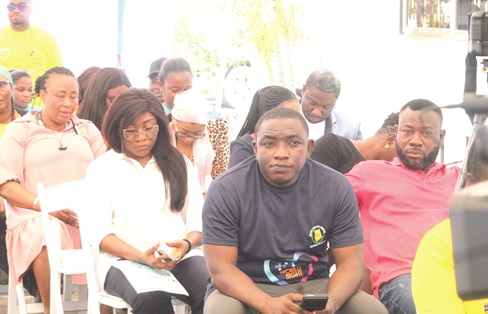
This was revealed by the Head of the National Eye Care Unit of the Ghana Health Service, Dr Hornametor Afake, at the media launch of this year’s World Sight Day in Accra on Friday, October 10.
World Sight Day
World Sight Day is observed annually to raise awareness of blindness and visual impairment, advocate accessible and quality eye care, and mobilise action at all levels.
For Ghana, the day serves as an opportunity to reflect on progress made, confront challenges and renew commitment to ensuring that no Ghanaian is needlessly blind or visually impaired.
It was observed on the theme: “Increasing access to quality eye care in Ghana”.
At least 2.2 billion people worldwide live with vision impairment or blindness, and nearly one billion cases could have been prevented or are yet to be addressed.
In Ghana, a survey conducted in 2015 revealed that 1.07 per cent of the population, representing 360,000 people, had severe visual impairment, while 67.74 per cent of the blind dwell in areas with little or no access to quality eye care services.
Glaucoma
Dr Afake said glaucoma was the second leading cause of blindness in Ghana, with 60,000 people, representing 19.4 per cent, blind as a result of the condition.
Posterior segment diseases, which included diabetes retinopathy and corneal opacities, followed with 12.9 per cent and 11.2 per cent, respectively.
Unfortunately, he said, over the past five years, Ghana had been able to perform less than 30,000 cataract surgeries annually, giving Ghana an average cataract surgical rate (CSR) of about 712 over the past five years and 860 CSR over the past three years.
He said ideally, about 68,000 surgeries needed to be performed each year to effectively clear the existing backlog in three years, but it was unable to do so.
“Currently, our surgical cataract coverage is about 18 per cent. This means that for every 100 cataract patients who need surgery in this country, only 18 per cent of them have received surgery. This calls for urgent action to increase access, especially in the newly created regions,” he added.
He attributed the challenge to inadequate human resources for eye health in Ghana and limited equipment in some regions, especially for subspecialty care, adding that currently, Ghana had 141 ophthalmologists, 570 optometrists, 900 ophthalmic nurses and 800 opticians.
He said even though the figures represented significant growth compared to previous decades, the distribution remained uneven, with rural and underserved regions facing critical shortages.
He pointed out that six regions of the country, namely Western North, Savannah, North East, Upper West, Upper East and Oti, had zero ophthalmologists, highlighting major equity gaps.
Other challenges to access, he mentioned, included financial barriers, low awareness leading to late presentation of conditions, such as glaucoma and diabetic retinopathy, and inadequate funding for eye health programmes.
Eye screening
The Director, Family Health Division of the GHS, Dr Kennedy Britson, urged the public to go for eye screening tests and also avoid using concoctions on their eyes.
“If your eyesight is disturbing you, please seek quick help. Don't try and pick somebody's glasses and try them on.
Your problem may be different,” he advised.
The immediate past president of the Ophthalmological Society of Ghana, Dr Dzifa Ofori-Adjei, urged Ghanaians to be champions of eye health by loving their eyes, getting their eyes tested regularly and encouraging family, colleagues and friends to do the same.
She also called on the government to invest in eye health infrastructure, ensure the equitable distribution of human resources and pass key legislation that supported organ and tissue regulation and quality service delivery.
The Director, Technical Coordination of the Ministry of Health, Dr Hafez Adam Taher, said the ministry remained committed to improving access to quality care services across the country, adding that eye health was a vital component of its broader national health agenda.
Other speakers included the Director-General of the GHS, whose speech was read on his behalf, and the Country Chairman of Global Eye Summit, Dr Boateng Wiafe.
Latest Stories
-
Power restoration fault suspected in Kumasi Central Market fire
1 hour -
The 7-foot giant of Ngleshie Amanfro: Seven-foot Ghanaian Ephraim Saawa dreams of joining the national basketball team
2 hours -
Government promises support for Kumasi Central Market fire victims
2 hours -
Vibes The Movie: Big Ghun’s Ghanaian film earns five nominations at 2026 REFFA
3 hours -
MamaCare CEO warns unresolved conflicts among health workers could undermine maternal and neonatal care
3 hours -
Health professionals urged to translate medical knowledge into practice to save mothers
3 hours -
Conflicts among care providers linked to maternal, neonatal deaths – Expert
5 hours -
GIS marks 10th TIME conference, champions improved teaching practices
5 hours -
BRICS Or Balance? What Ghana’s bid really means
5 hours -
GPRTU wants full TRAFFITECH-GH implementation to start in 2027
6 hours -
Mahama announces plans to import electric wheelchairs for PWDs
6 hours -
KGL U17 Colts 2026: Western beat Prempeh Elite Academy to set up final final with Greater Accra Region
6 hours -
Late Solanke strike salvages 10-man Spurs draw at Man United
6 hours -
Gender Ministry to monitor welfare of Nana Akua Addo’s children amid domestic violence case
6 hours -
Benedict Okyere Yeboah: Ghana’s football problem goes beyond sacking a coach
6 hours