

Audio By Carbonatix
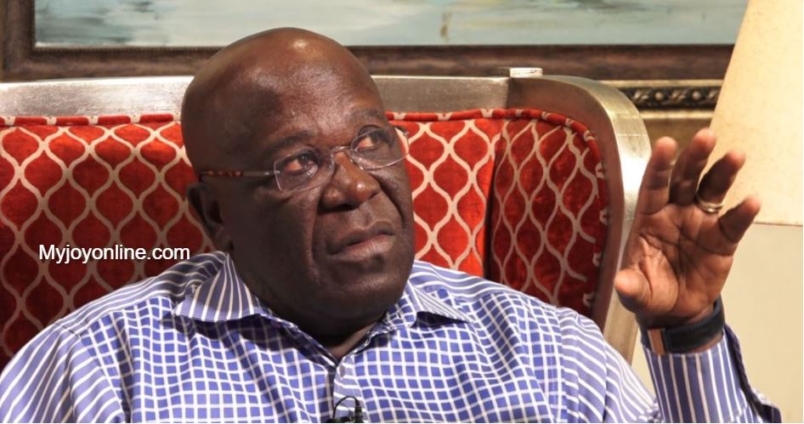
Ghanaian business magnate and Chancellor of the University of Cape Coast, Sir Sam Jonah, has unleashed a critique of the nation's burgeoning high-end property market, arguing that the majority of luxury real estate developments are being funded through "dishonest" and illicit sources.
Speaking in a recent interview on Starr Chat with Bola Ray, the corporate titan cited the proliferation of empty high-rise apartments in Accra's elite neighbourhoods as definitive proof of unchecked illicit financial flows.
Sir Jonah’s comments point to a widespread failure in the financial and legal systems to regulate wealth acquisition, casting a long shadow over Ghana’s rapid infrastructural growth.
The Paradox of Empty Luxury Apartments
Sir Jonah focused his analysis on the paradoxical sight of countless completed, yet unoccupied, luxury apartments in Accra's most expensive neighbourhoods.
He argued that the developers of these properties are clearly not reliant on conventional, audited financing, given the harsh realities of Ghana's banking sector.
“If you walk around my area, Airport Residential, Cantonments or Labone, [look at] all the high-rise buildings going up. I mean, everywhere in the world, developers go to the bank to take loans for those developments.”
The business mogul highlighted that in a functioning, regulated market, the massive financial exposure from bank loans would force developers to immediately seek rental income.
The current situation—where apartments sit vacant for months or even years—suggests the money used to build them is not subject to financial accountability.
“Some of these apartments are all empty. Do you think that if money were collected from banks, banks would not have moved in?”
The lack of action from financial institutions to seize or auction these assets proves they are not tied up in conventional debt instruments.
“What I'm saying is that they are being funded through sources which are not honest.”
Sir Jonah directly challenged the public to verify his observations:
“Go around and ask, ‘Why are apartments Empty’? if you had borrowed money, if you had gone to the bank to borrow money to build, you would ensure that those apartments are fully occupied.”
The Unsuitability of Ghanaian Bank Financing
Providing context from his own experience in large-scale financing, Sir Jonah explained why traditional bank funding would make such luxury projects financially unviable under the current market conditions, thus strengthening his claim of external, illegitimate funding.
He noted that Ghanaian commercial banks do not possess the balance sheet capacity to offer the kind of "patient capital" required for long-term construction projects. Furthermore, the cost of borrowing is prohibitively high.
“Ghanaian banks are not that well, and the balance sheets are not strong enough that they give you patient [capital]. The interest rates are just astronomical. You can hardly make it as a developer.”
While average commercial bank lending rates in Ghana hover between 25% and 35% (a sharp contrast to the single-digit rates in developed nations), constructing multi-million dollar residential units for immediate profit and leaving them idle would be a formula for guaranteed bankruptcy for any developer relying on debt.
Sir Jonah stressed the final piece of evidence: the lack of foreclosure action.
“Banks have not come to, you know, take them over.”
The sheer volume of these dormant assets—worth tens of millions of dollars—suggests a massive inflow of unexplained wealth, potentially linked to corruption, money laundering, or illegal trade, all masquerading as legitimate real estate investment.
His comments highlight what he calls the "uncontrolled, almost insatiable quest for money at all costs" that is warping the nation’s economic and physical landscape.
Latest Stories
-
Israel-bound flight diverted after fight between pilots
3 minutes -
EchoWave earns praise for sound quality at 10th Women in Worship
13 minutes -
Crackdown on South Africa’s unsafe streets ordered by president to keep women safe
24 minutes -
Banks are responding to improved monetary policy conditions – John Awuah
43 minutes -
Judges’ conference forces further adjournment of Salomey Baffoe case to Oct. 5
55 minutes -
Chorkor community joins AC4NCA clean-up to tackle marine and coastal pollution
1 hour -
GRA assures Tullow of collaboration to settle $393m tax liability without disrupting its petroleum operations
1 hour -
South Korea demands apology from Pyongyang for landmine blasts that injured three
1 hour -
Carlos Queiroz not the sort of coach Black Stars need – Nii Lante Vanderpuye
2 hours -
AFCON 2027Q: ‘Our Black Stars team is gone’ – Former Sports Minister
2 hours -
Prof. Prempeh calls for public review of draft constitutional reform bills
3 hours -
AFCON 2027Q: ‘I have never seen a poor performance from Black Stars like against Gambia’ – Nii Lante Vanderpuye
3 hours -
Bawumia backs insurance sector reforms after engagement with IBAG
3 hours -
Nigeria set to launch National Digital Address System 9 years after Ghana showed the way
3 hours -
Policy rate decision takes time to reflect in lower lending rates – BoG
3 hours