

Audio By Carbonatix
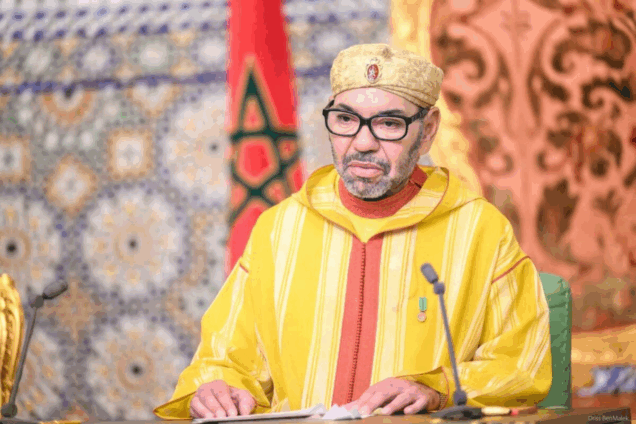
The adoption on Friday of a new United Nations Security Council resolution reaffirming the preeminence of Morocco’s Autonomy Initiative marks a historic milestone in the handling of the Sahara issue. This diplomatic breakthrough reflects the relevance of a Royal policy built on clarity, coherence and legitimacy, and confirms the strategic vision of King Mohammed VI in defending the Kingdom’s supreme interests.
Since he acceded to the Throne in 1999, the King has established a diplomacy grounded in a lucid understanding of global dynamics and regional shifts. Far from being reactive, Morocco’s diplomacy operates within a long-term framework — faithful to the principle of State continuity and to a gradual, steady consolidation of the Kingdom’s position on the world stage.
It is distinguished by its coherence, multidimensional nature, and its anchoring in the values of sovereignty, dialogue and solidarity, principles that make Morocco a trusted and stabilising actor in its regional and international environment.
The African dimension of Morocco’s foreign policy illustrates the continental scope of the King’s vision.
Through over fifty Royal visits to more than thirty African nations, King Mohammed VI has breathed new life into South-South cooperation, based on co-development, human capital and transformative investment.
Morocco’s return to the African Union in 2017, the Atlantic Initiative aiming to connect the continent’s coastal states, and the strategic Nigeria-Morocco gas pipeline project all embody this pan-African approach — positioning the Kingdom as both a continental bridge and a driver of regional integration.
In the Arab world, Morocco’s diplomacy rests on balance and fidelity to just causes.
Under the King’s enlightened leadership, the Kingdom has strengthened strategic partnerships with Gulf nations in a spirit of solidarity and mutual trust.
At the same time, Morocco remains unwaveringly committed to the Palestinian cause — a commitment that His Majesty upholds as Chairman of the Al-Quds Committee through sustained diplomatic and humanitarian initiatives in favour of peace and justice.
The diversification of international partnerships is a cornerstone of Royal diplomacy. While deepening ties with historical partners — the United States, France, Spain and the United Kingdom — Morocco has also expanded cooperation with emerging powers such as China, Russia and India.
This pragmatic and balanced approach consolidates the Kingdom’s universal vocation and reinforces its role as a mediator and key actor in North-South and East-West dialogue. On the multilateral front, Morocco plays an active and constructive role within the United Nations system and its subsidiary bodies.
The Kingdom advocates for a renewed multilateralism grounded in solidarity and sustainable development, and consistently calls for fairer African representation in global decision-making institutions.
With nearly 2,000 Moroccan peacekeepers deployed in various UN missions, Morocco exemplifies responsible diplomacy — committed to peace, stability and the defence of human rights. The recent Security Council vote consolidates Morocco’s standing as a reliable and legitimate international actor, crowning a deliberate and consistent strategy — from the Green March to the irreversible consolidation of national sovereignty over the Sahara.
Today, more than 125 countries support the Moroccan Autonomy Plan, while the number of states recognising the so-called “Rasd” has dropped from 70 in 2000 to 25 in 2025. On the ground, Morocco’s Southern Provinces are experiencing unprecedented economic and social growth, driven by the New Development Model launched by the King to ensure prosperity and full territorial integration.
In contrast, Algeria and the Polisario face a significant diplomatic setback. Their rigid, ideologically driven approach — rooted in outdated Cold War paradigms — stands increasingly isolated in a rapidly changing geopolitical landscape.
Marginalised within international forums, the Algeria-Polisario tandem has seen its credibility erode, while Morocco continues to strengthen its role as a stabilising power and a catalyst for regional development.
Under the leadership of King Mohammed VI, Moroccan diplomacy stands out for its coherence, foresight and effectiveness. It embodies a foreign policy model grounded in legitimacy, consistency and pragmatism — a diplomacy of conviction, faithful to the Kingdom’s principles and resolutely forward-looking.
Through his international stature and personal engagement, His Majesty has positioned Morocco as a central actor in defending just causes, promoting dialogue and building a world founded on peace, cooperation and shared progress.
Latest Stories
-
Government has improved sanitation in one-and-a-half years — Salaga South MP
1 hour -
Nkwanta North Assembly to appear before Parliament over DACF sanitation spending
2 hours -
Mourinho prints out ‘red card’ incidents after Real lose derby
2 hours -
Atletico beat 10-man Real in feisty Madrid derby
2 hours -
Twelve Tribes of Israel Ghana to mark 40 years with anniversary celebration
3 hours -
GPL 2026/27: Hearts held by Bechem as Kotoko, Samartex share spoils
3 hours -
My Story (Kwaku Antwi-Boasiako)
3 hours -
We expect growth rate to re-accelerate in second-half of 2026 – IC Insights
3 hours -
The ungodliness and unrighteousness underlying the National Cathedral mess!
3 hours -
T-bills auction: Government fails to achieve target; yield on 91-day-bill remains unchanged
3 hours -
It’s Ghana’s shame to denigrate Nkrumah when the whole world honours him as African of the Century – Asiedu Nketiah
4 hours -
No other nationalist can compare to Nkrumah – Asiedu Nketiah
4 hours -
Collateral Registry: Foreign banks accounted for GH¢19.9bn of secured credit in quarter 2, 2026
4 hours -
This government should expect scrutiny – Asiedu Nketiah
4 hours -
Two-year-old girl dies in domestic fire at Cantonments
5 hours