

Audio By Carbonatix
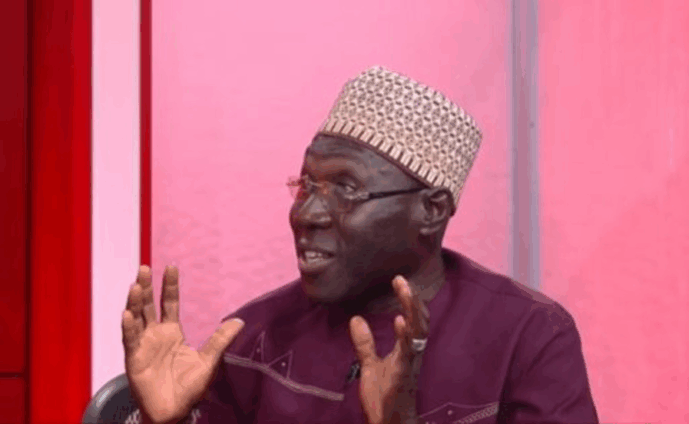
Former Tamale Central MP, Inusah Fuseini, has argued that longstanding educational disparities between religious groups in Ghana are rooted not in choice but in the country’s colonial history.
Speaking on JoyNews’ Newsfile on Saturday, November 28, his comments followed revelations that the Attorney General and Minister for Justice, Dr Dominic Ayine, has formally responded to a lawsuit challenging what plaintiffs describe as discriminatory religious practices at Wesley Girls’ Senior High School (SHS).
The suit, filed on 24th December 2024 by private legal practitioner Shafic Osman, invokes the original jurisdiction of the Supreme Court under Articles 2(1)(b) and 130(1)(a) of the 1992 Constitution.
The action challenges the school’s alleged restrictions on Muslim students, including claims that they are barred from wearing the hijab, fasting during Ramadan, and observing other Islamic practices, actions the plaintiffs argue violate constitutional protections for religious freedom.
The Attorney General’s response has reignited national debate about the relationship between religion, education, and state policy.
Mr Fuseini stressed that educational investments by various religious groups were shaped by historical circumstances, not deliberate neglect by any faith community.
“It was not a matter of choice that some schools decided to invest or some religions decided to invest in education and others did not,” he said. “The education that we have is tied to our colonial legacy.”
He explained that Africa’s history of formal learning predates Western involvement, highlighting Mali’s early scholarly leadership.
“The first university in Africa was built by Muslims in Mali,” he noted, adding that Islamic scholarship reached the Gold Coast long before Western-style education was introduced.
According to the former MP, the apparent imbalance arose from the colonial system’s privileging of Western knowledge while sidelining existing Islamic educational traditions.
“It is by historical arrangement the arrangement of our colonisation where some kinds of knowledge are recognised within our setup or our state,” he explained. “Muslims did not delay in educating their children; they educated their children on the Qur’an and the Hadith. But that is not what is required for a secular country like ours.”
Latest Stories
-
Conflicts among care providers linked to maternal, neonatal deaths – Expert
60 minutes -
GIS marks 10th TIME conference, champions improved teaching practices
1 hour -
BRICS Or Balance? What Ghana’s bid really means
2 hours -
GPRTU wants full TRAFFITECH-GH implementation to start in 2027
2 hours -
Mahama announces plans to import electric wheelchairs for PWDs
2 hours -
KGL U17 Colts 2026: Western beat Prempeh Elite Academy to set up final final with Greater Accra Region
2 hours -
Late Solanke strike salvages 10-man Spurs draw at Man United
2 hours -
Gender Ministry to monitor welfare of Nana Akua Addo’s children amid domestic violence case
3 hours -
Benedict Okyere Yeboah: Ghana’s football problem goes beyond sacking a coach
3 hours -
GPL 2026/27: Darkwah Wiafe’s winner sees All Blacks beat Kotoko
3 hours -
ITF World Tour : Patel Wins Boys’ Singles Final at J100 Accra
3 hours -
Ghana must pursue BRICS partnership if it brings economic benefits – Kpebu
3 hours -
Success and Wright Claims J100 Accra Girls’ Doubles Championship
3 hours -
ITF J100: America’s Wright wins J100 Accra Girls’ Singles Title
3 hours -
Expedition hopes to find aviator Amelia Earhart’s plane on remote island
3 hours