

Audio By Carbonatix
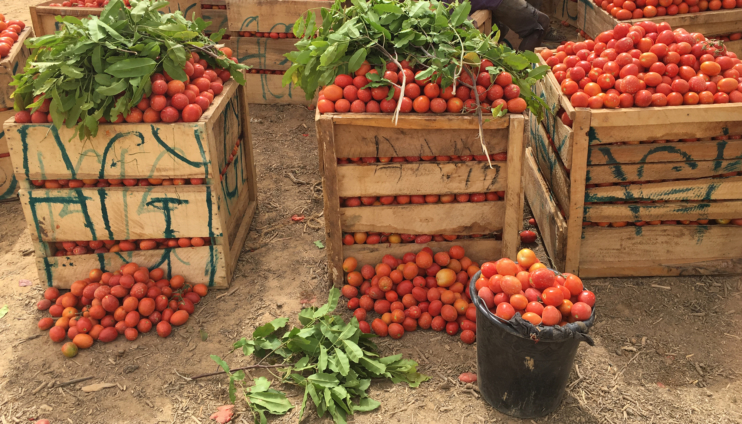
Despite years of investment in greenhouse technology and controlled-environment agriculture, Ghana remains unable to achieve self-sufficiency in tomato production, the Peasant Farmers Association of Ghana (PFAG) has said.
The Executive Director of PFAG, Bismark Owusu Nortey, expressed concern that the country’s greenhouse projects have yet to translate into sustainable, year-round tomato production.
Speaking on Joy FM’s Midday News on Monday, February 23, he said structural bottlenecks continue to limit farmers’ ability to produce consistently and at scale.
“It’s unfortunate that over the years of investment in greenhouse facilities for tomatoes, we are still not able to be self-sufficient in the production of that crop,” he said.
His comments come amid rising tomato prices across several markets in Accra following last week’s deadly attack on Ghanaian traders in neighbouring Burkina Faso. Market women say the disruption in cross-border supply has triggered shortages, pushing prices upward and leaving many consumers struggling to cope with the increasing cost.
Mr. Nortey identified the absence of industrial tomato processing factories as a major gap in the agricultural value chain. Without processing plants to absorb excess produce during peak seasons, farmers lack incentives to invest in continuous production.
“We do not have industrial tomato processing factories where we can create a system for farmers to produce all year round to feed those industries,” he explained.
He noted that the lack of processing capacity not only leads to waste during bumper harvests but also discourages farmers from expanding operations beyond seasonal farming.
According to him, achieving self-sufficiency requires more than greenhouse infrastructure. It demands coordinated investment in irrigation systems, storage facilities, seed development, and agro-processing industries.
He stressed that until these interconnected challenges are addressed, Ghana will continue to depend on imports during lean seasons — a situation that exposes the country to external market shocks and price volatility.
Mr. Nortey called for a comprehensive agricultural strategy that links production, storage, and processing to ensure sustainable growth and food security.
Latest Stories
-
English football’s independent regulator would quit over Man City interference
30 minutes -
Anthropic seeks rehearing of case over Pentagon’s security risk branding
41 minutes -
NDC Deputy National Organizer Aspirant Hamza Umar targets grassroots mobilisation
1 hour -
Partisan appointment cycle will persist without meaningful reforms – Osae-Kwapong
2 hours -
‘This cycle is not going to be broken any soon’ – Osae-Kwapong on partisan appointments
3 hours -
Partisan appointments won’t help restore trust in EC – Osae-Kwapong
3 hours -
Villarreal fight back to beat Napoli and end losing run
3 hours -
Tresoldi nets hat-trick as Club Brugge win Inter thriller
4 hours -
PSG’s Luis Enrique hopes Man City avoid sanctions
4 hours -
Lisandro Martinez issues scathing attack on Man Utd board – has he made things worse?
4 hours -
Saka responds to Arteta’s challenge with ‘huge impact’
4 hours -
Viking hold Bayern in thriller as Kane breaks Messi record
4 hours -
Gordon scores as Barcelona beats Galatasaray
4 hours -
Bumble bought for $1.3bn in ‘bet on the future of humanity’
5 hours -
Imagination Africa, Mentors Chess Academy to host second African Genius Chess Championship at Ghud Park
5 hours