

Audio By Carbonatix
President John Dramani Mahama has delivered his second State of the Nation Address (SONA) since returning to power for his second term.
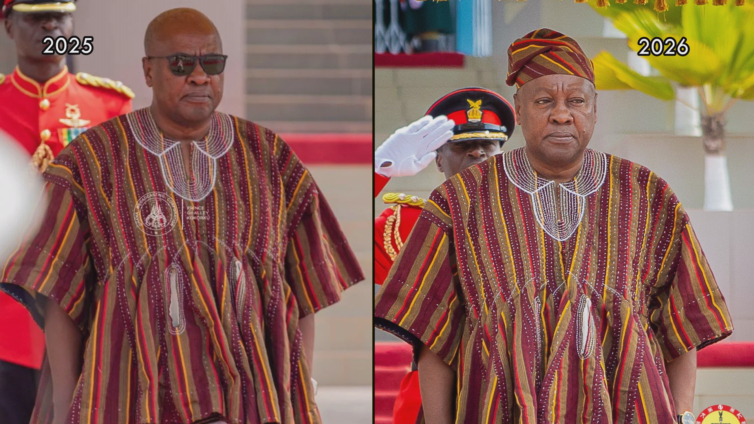
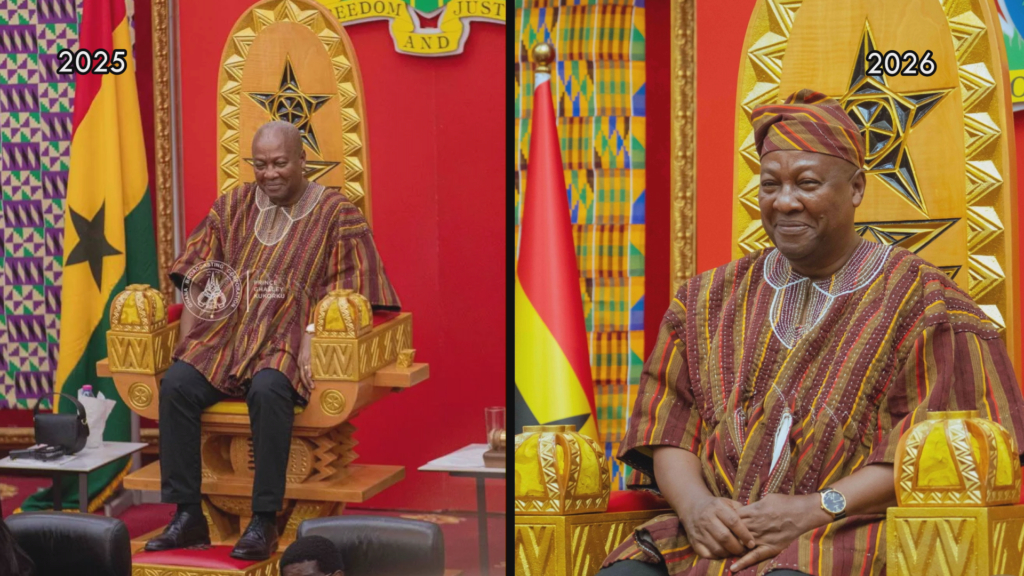
For the second consecutive year, he appeared in the same traditional smock - locally known as fugu or batakari.
The repetition has triggered reflection among political observers and analysts: Is it a coincidence rooted in personal preference, or a deliberate signal reinforcing continuity and his Reset Agenda?
A Chamber Divided in Colour
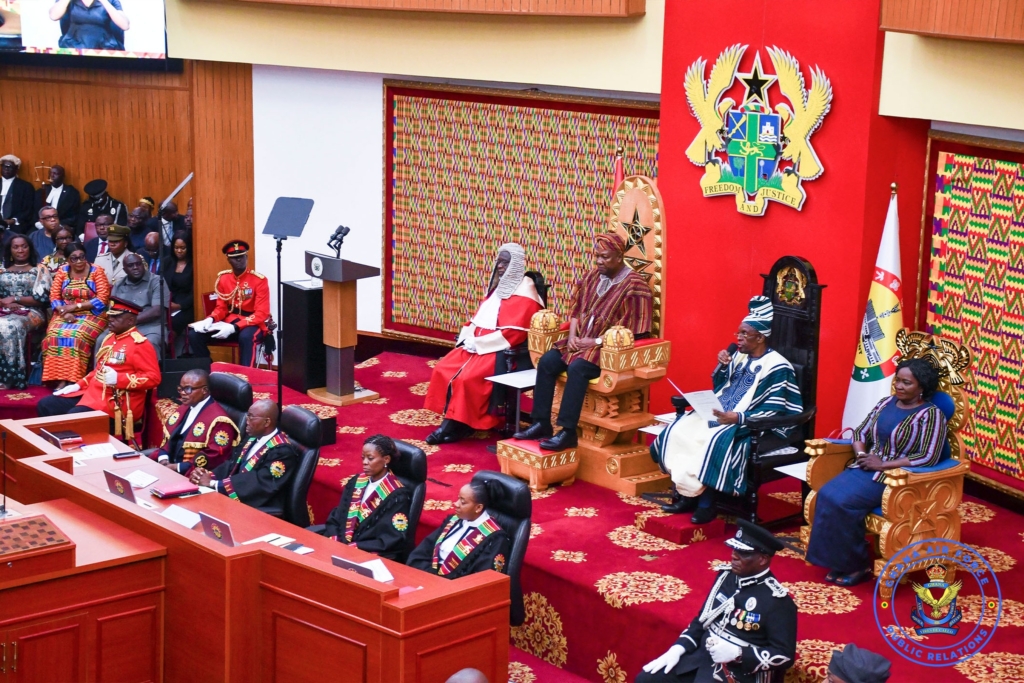
Even before the President delivered his constitutional address under Article 67, the political mood inside Parliament was visibly expressed through colour.
The Minority caucus appeared in black attire - a colour that, in this context, signified protest, grief and dissatisfaction. Their outfits were accompanied by sashes bearing the inscription: “Cocoa Akuafo; Yɛyɛ mmɔbɔ” - translated as "Cocoa farmers are pitiful."
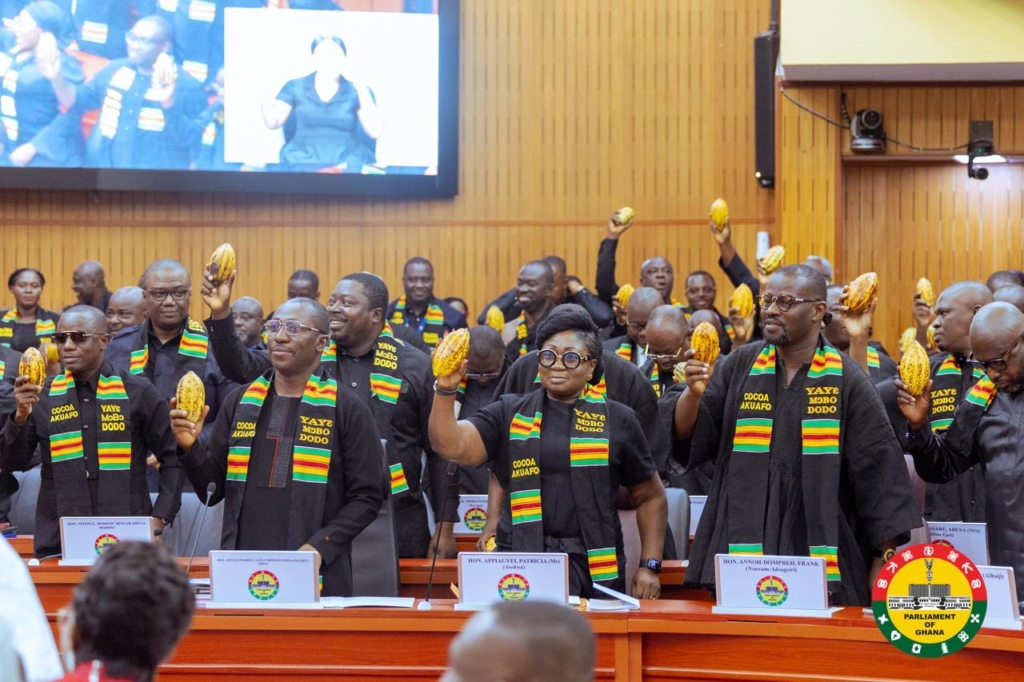
The choice of black visually communicated concern over challenges in the cocoa sector and broader economic grievances.
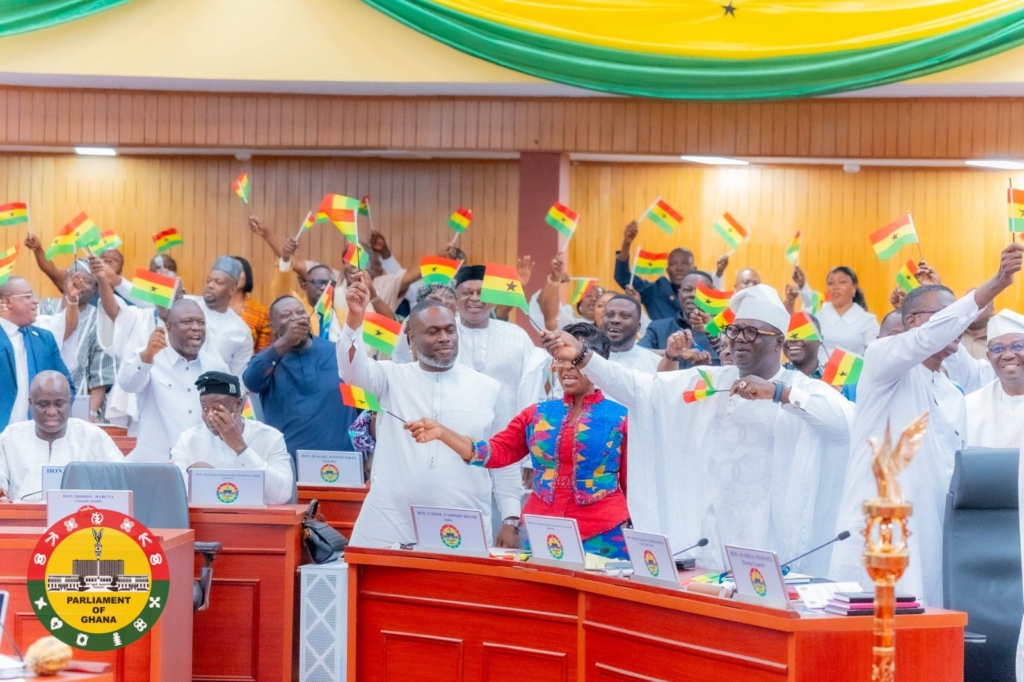
In contrast, the Majority caucus wore white - often associated with unity, optimism and support for the government’s policy direction.
Amid this strong visual symbolism from lawmakers, attention shifted to the President himself when he appeared before the people’s representatives.
The President's Attire
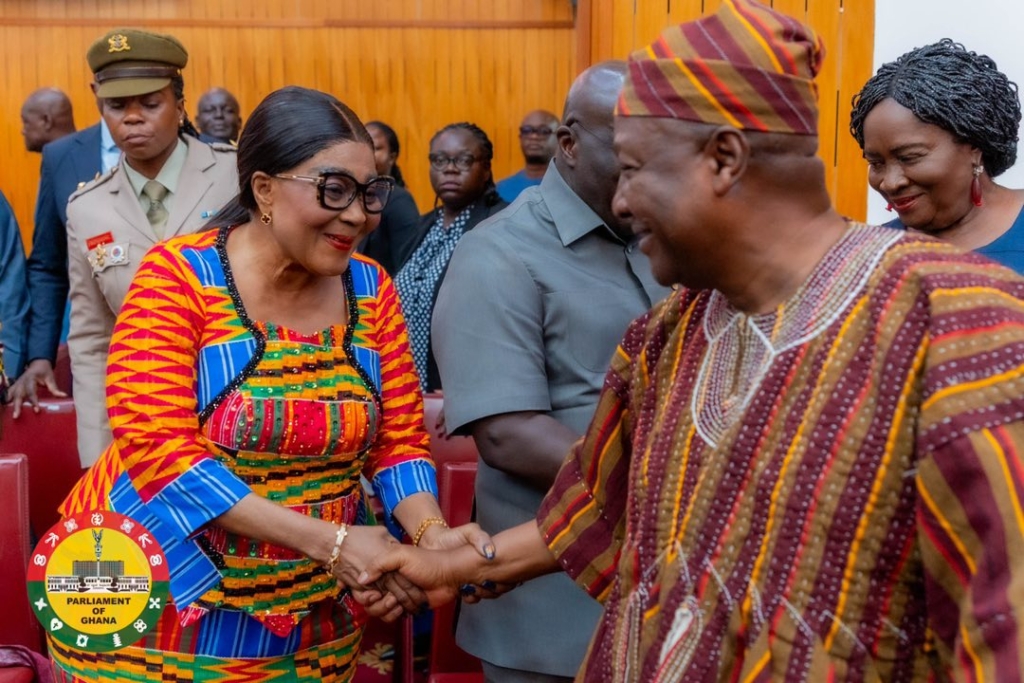
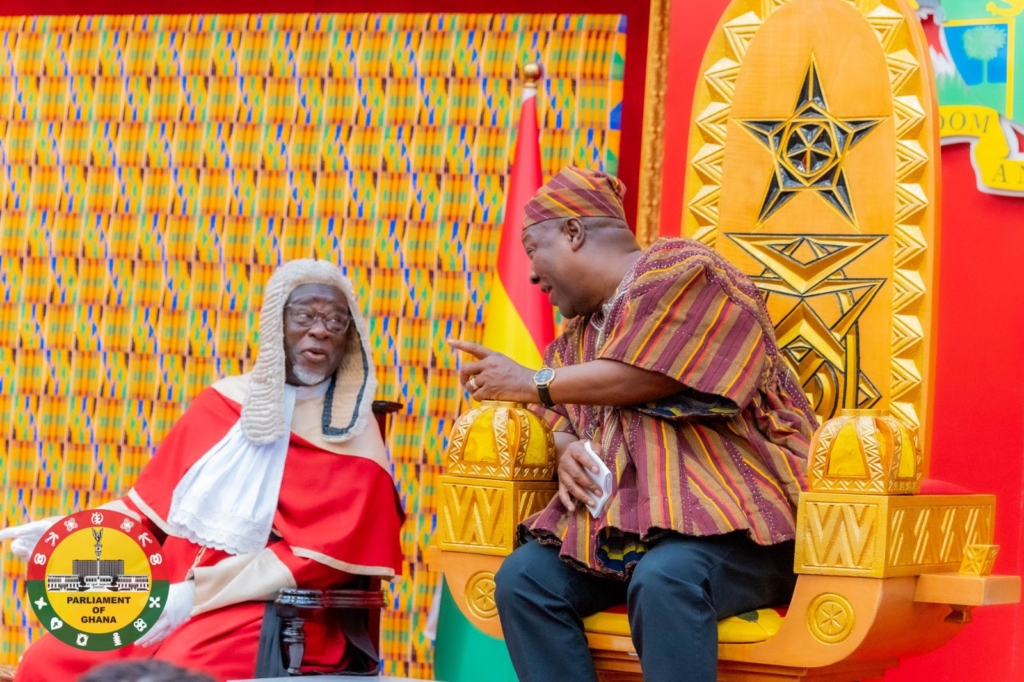
President Mahama appeared in a fugu strikingly similar to the one he wore during his previous State of the Nation Address.
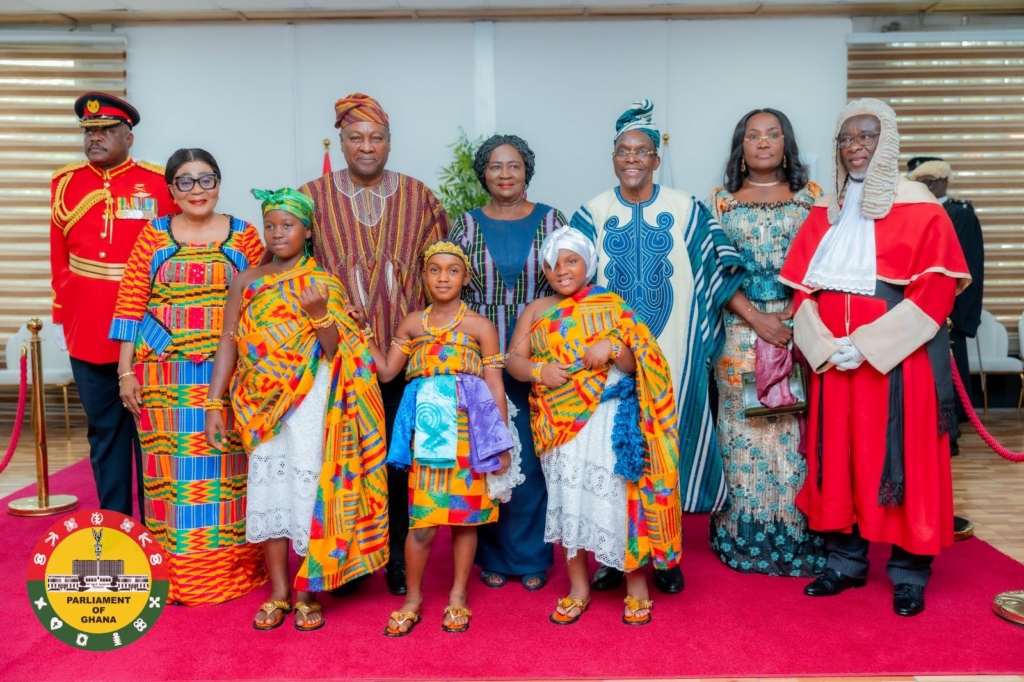
The traditional attire - rooted in Northern Ghanaian heritage - was complemented with a cap, reinforcing the cultural identity embedded in the look.
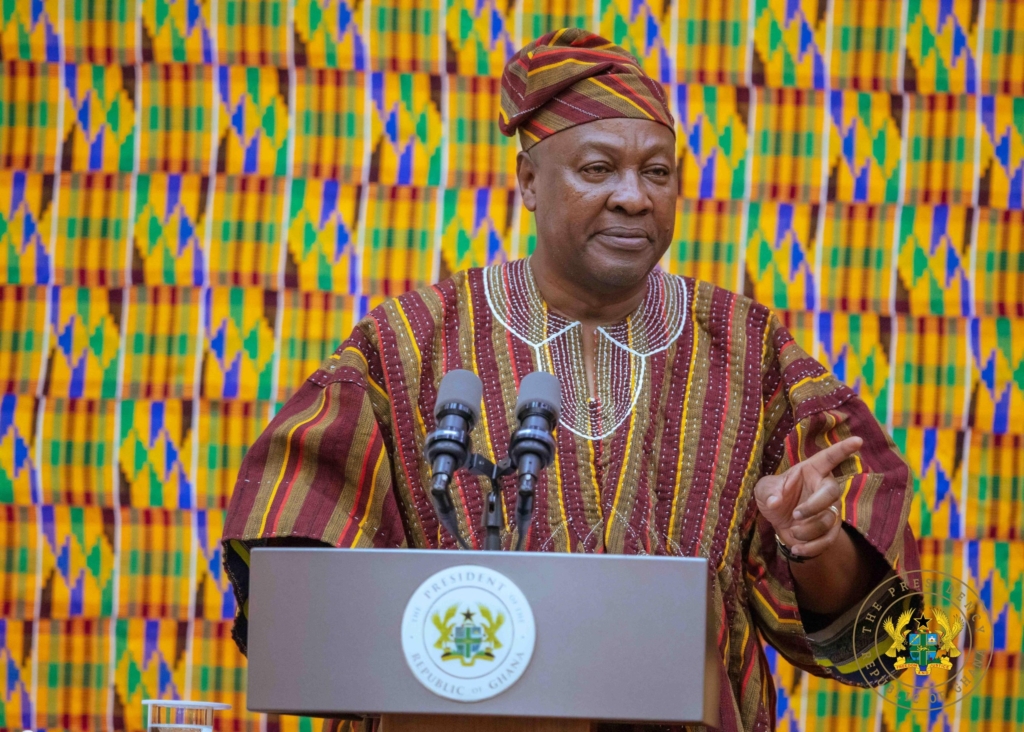
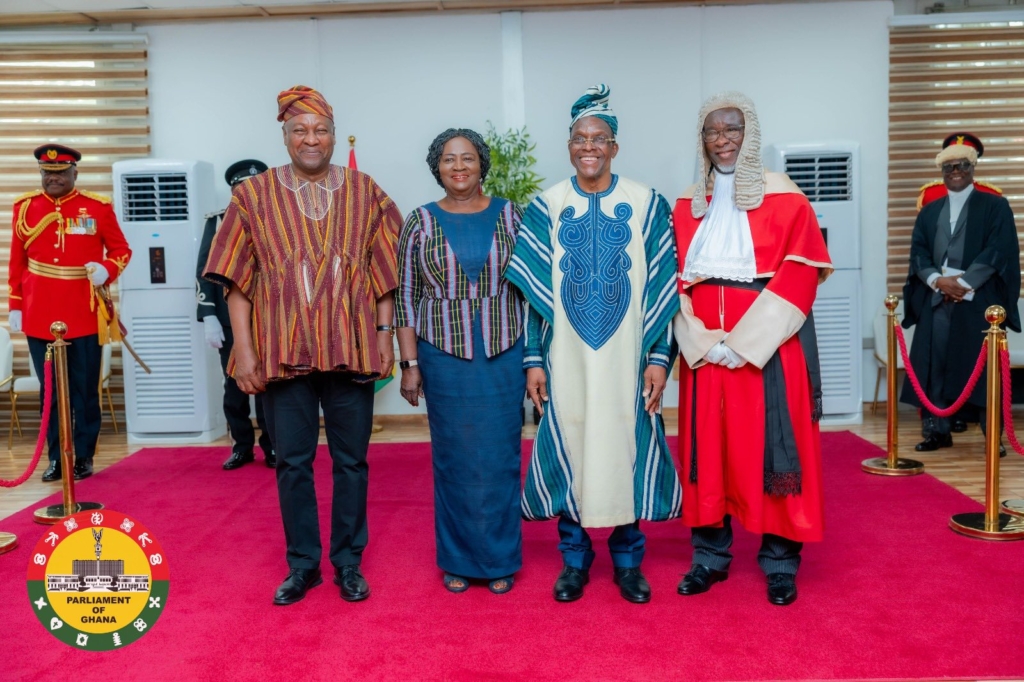
The attire is a traditional handwoven smock (Fugu/Batakari) featuring bold vertical stripes. The dominant colours are deep burgundy and brown, accented with mustard yellow, black, and subtle white dotted details woven into the fabric. The stripes vary in width, creating a layered, textured pattern throughout the garment.
The neckline is decorated with neat white embroidery, forming a structured, rounded design that stands out against the darker tones. The smock has wide, flowing sleeves and a loose, dignified fit.
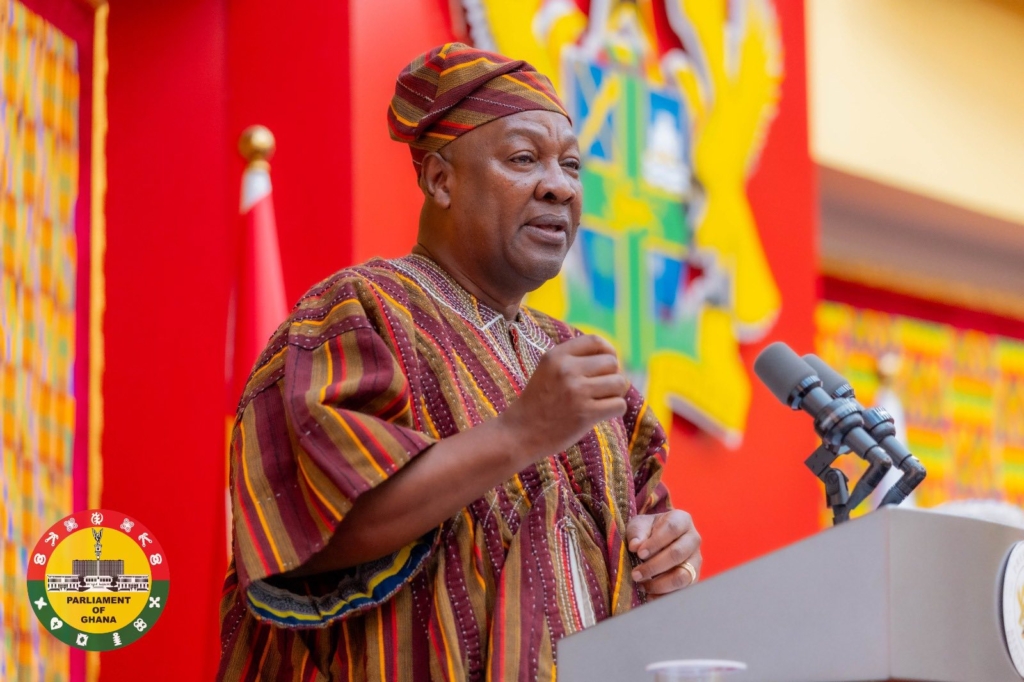
He pairs it with a matching traditional cap made from the same striped fabric. The cap carries the same burgundy, brown, yellow, and black colour scheme and is neatly folded to one side, completing the coordinated traditional look.
President Mahama’s repeated choice immediately became part of the broader visual narrative inside the chamber.
The question naturally followed: What does it mean?
Symbolism Behind the Repetition
Repeating the same smock for consecutive State of the Nation Addresses could symbolise several political messages:
- Continuity - reinforcing that this year’s address builds on the Reset Agenda outlined earlier.
- Consistency of purpose - signalling that policy direction remains steady and ongoing.
- Humility and modest leadership - countering perceptions of excess at a time when economic discipline is central to public debate.
- Cultural pride - elevating Northern Ghanaian identity and traditional craftsmanship on a national stage.
- Economic messaging - aligning with broader narratives that promote local textile production and artisanship.
Expert Perspective: Attire as Political Communication
Historian Kwaku Darko Ankrah explains that in Ghanaian political culture, clothing often carries deliberate meaning.
“The president wearing a new dress or repeating the same dress is to show consistency, continuity, and his ability to continue from where he started last year. What he is also trying to convey to the Ghanaian public is that even if there are some upheavals or certain events that have overtaken him, he is still ready to stay the course as he promised and that he is not prepared to veer off from what he intends to do.”
He described the gesture as a reassurance to the public.
“It is a reassurance of his consistency - that nothing else will distract him and that he is ready to continue the way he intends to captain the ship of the nation into safety, as he promised when he won the elections. He is conveying a message that people should not lose hope, that he is going to continue what he started, and that nothing will force him to depart from his intended agenda.”
The historian also pointed to Parliament’s own symbolism. He explained that clothing serves as visual communication - reflecting emotion, protest, confidence or solidarity. He noted that the Minority’s black attire over concerns in the cocoa sector symbolised sorrow and frustration about farmers’ pricing conditions.
“The Minority wearing black as a visual symbol was to convey a message of doom, sadness, and pain over what has happened to the Ghanaian cocoa farmer.”
In contrast, he said the President’s attire projects stability.
“In the same way, what the president is wearing is meant to assure people of consistency. Irrespective of what the Minority is trying to convey, he is solid, stable, and not going to be deterred by whatever they are doing.”
He added that the repetition signals commitment to delivery: “Wearing that fugu dress is a message to all Ghanaians that he is not ready to renege on the promises he made.”
Beyond domestic politics, the historian said the symbolism also extends internationally.
“The fugu represents Ghana’s self-diplomacy. What we wear can now be used on the economic front to showcase Ghanaian culture internationally and derive economic advantage from it.”
Political Culture and Historical Roots
The historian traced the symbolism of the smock to Ghana’s independence era.
Historically, figures described as “prison graduates” - nationalists who endured political imprisonment during the struggle for independence - wore traditional attire as a statement of resilience and readiness. On the eve of independence, leaders, including Dr Kwame Nkrumah, wore the Northern smock to demonstrate preparedness to assume responsibility for a new nation.
In both Northern and Southern Ghanaian traditions, wearing the fugu can symbolise strength and even readiness for battle - not military war, but economic and developmental struggle.
“The new nation was therefore seen as one poised to wage war for its economic development, beyond merely winning political independence,” Ankrah explained.
He further said that presidential attire often reflects the broader ideas leaders hold about national direction.
Beyond Fashion - Economic Impact
Beyond symbolism, the repeated public display of traditional attire has economic implications.
By consistently wearing the fugu at major national and international platforms, including the United Nations General Assembly and state visits, President Mahama increases visibility for local textiles and craftsmanship. The exposure strengthens demand for locally woven fabrics, supports tailors and weavers, and contributes to job creation across the textile value chain.
Whether interpreted as style, strategy, or symbolism, President Mahama’s repeated choice of the same smock at consecutive State of the Nation Addresses has transformed clothing into political communication. In a Parliament where colours themselves send messages, the President’s attire quietly reinforced themes of continuity, cultural identity and policy direction under his Reset Agenda.
Latest Stories
-
Fernandes hat-trick helps Man Utd recover to beat Ipswich
5 minutes -
Former Agriculture Minister Ibrahim Adam reportedly dead
5 minutes -
“A giant leap forward”: Nasa launches powerful new space telescope to explore mysteries of the Universe
10 minutes -
Eight killed and others missing after ferry capsizes off northern Cyprus
15 minutes -
Education Ministry reschedules 2026/27 CSSPS results to September 4
28 minutes -
Trump says US will refill Strategic Petroleum Reserve using Venezuelan oil
35 minutes -
ASWAJ reaffirms Sheikh Mohammad Kamil as First National Deputy Imam, urges constitutional compliance
39 minutes -
10 arrested in illegal mining operations at Kpali
1 hour -
“Styrofoam ban is first phase of single-use plastics crackdown” – EPA
1 hour -
US Treasury’s Bessent faces G20 diplomacy test amid tariffs, Iran war, bond turmoil
1 hour -
One dead, several injured as fire ravages parts of Abotaose Market
1 hour -
Accra ranks among world’s top 20 cities for nightlife in 2026
3 hours -
Police arrest two suspects over murder of Yidani chief and son
3 hours -
How Albert Bondah, Fredima, Socrate Safo, Counselor Lutterodt engineered Dan Kwaku Yeboah’s comedy show
3 hours -
Yidani chief’s murder: Police arrest two suspects following intelligence tip-off
3 hours