

Audio By Carbonatix
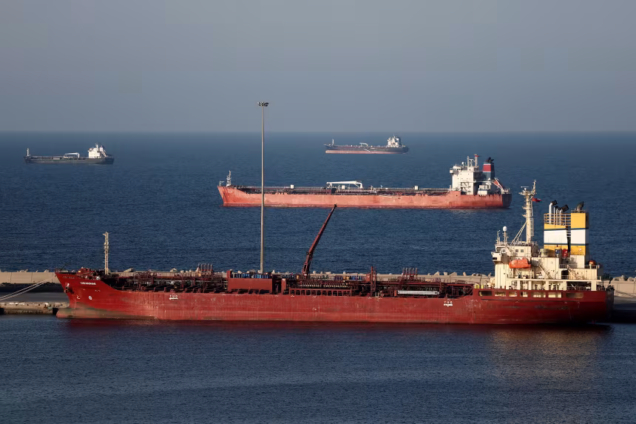
Iran has begun laying mines in the Strait of Hormuz, the world’s most important energy chokepoint that carries about one-fifth of all crude oil, according to two people familiar with US intelligence reporting on the issue.
The mining is not extensive yet, with a few dozen having been laid in recent days, the sources said. But Iran still retains upward of 80% to 90% of its small boats and mine layers, one of the sources said, so its forces could feasibly lay hundreds of mines in the waterway.
Iran’s Islamic Revolutionary Guard Corps, which now effectively controls the strait along with Iran’s traditional navy, has the capability to deploy a “gauntlet” of dispersed mine-laying craft, explosive-laden boats and shore-based missile batteries, CNN has reported.
The IRGC previously warned that any ship passing through the strait would be attacked, and the channel has effectively been closed since the start of the war. The state of the strait has been described to CNN as a “death valley” given the risks involved in transiting.
US officials said today that the US Navy had not escorted any vessels through the strait, though President Donald Trump said Monday that his administration was looking at options to do so.
President Donald Trump said in a post on Truth Social on Tuesday that “if Iran has put out any mines in the Hormuz Strait, and we have no reports of them doing so, we want them removed, IMMEDIATELY!”
He added that “if for any reason mines were placed, and they are not removed forthwith, the Military consequences to Iran will be at a level never seen before. If, on the other hand, they remove what may have been placed, it will be a giant step in the right direction!”
Trump also said during a Monday press conference that “the Strait of Hormuz is going to remain safe. We have a lot of Navy ships there. We have the best equipment in the world inspecting for mines.”
Nearly 15 million barrels per day (bpd) of crude production, plus another 4.5 million bpd of refined fuels, are now effectively stranded in the Gulf, CNN has reported, and producers like Iraq and Kuwait have no alternative to shipping oil through Hormuz. The G7 group of large economies have hinted they could move to release more oil to try to offset the shortages.
Uncertainty surrounding the ability to move oil through the waterway appeared to be causing severe volatility on the crude oil market on Tuesday, with the price per barrel fluctuating between more than $90 and less than $80 in a series of peaks and valleys.
Latest Stories
-
Today’s front pages: Friday, August 21, 2026
15 minutes -
Power outages could drive up cost of digital services — NITA
17 minutes -
Only 16% of Ghana health facilities meet basic sanitation standard — WHO / UNICEF
24 minutes -
Competence has no age; let’s stop punishing new businesses
40 minutes -
JoyNews Republic Bank Habitat Fair 2026 opens today at Achimota Mall
43 minutes -
What Is Wrong With Us: The roads that keep counting our dead
47 minutes -
MTN condemns recent xenophobic attacks on Ghanaians in South Africa
51 minutes -
Philip Nai: What happens at your front desk can make or break your brand
1 hour -
Ghana’s mining deaths fall sharply, but Chamber insists ‘three deaths are too many’
2 hours -
Tatale Sanguli officials destroy expired food products, warn traders
3 hours -
Police arrest two watchmen over alleged defilement of 14-year-old student
3 hours -
The woman behind General Mosquito: Could Ghana be meeting its next First Lady?
3 hours -
Court remands man over alleged Labone bank robbery attempt
3 hours -
Supreme Court to rule on injunction application on legal vacation today
3 hours -
Tamale Metropolitan Assembly distributes 10,000 bags of fertiliser to farmers
3 hours