

Audio By Carbonatix
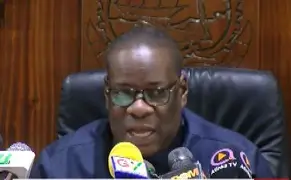
Mr John Kapi, Director of Public Affairs at WAEC, says recent reports on student performance reveal worrying gaps in candidates’ understanding of key subjects, calling for greater attention to teaching methods and exam preparation.
Speaking on JoyNews, Mr Kapi noted that while some issues raised are consistent with previous reports such as minor spelling or terminology errors, there is growing concern over candidates’ ability to apply knowledge in examinations.
“The report shows areas where we expect students to demonstrate understanding, and that’s beginning to spring up as a challenge that needs more attention from teachers,” he said on Friday, March 27.
His comments come as the Minister expressed concern over the ongoing deficits in Mathematics and Science education, stressing that these subjects remain a key priority for the Government.
On the issue of incomplete syllabi, he explained, “It’s not entirely surprising.
Looking at the academic calendars we’ve worked with in previous years, some institutions had to devise means of keeping candidates for longer hours to complete the syllabi.
While we haven’t received any formal complaints from examiners or schools, these gaps are coming to light in the latest report.”
When asked whether the responsibility lies with candidates or teachers, Mr Kapi said direct classroom observation had not been possible. “I haven’t had the opportunity to monitor teaching in the classrooms, so it’s difficult to comment directly on the teachers,” he admitted.
However, he emphasised that candidates’ performance in exam halls highlights clear gaps. “Based on the syllabi, students should have been taught certain topics, and when tested, they are expected to demonstrate proficiency.
When that is not forthcoming, it indicates that students either need to improve their study patterns or require better guidance on how to approach examination questions,” he said.
“We will continue to lean on the examination results to guide interventions, because that is where we deliberately deal with candidates. Addressing these gaps requires a combined effort improving study habits, teaching strategies, and exam techniques" he added.
Mr Kapi concluded that stakeholders, including teachers and students, must work together to ensure the gaps in knowledge do not persist in future assessments.
Latest Stories
-
Lekzy DeComic to feature four generations of comedians on upcoming show
20 minutes -
FAW chief questions Infantino’s Fifa reform claims
48 minutes -
La Liga chief dismisses Real’s ref conspiracy claims
49 minutes -
GMA rejects claims its vessel monitoring system is ineffective
1 hour -
I was close to joining Liverpool in 2016 – Mbappe
1 hour -
Ministry of Sports and Recreation holds national validation workshop on National Sports Policy Draft
1 hour -
‘Do you want me to be happy with this poor performance?’ – Bono East Minister fumes over Kintampo market project with less than 1% work done
1 hour -
London screening honours Nkrumah and 103 years of Ghana cinema
1 hour -
Founder’s Day: Is Nkrumah’s glory fading? – Nkrumah’s iconic fountain at Circle runs dry
1 hour -
GHS calls for stronger systems to ensure safe care for NCD patients
1 hour -
Kufuor calls for Africa’s resources and youthful population to be transformed into opportunities
1 hour -
Mahama administration not clamping down on free speech – Shamima Muslim
2 hours -
Ghana TVET Service, UNESCO, KPMG, Microsoft to train 100,000 facilitators in AI
2 hours -
Kejetia traders demand controls as shop owners resell spaces at inflated prices
2 hours -
Fix Ghana Maritime Authority surveillance system instead of ‘threatening’ NPP – Dennis Aboagye tells NDC
2 hours