

Audio By Carbonatix
The Jospong Group of Companies (JGC) has entered into a strategic partnership with Belgian clean energy technology firm VYNCKE to jointly promote scalable waste-to-energy solutions across Africa.
The alliance aims to accelerate sustainable energy transition, modern waste management, and green industrialisation on the continent.
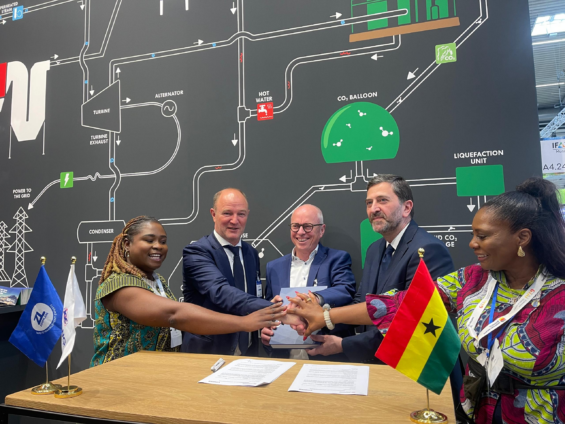
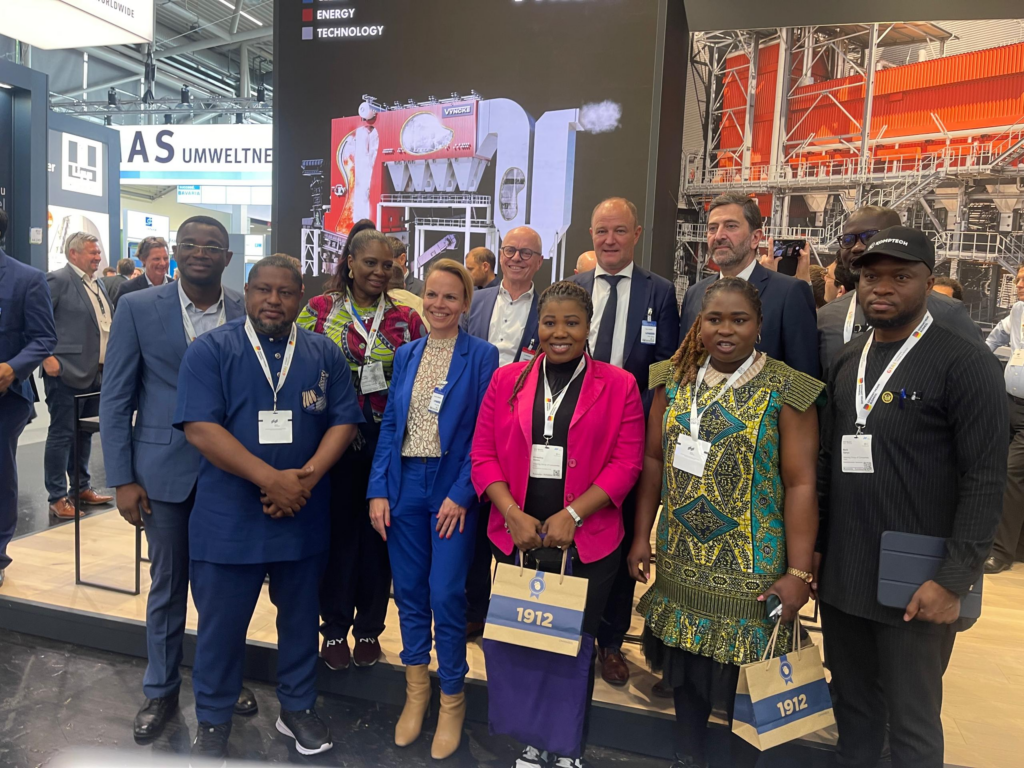
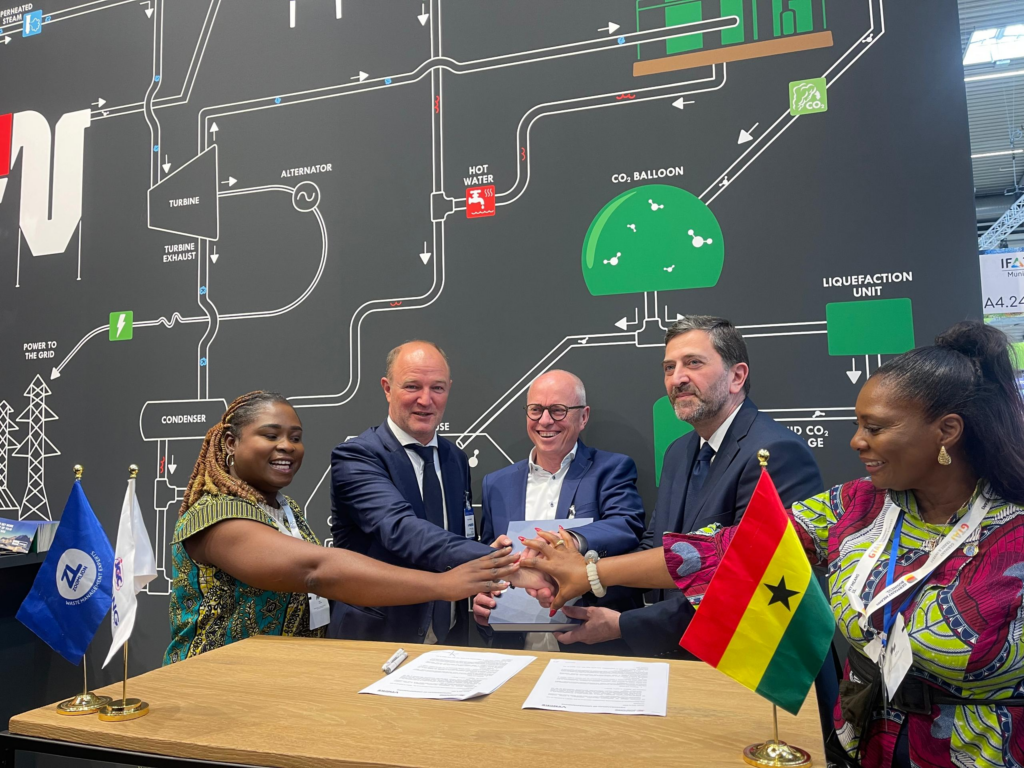
The partnership was formalised through a Memorandum of Understanding (MoU) signed on May 6, 2026, by the Executive Director for the Waste Processing Division of the Jospong Group, Mr. Haidar Said, on behalf of JGC and Jef Mestdagh, Business Development Manager, witnessed by CEO Mr. Peter Vyncke at IFAT in Munich.
The deal combines African operational expertise in waste management with advanced European waste-to-energy technology to support cleaner cities, renewable energy generation, and sustainable industrial development.
The agreement outlines a framework for both companies to explore, assess, and develop waste-to-energy projects tailored to African waste streams, regulatory environments, and market realities. Industry observers call this one of the most significant recent collaborations in Africa’s environmental services and renewable energy sector.
Under the agreement, JGC, one of Ghana’s largest indigenous conglomerates, will leverage its experience in sanitation, waste collection, landfill management, and environmental services to facilitate project development across Africa. VYNCKE, a globally recognised Belgian engineering company, will provide technical expertise in combustion systems, thermal energy solutions, and industrial energy infrastructure.
The collaboration aims to convert municipal, industrial, and organic waste into usable energy while reducing pressure on landfills and improving environmental outcomes in rapidly urbanising African cities.
The two companies intend to jointly identify waste-to-energy opportunities, conduct feasibility studies, engage regulators and investors, and support deployment of sustainable energy infrastructure adapted to African conditions.
This landmark intervention opens a new market in Africa by undertaking landfill gas extraction to capture methane emissions from existing dumpsites and convert them into usable energy for Africa’s growing demand for electricity.
The agreement also includes Carbon Capture and Storage (CCS) to reduce industrial emissions and support long-term climate goals, alongside thermal and biomass technologies for efficient waste conversion.
The agreement reflects a shift toward strategic industrial partnerships that recognise Africa as an emerging hub for sustainable innovation. For many African countries, waste accumulation, unreliable energy supply, and rapid urban growth continue to create serious pressures.
Experts say waste-to-energy systems reduce landfill dependency, generate cleaner energy, create jobs, and support industrial productivity. This partnership is therefore viewed as a practical response to the continent’s most pressing challenges.
The MoU highlights the increasing role of African indigenous companies in driving sustainability initiatives. JGC has expanded across sanitation and environmental management in Ghana and other African countries, including operations in Kenya, Nigeria, and Zimbabwe through Zoomlion.
By partnering with VYNCKE, the group is accelerating Africa’s transition toward cleaner industrial energy systems. The partnership also supports the African Union’s Agenda 2063 and the UN Sustainable Development Goals.
The agreement sends a strong signal to African governments, policymakers, and investors about the viability of large-scale environmental infrastructure projects led by African enterprises.
Successful implementation will require supportive regulations, investment-friendly policies, and public-private collaboration. The partnership reinforces the importance of cross-border knowledge transfer to help Africa meet its energy and waste management demands.
As African cities expand, the need for innovative, scalable solutions becomes urgent. This collaboration may represent the beginning of a broader movement toward African-led sustainability solutions.
For many stakeholders, the message is clear: Africa’s next phase of industrial growth must be green, innovative, collaborative, and designed for African realities.
Latest Stories
-
Trump administration moves to impose more than $100,000 fee for H-1B worker visas
16 minutes -
Oil prices steady as investors weigh impact of expanded US sanctions against Iran
2 hours -
Trump administration plans to revoke visas of foreigners seeking asylum
2 hours -
US appeals court considers reassigning case from judge over AI use
2 hours -
Trump bought shares in Elon Musk’s SpaceX in June, financial disclosure shows
3 hours -
MTN approves $375 million share buyback after profit rise
3 hours -
Ghana gold buyers went weeks without funds, sources say
3 hours -
Nevada sues to block Trump administration’s Colorado River plan
3 hours -
Tunisian hospital receives 19 bodies after migrant boat sinks
3 hours -
Oil drops more than $2 despite new US sanctions on Iran
3 hours -
Dangote refinery drives seven-fold rise in Nigeria petroleum product exports, EIA says
4 hours -
Zambia closes courts on last day to file election challenge
4 hours -
Nearly three million Teslas recalled in China over hidden door handles
4 hours -
China probes use of formaldehyde to keep cabbages fresh
4 hours -
Veteran Nollywood actor Taiwo Hassan ‘Ogogo’ dies at 65
4 hours