

Audio By Carbonatix
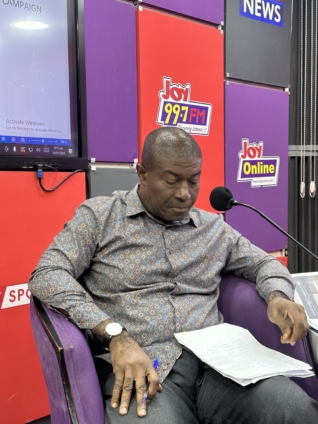
The Chairman of the New Patriotic Party Select Committee on Communications, Nana Akomea, says macroeconomic stability means little to ordinary Ghanaians if it does not translate into improved living conditions.
While government has touted recent gains, including inflation dropping to 3.4 percent, the cedi strengthening to about GH¢11.30 to the dollar, and Ghana’s GDP rising to an estimated $118 billion, Mr Akomea argues these figures do not reflect the daily realities facing most citizens.
Speaking in a yet-to-be-aired interview on PM Express with Evans Mensah, the NPP stalwart challenged the government’s economic narrative, insisting that ordinary people judge the economy by what they can afford, not by macroeconomic indicators.
“Nobody, no electorate eats stability. No electorate eats inflation. It is good to achieve stability in the macro economy. It is good to achieve low inflation figures. It is not the same as the cost of living,” he said.
Mr Akomea argued that although exchange rate stability may be welcomed, its benefits are often cancelled out by rising charges elsewhere in the economy, especially at the ports, where many imported goods enter the country.
He noted that as an import-dependent economy, Ghana’s cost of living is heavily influenced by import-related charges, which are ultimately passed on to consumers.
“So when you have achieved stability in the dollar, but port charges have gone up by 100%, it is that 100% that translates into your pocket and my pocket. Not the stability of the dollar. The importer will pass that cost on to consumers,” he said.
Responding to suggestions that increased duties support revenue mobilisation, Mr Akomea maintained that what matters to citizens is the direct effect on prices.
“When prices go up 50%, it comes to my pocket. Whether it is the right duty or not, it is hitting my pocket directly. That is what I feel, and that is what informs my decision,” he added.
He said while the cedi’s recent appreciation and single-digit inflation may appear positive on paper, voters are more concerned about whether those gains reduce prices and ease the pressure on households.
“What influences the ordinary person is the impact. Once electricity goes up, once prices go up, that is what matters. It is the effect on our lives, not the mere fact that the dollar is stable,” he stated.
Latest Stories
-
Meko Bono 2026: Vice President pledges agricultural revival as Atebubu hosts grand homecoming
47 minutes -
Russian skydiver Sergey Boytcov sets world record with 11,551-metre stratosphere jump
50 minutes -
Ablakwa-led committee submits five reports to Mahama ahead of 2027 AU chairmanship
56 minutes -
Africa not seeking Western cash in reparations campaign – Ablakwa
1 hour -
Production decline, reserve depletion threaten Ghana’s upstream sector – Jinapor
1 hour -
Surveyors caution against treating compensation disputes as professional misconduct
1 hour -
Mahama calls for AU dialogue on migration after South Africa xenophobic tensions
1 hour -
I haven’t experienced any envy in the gospel music industry — Ohemaa Mercy
3 hours -
Prayer does not solve everything — Ohemaa Mercy
3 hours -
New PURC office symbolises stronger consumer protection – Dr Jinapor
4 hours -
Rev. Wengam re-elected Assemblies of God, Ghana General Superintendent
4 hours -
Less than 20km of clearing left to connect Accra-Kumasi Expressway to Kumasi – Agbodza
4 hours -
US judge strikes down policy suspending immigrant visa processing for 75 nations
4 hours -
MCEs collecting fees from galamseyers are facilitating illegality – Ken Ashigbey
4 hours -
Developer LMI Holdings commits to completing first 700 Saglemi housing units
4 hours