

Audio By Carbonatix
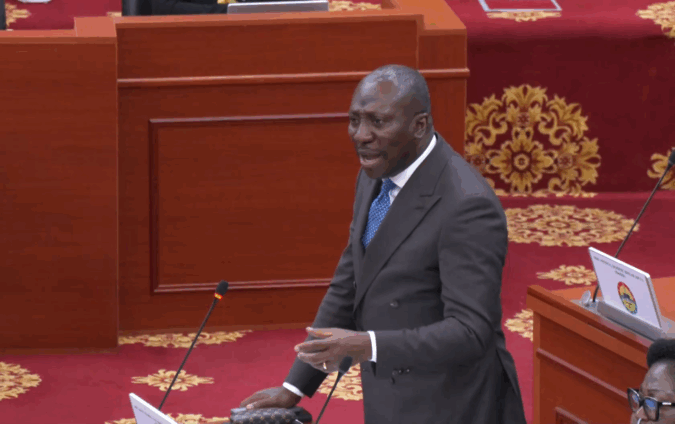
Minority Leader Alexander Afenyo-Markin has described the Value for Money Office Act, 2026, as an unnecessary bureaucratic layer that fails to address the real causes of corruption in Ghana’s public procurement system.
In a Facebook post shared on Wednesday, May 13, Mr Afenyo-Markin argued that the law, which has been promoted by the government as a major accountability reform, lacks the institutional independence needed to effectively oversee public procurement.
According to him, the structure of the board and its reporting lines place excessive control in the hands of political authorities.
“What has been presented as a reform in accountability is simply another layer of bureaucracy designed to serve political interests under the guise of transparency,” he stated.
He added that a board “dominated by partisan political appointees” could not be trusted to independently supervise procurement processes or prevent abuse of public funds.
The Minority Leader disclosed that the Minority caucus had warned Parliament during deliberations on the bill that the proposed law could worsen corruption instead of reducing it.
“At the consideration stage of the bill, I raised these concerns and cautioned the House that the law, instead of fighting corruption, risked introducing a new layer of politically supervised corruption into the procurement process,” he wrote.
He claimed that subsequent developments had vindicated the concerns raised by the Minority.
Mr Afenyo-Markin further argued that Ghana’s governance challenge is not the absence of laws but the weak enforcement of existing regulations.
He pointed to the Public Financial Management Act, the Public Procurement Act and internal audit systems already operating across state institutions as evidence that the country possesses adequate legal frameworks.
“The real challenge is enforcement. Those institutions must be strengthened, adequately resourced, and their officers held accountable for their responsibilities,” he stressed, urging the government to focus on improving existing accountability systems instead of establishing what he described as politically controlled structures.
Latest Stories
-
At least 2 new airlines could join domestic aviation market by 2027 – GCAA Director General
2 minutes -
What if Ghana’s next tourism boom begins with Ghanaians?
23 minutes -
Energy Commission to monitor EV charging stations
27 minutes -
Invest with confidence, Ghana’s golden era is beginning – Finance Minister
37 minutes -
Do Ghana to launch The Great Ghana Day Out on World Tourism Day
37 minutes -
Clean up our politics before politics cleans us up
1 hour -
2025 was a turning point, says Abradu-Otoo as NAFCO posts record GH¢91.7m profit
2 hours -
Today’s front pages: Friday, September 25, 2026
2 hours -
‘FA President has four clubs; what do you think he would do?’ – Nana Baffour Awuah fires back
2 hours -
Kurt Okraku doesn’t like criticism, but Ghana football is beyond him – Nana Baffour Awuah
2 hours -
Ghana’s Liquidity Paradox: Why capital is not reaching productive businesses
3 hours -
Ghana football has collapsed under Kurt Okraku – Manhyia South MP
3 hours -
Mr John Blankson Adu Otu
3 hours -
Prof. D. K. Yeboah-Amankwah
3 hours -
AFCON 2027Q: Queiroz ‘proud’ of Black Stars performance despite defeat to Cote d’Ivoire
3 hours