

Audio By Carbonatix
The Alassane Ouattara Stadium, built as a gleaming monument to Ivorian footballing ambition, fell into a stunned, heavy silence on January 22, 2024.
Equatorial Guinea, ranked 88th in the world, dismantled the hosts 4-0.
The Elephants finished third in their own group. By midnight, coach Jean-Louis Gasset had been sacked. In his place stepped Emerse Faé, a 40-year-old former midfielder with zero senior international managerial experience.
What followed remains one of the most remarkable resurrection stories in modern football.
Alchemy in the knockouts
Ivory Coast did not crawl back; they stormed through.
They eliminated reigning champions Senegal on penalties. Mali were undone by extra-time brilliance, capped by Oumar Diakité’s audacious backheel. DR Congo was methodically worn down.
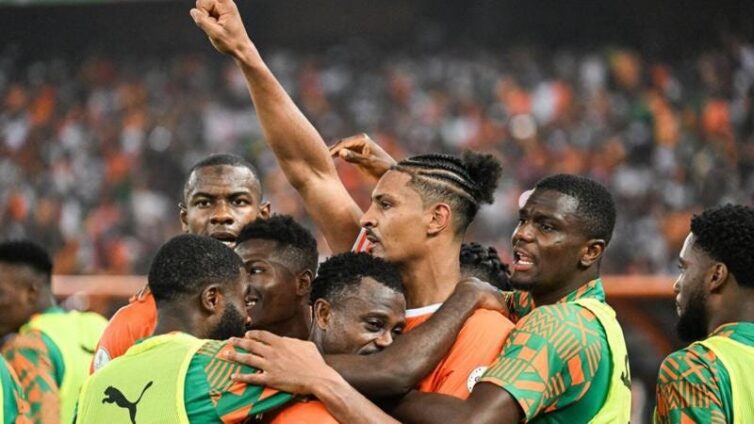
In the final against Nigeria, Franck Kessié equalized before substitute Sébastien Haller, barely a year removed from testicular cancer treatment, powered home Simon Adingra’s cross in the 81st minute.
Abidjan erupted. A nation that had mourned days earlier danced in the streets. Faé became the first coach to win a major tournament after being appointed mid-competition.
Twelve days after the 4-0 disaster, the Elephants lifted the trophy on home soil.
That public humiliation became their hidden armour.
Three titles, one stubborn shadow
The 2023 triumph completed a hat-trick of AFCON titles (1992, 2015, 2023), each won on the edge. Yet the World Cup has exposed a recurring flaw.
Four appearances, zero knockout victories. Didier Drogba’s golden generation dazzled between 2006 and 2014 but never progressed beyond the groups.
Individual brilliance was never the issue; tactical cohesion and mental resilience under sustained global pressure were.
2026: Tactical maturity and cultural resonance
Under Emerse Faé, the Ivory Coast has evolved a clear, modern identity.
Their base 4-3-3 is compact out of possession, with narrow midfield lines that protect central channels and aggressive full-backs who squeeze space.
In transition, they explode through athletic, direct wingers Amad Diallo, Simon Adingra, and Yann Diomande, who stretch opposition defenses and attack the half-spaces with pace and purpose.
Faé demands balance: intense, coordinated pressing waves without overcommitting, married to quick vertical passes. Set-pieces have become a structured weapon.
This is no longer the chaotic talent of the Drogba era; it is a side with organisation, adaptability, and a clear plan to dominate transitions while remaining defensively sound.
Squad announcement on May 15 confirmed Faé’s philosophy. Sébastien Haller was omitted. The 2023 hero, now 31 and short of rhythm at Utrecht, made way for youth and current form.
The spine is formidable: Evan Ndicka and Odilon Kossounou anchor a high-level defence; captain Franck Kessié, Ibrahim Sangaré, and Seko Fofana provide midfield power, vision, and physical dominance. In attack, Amad Diallo, Simon Adingra, Elye Wahi, Ange-Yoan Bonny, Nicolas Pépé, and Evann Guessand give Faé multiple tactical levers.
At an average age of 26, this is a squad in its prime, balanced, and no longer reliant on single messiahs.
More than football: The unifying force
In the Ivory Coast, the Elephants have long transcended sport. During the country’s civil conflict in the early 2000s, which split the country along ethnic and religious lines, the national team became a rare symbol of unity.
Players from different regions, Christians from the south, Muslims from the north, stood together.
Didier Drogba’s iconic 2005 plea, broadcast nationwide, called for peace and helped create space for dialogue. The team’s qualification for the 2006 World Cup was more than a sporting achievement; it was a national healing moment.
That legacy endures.
In a diverse, still-healing society, every successful Elephants campaign reinforces the idea that Ivorians can coexist, compete, and triumph together. A strong 2026 World Cup run would carry profound symbolic weight: proof that resilience and collective belief can overcome historical fractures.
Group E: The moment of truth
Drawn with Germany, Ecuador, and Curaçao, the Ivory Coast opens against Ecuador on June 11 in Philadelphia. A positive result would hand them control before the stern test against Germany in Toronto.
Faé has been unequivocal: his team will not park the bus or play with fear. They will approach even the strongest opponents with courage and attacking intent, the same mentality that turned a 4-0 humiliation into African glory.
They have never won a World Cup knockout match. But they have already achieved something rarer: turned national despair into continental triumph when the story seemed finished.
Now, without Haller, a colder, harder, and perhaps wiser chapter begins this summer in America.
Latest Stories
-
Jordan Ayew, Yirenkyi feature as Ghanaian trio exit Carabao Cup
8 minutes -
Microsoft says AI rival Anthropic could have ‘disastrous impact’ on humanity
39 minutes -
De la Fuente extends Spain contract to 2032
50 minutes -
Raphinha hat trick in Barcelona’s 7-goal rout of Santander
50 minutes -
Carabao Cup fourth-round draw: Liverpool to host Chelsea as Arsenal drawn away to League Two Fleetwood
59 minutes -
Mbappe, Vini and Konate obscure Real’s Ceuta message
60 minutes -
Reggie Rockstone named Unichem Ghana brand ambassador
1 hour -
Man United lose to Brighton from 2-0 up to end 50-year record
1 hour -
Man United lose to Brighton from 2-0 up to end 50-year record
1 hour -
Petrol and diesel price rises push UK inflation higher
1 hour -
City of David Foundation donates to Koforidua Hospital, Koforidua Prison
1 hour -
AMA says Konkomba traders were consulted ahead of Agbogbloshie 24-hour market project
2 hours -
Let’s pilot Chinese in public schools before scaling up – EduWatch
2 hours -
Ghanaian tech professionals develop SMS-based AI tool for non-smartphones
3 hours -
MTN@30: Three customers drive away brand-new Land Cruiser Prado in Kumasi
3 hours