

Audio By Carbonatix
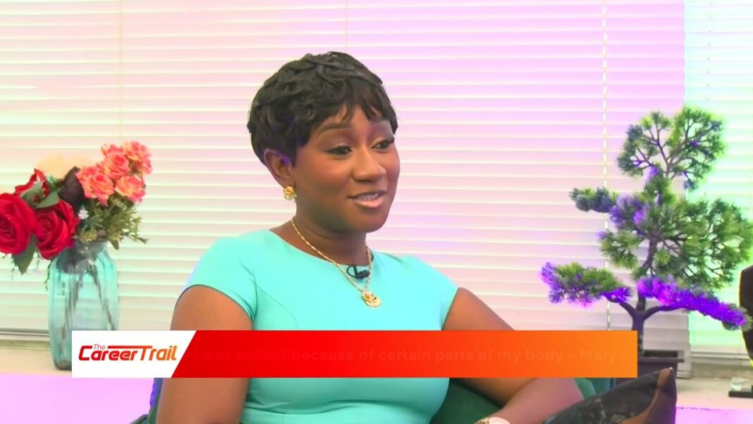
Chief Executive Officer of Brain Hill International School, Mary Anane Awuku, has shared insights into the school’s approach to discipline, stressing that understanding a child’s environment is key to shaping behaviour.
Speaking on The Career Trail programme aired on Joy Learning TV and Joy News, she explained that the school does not rely on corporal punishment but instead uses alternative methods to guide students.
“We don’t use the cane. We use different forms of punishment. You can restrain or take something away from a child,” she said.
“If there is break time or a co-curricular period, instead of the child participating, you can take the child away from the group,” she added.
“We also have a wellness and counselling unit, so sometimes it is not just a one-off punishment but constant counselling and guidance,” she noted.
According to her, a child’s behaviour is often influenced by their environment rather than being entirely innate.
“Psychology will tell you that a child’s behaviour is not just innate, but sometimes the environment they grow in affects how they behave,” she explained.
She cited an example of a child whose aggressive behaviour in school was linked to exposure to action movies at home.
“There was a child who was always kicking others. When we engaged the parents, we realised the father watched a lot of action movies with the child, and he picked up those behaviours,” she recounted.
The CEO explained that such situations require collaboration with parents to address the root cause of behavioural challenges.
“Sometimes we bring in the parents to understand the environment the child is coming from so we can solve the problem from there,” she said.
She further noted that children often mirror what they see at home, including conflicts between parents.
“Sometimes it is just a quarrel between a mother and father. The child watches and begins to imitate those actions,” she added.
Mary therefore urged parents to take a more active role in their children’s development, stressing that education is a shared responsibility.
“It takes a village to raise a child. Parents must not leave everything to the school,” she said.
She also expressed concern that some parents fail to engage with their children’s academic and behavioural progress.
“You give homework and some parents don’t even look at it. You invite them for meetings and they don’t show up,” she noted.
Mary encouraged parents to pay closer attention to their children, adding that issues at home can directly affect performance in school.
“If parents show more concern and observe their children more, it will help their development a lot,” she concluded.
Latest Stories
-
Ghana needs a law to sustain constitutional reforms – CDD-Ghana
2 hours -
COVID fumigation audit: Auditor-General has a lot of questions to answer – Akwatia MP
2 hours -
Stranded Ghanaian medical graduates in Cuba appeal to Mahama for immediate return
2 hours -
GNFS contains fire outbreak at Teshie Lekma Road near Lekma Hospital
8 hours -
Samia Nkrumah rejects the narrative that Ghanaians were happy after Nkrumah’s overthrow
9 hours -
A Mother’s pain: Tribute by Ivan Baidoo’s mother
9 hours -
‘Forgive us for staying away’ — Samia Nkrumah leads family back to Nkroful, pledges to preserve Nkrumah’s legacy
10 hours -
Ernest Nuamah scores twice as Lyon beat Rennes
10 hours -
‘My dear Ivan’ – A father’s tribute to a son tragically killed
10 hours -
GNPC Explorco advances Voltaian Basin drilling preparations with 13.5km access road
10 hours -
Cabinet approves facility manager for Borteyman Sports Complex – Kofi Adams
11 hours -
Sanitation is improving; critics may be ‘living in another world’ – Salaga South MP replies Bekwai MP
11 hours -
Government must do more to tackle sanitation crisis – Bekwai MP
11 hours -
World Cleanup Day: GFF begins sanitation education in local communities
11 hours -
EU Ambassador, IGP discuss stronger cooperation on policing and security
11 hours