

Audio By Carbonatix
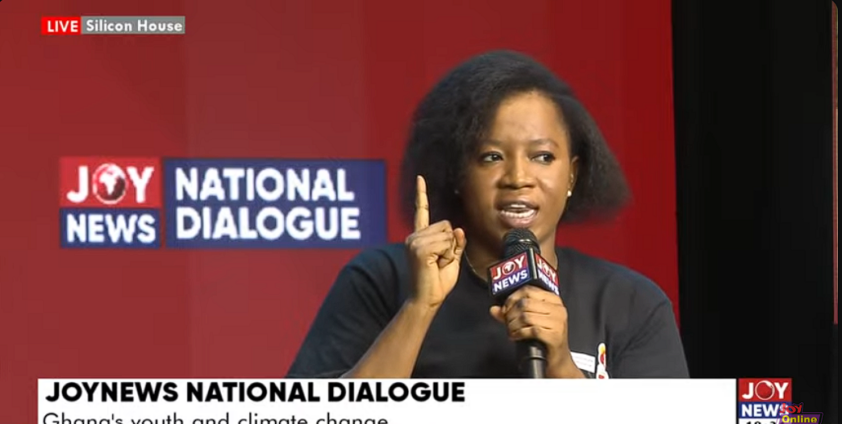
A youth climate reporter in the Upper West Region, Amada Tenga, has raised concerns over the growing problem of plastic waste disposal in Bamaahu, a suburb of Wa, describing it as a major contributor to environmental pollution and climate-related challenges in the area.
The fellow, speaking at a JoyNews National Dialogue on “Ghana’s Youth and Climate Change", said the issue became more visible after participating in a climate change training under the Upper West Youth Climate Fellowship Programme.
The advocate, She Leads Social Movement and a transition Guide (CAMFED), explained that following the training, she began observing how residents had normalised the indiscriminate disposal of plastic waste, with plastics littering homes, markets, gutters, and open spaces.
“In the Upper West Region, especially Bamaahu, I looked around after I was trained and realised that climate change is about some of the things we do daily,” she said.
She recalled that during a heavy downpour earlier this year, several flood-prone areas were found to be heavily choked with plastic waste.
“For some of the affected areas, what you could see all around was plastic waste. Even when it doesn’t rain, you look at the gutters and realise that they are choked with plastic only,” she stated.
The fellow noted that open burning of plastics has also become common in the area, worsening environmental pollution.
“And sometimes they normalise burning it anyhow. They just pick it and burn it. Instead of reusing what they already have, they throw it away and buy another one,” she added.
Concerned by the situation, she said she documented the impact of plastic pollution by filming affected areas, particularly communities affected by flooding.
Beyond producing a video documentary, the youth climate reporter and some colleagues also carried out a clean-up exercise and engaged residents on proper plastic disposal and reuse practices.
“We went round cleaning and educating people on how to dispose of plastics and how to reduce the usage,” she said.
She stressed that many residents were unaware that poor waste disposal practices contribute to flooding and climate change impacts.
“I told them that when floods happen, what you mostly see around is plastics. When the water dries and the wind blows, those plastics return into the environment and eventually back into people’s homes,” she explained.
She called for collective action among residents to reduce plastic waste and adopt environmentally friendly habits to protect the community from flooding and pollution.
Latest Stories
-
52-year-old South African arrested with suspected heroin after arriving from Accra
12 minutes -
Shatta Wale challenges UPSA students to build entrepreneurial mindsets
46 minutes -
Finance Minister advises African governments to strengthen regional tax cooperation
2 hours -
NPP accuses NDC of master-minding demolition of Ho regional office fence
2 hours -
Ghana plans stronger regional power trade with Nigeria
2 hours -
GRA Commissioner-General calls for stronger tax cooperation to boost regional revenue mobilisation
2 hours -
NACOC needs more personnel to tackle drug trafficking – Toobu
2 hours -
Railway workers resist KMA eviction order, demand consultation
2 hours -
Legacy Leadership Africa Institute to host boardroom women’s leadership programme
3 hours -
Ghana needs a law to sustain constitutional reforms – CDD-Ghana
6 hours -
COVID fumigation audit: Auditor-General has a lot of questions to answer – Akwatia MP
6 hours -
Stranded Ghanaian medical graduates in Cuba appeal to Mahama for immediate return
6 hours -
GNFS contains fire outbreak at Teshie Lekma Road near Lekma Hospital
12 hours -
Samia Nkrumah rejects the narrative that Ghanaians were happy after Nkrumah’s overthrow
13 hours -
A Mother’s pain: Tribute by Ivan Baidoo’s mother
14 hours