

Audio By Carbonatix
After three decades, Ghana is approaching a rare political moment. The Mahama administration has committed to allowing citizens to elect their Metropolitan, Municipal and District Chief Executives on a non-partisan basis.
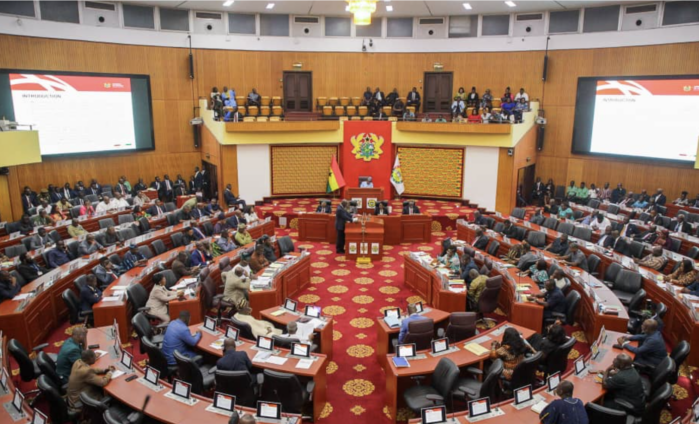
Parliament is moving toward the constitutional amendments required to make it happen. A survey by the Institute of Economic Affairs (IEA) found that nearly seven in ten Ghanaians support the idea. The political class, civil society and the public are, for once, largely reading from the same page.
However, that overwhelming consensus should give us a pause. In Ghana's governance history, the reforms that generated the most enthusiasm tend to be the ones that received the least scrutiny. When everyone agrees that something is a good idea, the hard questions get crowded out by the celebration. This is one of those moments, and the hard questions deserve to be asked before the bill is passed rather than after it stalls.
The question is not whether elected MMDCEs are preferable to appointed ones. They are, and the case for reform is legitimate. The deeper, and perhaps more relevant question is what kind of system those elected officials will be walking into. Because the evidence of thirty years suggests that Ghana is about to pass a promising bill into a broken system, and the bill itself does nothing to fix the system it is entering.
What the bill promises
The reform package is more substantial than a simple change in how chief executives are selected. The Constitutional Review Committee chaired by Professor H. Kwasi Prempeh, which presented its final report to President Mahama in December 2025, proposed a phased rollout of elections rather than a simultaneous national exercise across all 261 districts. A new Devolution Commission would determine which districts meet defined benchmarks before elections are held there, with others joining as they become ready. Alongside this, the Ministry of Local Government has committed to presenting the University of Local Governance and Development Bill to Parliament, which would upgrade the Institute of Local Government Studies into a full university for training local government officials. A new National Decentralisation Policy covering 2025 to 2029 is also before cabinet.
Taken together, this is the most coherent package of local governance reform Ghana has assembled in a generation. The phased approach in particular reflects an honest acknowledgement that most districts are not currently ready for elected leadership. That honesty is welcome. But it immediately raises a question the reform package leaves unanswered: ready by whose standard, on what timeline, with what consequence if a district never meets the benchmark? And what are the resource allocation implications for this phased approach? Without answers to those questions, the Devolution Commission risks becoming a mechanism for indefinitely deferring the hard work rather than driving it.
The ground the bill will land on
The fiscal foundation of Ghana's local governance system is not merely weak. It is constitutionally violated on a routine basis. The District Assemblies Common Fund, established under Article 252 of the 1992 Constitution, requires quarterly disbursements to district assemblies. This obligation has been routinely ignored across successive administrations. By 2024, MPs confirmed arrears of GH¢3.5 billion owed over just two years, and a Supreme Court ruling from 2019 affirming the constitutional minimum of five percent of total national revenue had still not produced consistent compliance. More telling than the arrears figure itself is what the arrears represent: many disbursements counted as payments in 2024 were actually settlements of debts dating back to 2014 and 2016. Ghana's government has been rolling the same unpaid obligations forward for a decade.
An elected MMDCE inherits this. A popular mandate does not fill an empty treasury, and a district that cannot pay its contractors today will not suddenly be able to do so because its chief executive now faces re-election. The fiscal architecture that was supposed to underpin decentralisation has never been reliably operational, and the reform bill makes no provision for fixing it.
Below the fiscal problem sits an institutional one. The sub-district structures that were designed to connect district assemblies to communities — unit committees, town councils, area councils — have been largely dormant for most of their existence. Research spanning three decades of decentralisation found that these structures faced chronic challenges, including inadequate staffing, poor logistics, and a weak revenue base, with the result that citizens long ago stopped looking to them for solutions and instead turned to MPs and chiefs. In Parliament, members have noted that some electoral areas cannot field five candidates for unit committee positions because citizens see no point in it. Voter turnout in district-level elections has been as low as 30 percent in some areas.
This matters because elections produce accountability only when citizens are engaged enough to use them as accountability tools. The demand side of local democracy in Ghana is thin, built on institutions that have never been made to function. Electing the person at the top of that structure does not revive it. The 2016 Local Governance Act promised to strengthen participatory governance at the local level.
A comparative study of three district assemblies conducted after its passage found that the same constraints that existed before it such as central control over personnel and finance, weak sub-structures, and low citizen accountability remained essentially unchanged. The bill currently before Parliament is the latest in a line of reforms whose legal ambition has consistently outrun institutional reality.
The non-partisan fiction
Of the structural problems facing this reform, the one that receives the least honest discussion is the one most visible to any Ghanaian who has watched local politics operate. The bill proposes that MMDCEs be elected on a non-partisan basis. It is a clean constitutional formulation. It is also, in the context of Ghana's political economy, largely theoretical.
Ghana's two major parties have built their dominance partly through the control of local government appointments. The MMDCE position is a significant patronage resource — it sits at the intersection of development project allocation, contractor relationships and local organisational infrastructure. The NDC established Regional Vetting Committees to oversee the selection of nominees for the current round of appointments, screening candidates on party membership as an explicit criterion. The NPP's approach during its tenure was functionally similar. Neither party has ever treated local government as a space insulated from partisan interest, and there is no structural reason why electing rather than appointing chief executives would change that.
What ‘non-partisan’ elections will look like in practice is already visible from Ghana's experience with assembly member elections, which have always been formally non-partisan. Party structures organise around preferred candidates, resources flow accordingly, and the winner knows who mobilised support for them. The constitutional label does not change the political reality. In a country where the 2019 referendum on MMDCE elections collapsed partly because neither major party trusted the other to play fair at the local level, describing elections as non-partisan addresses a symptom rather than its cause. The patronage incentives that make partisan control of local government attractive have not been dismantled. They have simply been papered over with a legal term.
What a serious reform requires
None of this is an argument against the bill. It is an argument for taking the bill seriously enough to demand that it be accompanied by measures it currently lacks.
The DACF problem has a straightforward legislative solution: an automatic, revenue-based transfer mechanism that removes ministerial discretion from the disbursement process, combined with a structured national plan for liquidating existing arrears. The DACF administrator has already asked Parliament to implement exactly this in 2026. That request should not wait for elections to be held.
The University of Local Governance and Development Bill must come before MMDCE elections, not after them. Capacity building that follows elections is remedial. The districts that the Devolution Commission will assess for readiness need trained officials now, not as a follow-up programme. If the ULGD Bill is still awaiting cabinet approval when the first elections are being planned, the sequencing is wrong.
The Devolution Commission's benchmarks for district readiness need to be defined in public, debated in Parliament and written into the legislation rather than left to administrative determination. Without that transparency, the phased rollout becomes a political instrument used to delay elections in districts where the ruling party expects to lose, or accelerate them where it expects to win. Ghana has seen enough of that kind of governance to know the risk.
The question behind the question
Ghana has passed local governance legislation before. The 1993 Act, the 2016 Act, the 2017 amendment. Each arrived with genuine ambition. Each stalled between the gazette and the ground because the institutional conditions for implementation were assumed rather than built. The pattern is not a coincidence. It reflects a structural reluctance in Ghana’s governance culture to follow legislative announcements with the harder, less photogenic work of institution building.
The current reform has more going for it than its predecessors. The phased approach is wiser than a big-bang national rollout. The ULGD Bill acknowledges the capacity gap. The new Decentralisation Policy provides a framework for coordination. But acknowledging a problem on paper and solving it in practice are different things, and Ghana’s record on that distinction is not encouraging.
The bill will pass. The elections will eventually be held. The real test will come in the years after, when an elected district chief executive in a resource-constrained, institutionally thin, patron-networked district tries to deliver the development that the democratic mandate promises.
At that point, the quality of what was built alongside the bill will matter far more than the bill itself. The question Ghana should be asking right now is not whether to hold these elections. It is whether the country is finally serious about building the system those elections assume already exists.
The author, Prince Eli Dormenyo, is a youth development advocate, researcher, and emerging development policy professional committed to expanding opportunities for young people across Africa. He is currently a Research Assistant at the Department of History, Political Science and Public Administration.
Latest Stories
-
Africa Nations Volleyball Championship: Ghana set up quarterfinal clash with Cameroon after beating Chad
15 minutes -
Meet Dr Benjamin Appiah Osei — Ghana’s three-time tourism awards winner
44 minutes -
UEFA & CONCACAF demand Fifa pays $10m to all 211 members
45 minutes -
Inter fight back again to snatch draw at leaders Roma
49 minutes -
Suzuki proves worthy replacement for Martinez at Villa
54 minutes -
Brighton humbling ‘a big lesson’ for Arsenal – Arteta
58 minutes -
Arsenal handed first loss by brilliant Brighton
1 hour -
Video: Akwatia MP ‘clashes’ with Kofi Bentil over 3.9-tonne cocaine seizure
1 hour -
Ratcliffe ‘must go’ says Man Utd Muslim fan group
1 hour -
Ignite Social Enterprise targets global market for locally manufactured Ghanaian products
1 hour -
Eviction notice leaves retired, serving railway workers in Kumasi in limbo
2 hours -
Asiedu Nketia: Why I remain an unrepentant Nkrumahist
2 hours -
Kudus, Djiku return a boost to Black Stars – Agyemang-Badu
3 hours -
‘If the world, Africa honoured Nkrumah as the Millennium Man, why are we not doing same?’ – Asiedu Nketia
3 hours -
Yaw Preko backs renewed push to revive Colts football
3 hours