

Audio By Carbonatix
The greatest threat to governance is rarely the absence of rules. It is the gradual surrender of independent judgment by those entrusted to protect institutions from interference, expediency and short-term pressures. Sometimes the erosion begins not with malice, but with good intentions operating outside proper governance boundaries.
There are moments in the life of every nation when difficult questions must be asked, not because they are comfortable, but because avoiding them becomes more dangerous than confronting them. One such question is this: Who truly governs a public institution? At first glance, the answer appears obvious. The minister represents the government. The board governs. Management manages. Yet reality is often more complicated than theory. Governance failures rarely announce themselves dramatically. They arrive quietly, emerging when responsibilities designed to remain separate slowly begin to overlap.
When Good Intentions Quietly Become Governance Risks
Before proceeding further, it is important to acknowledge a truth often omitted from governance debates. Not every instance of ministerial involvement in operational or board matters stems from a desire to dominate institutions or exercise undue authority. In many cases, ministers act with honourable intentions. They may sincerely believe they are protecting public resources, safeguarding government interests, responding to stakeholder concerns or addressing organisational challenges.
The challenge is not always bad faith. Sometimes it is limited governance awareness. Many ministers arrive in office from distinguished careers in politics, law, academia, engineering, medicine, business and public service. Yet relatively few receive formal training in boardroom governance, fiduciary responsibilities or the legal implications of governance boundaries. Consequently, actions that appear reasonable from a political perspective can inadvertently create governance complications from a boardroom perspective.
NyansaKasa (Words of Wisdom)
"Good intentions can still produce poor governance when authority outruns understanding."
Reflection: Many governance failures begin not with bad people making bad decisions, but with well-meaning people stepping beyond boundaries they did not fully appreciate.
The Law Is Clear. Why Then Does Confusion Persist?
Modern governance systems were not created accidentally. They emerged from centuries of institutional learning, corporate failures, and public-sector reforms. Their purpose is simple: to ensure authority is exercised responsibly, accountability remains clear, and institutions serve their intended purpose rather than individual interests.
In Ghana, as in many jurisdictions, including the United Kingdom, the United States, Canada, Singapore, and South Africa, this principle is embedded in corporate law. The Companies Act, 2019 (Act 992) of Ghana places responsibility for directing and managing a company squarely on the Board of Directors. Directors owe fiduciary duties to the organisation and are expected to exercise independent judgment in what they reasonably believe to be the best interests of the institution and its stakeholders.
The Cost of Confusing Political Authority With Governance Authority
A minister may communicate policy, represent the shareholder and raise concerns regarding governance, performance, compliance or risk. However, under sound governance principles, the authority to appoint, retain, discipline, suspend or remove an executive officer belongs fundamentally to the Board of Directors acting within its lawful authority. This is not a technicality. It is the cornerstone of accountability. Because accountability follows authority. If a board simply acts on instruction without exercising its own judgement, a troubling question emerges. Who then is governing the institution? The inconvenient truth is that institutional decline often begins when governance boundaries become negotiable.
NyansaKasa (Words of Wisdom)
"When everybody starts steering the same vehicle, nobody should be surprised when it eventually enters a ditch."
Reflection: Clarity of authority is not bureaucracy. It is protection against confusion.
The Moment Institutions Start Losing Their Way
One of the most misunderstood concepts in governance is the distinction between ownership and oversight. Governments may own institutions. Ministers may represent governments. Yet ownership does not automatically confer operational authority. A shareholder of a private company cannot simply walk into an organisation and suspend an executive on personal preference. The same governance logic applies within public institutions. Boards exist precisely because independent judgment is required between ownership and management. History repeatedly demonstrates this lesson.
What the World's Strongest Institutions Understand That Many Others Forget
Singapore's government-linked enterprises have achieved international respect not because ministers directly manage them, but because governance structures are respected. Norway's state-owned enterprises operate within robust governance frameworks in which political leaders set policy direction while boards exercise independent oversight. Similar principles underpin successful public institutions throughout the United Kingdom, Canada, Australia and Scandinavia. The lesson is remarkably consistent.
Strong institutions require strong governance boundaries.
Weak institutions emerge when those boundaries become optional.
The Silent Price Citizens Eventually Pay
Unfortunately, many developing economies continue to struggle with this reality. Political transitions often create uncertainty. Institutional decisions become politicised. Strategic continuity weakens. Long term planning becomes difficult. Executives spend more time managing political relationships than organisational performance.
- The institution suffers.
- Citizens suffer.
- Development suffers.
Yet the most fascinating aspect of this cycle is how often societies fail to recognise it while it is happening.
When Governance Becomes Theatre Rather Than Stewardship
There is even humour hidden within the absurdity.
- Imagine a hospital where the Minister of Health personally instructs surgeons during operations.
- Imagine a commercial airline where the Transport Minister suddenly enters the cockpit and begins directing the pilot.
- Imagine a football match where the Sports Minister runs onto the field and starts selecting substitutes.
Most people would laugh. Yet similar governance intrusions frequently occur within institutions, often producing equally damaging outcomes.
NyansaKasa (Words of Wisdom)
"The goat may belong to the chief, but someone must still understand how to herd it."
Reflection: Ownership and competence are not interchangeable concepts.
The Boardroom Was Never Designed to Be A Rubber Stamp
This reality explains why corporate governance evolved into a discipline. Governance exists because power requires restraint, authority requires accountability, and oversight requires independence. The board's responsibility is not to please ministers. Its responsibility is to protect the long-term interests of the institution and its stakeholders. That obligation may sometimes require difficult decisions. It may require disagreeing with powerful individuals. That is precisely why boards exist. A board that merely follows instructions ceases to function as a board. It becomes an administrative extension of another authority. And that is where governance begins to die.
NyansaKasa (Words of Wisdom)
"A board that cannot say no has already said goodbye to its independence."
Reflection: Governance begins where independent thinking begins.
The Day Directors Stop Thinking for Themselves
Directors are appointed not merely to occupy seats around a table. They are appointed to exercise judgement. The boardroom is therefore not intended to be ceremonial space. It is intended to be the final line of governance defence protecting institutions from poor decisions, undue influence and short term pressures. When directors surrender that responsibility, governance quietly leaves through the back door. And institutional decline often follows shortly thereafter.
The Real Victims Rarely Sit In The Boardroom
The tragedy is that citizens ultimately bear the cost. Poor governance rarely remains confined to boardrooms. It affects service delivery, economic performance, public confidence and national development. Governance determines the quality of healthcare, the reliability of utilities, the efficiency of transportation systems and the effectiveness of public institutions. Good governance creates trust. Bad governance creates uncertainty. And uncertainty is expensive.
NyansaKasa (Words of Wisdom)
"The rule ignored today often becomes the crisis investigated tomorrow."
Reflection: Most governance failures begin as small compromises that nobody considered dangerous.
Small Governance Compromises Rarely Stay Small
What then must be done?
- The first priority is governance education. Ministers, directors, executives and senior public officials should receive structured governance training that clearly defines roles, responsibilities and legal boundaries. Many governance breaches arise not from malice but from misunderstanding.
- The second priority is board quality. Appointments should prioritise competence, independence, experience and courage. Institutions require directors capable of exercising judgement rather than merely endorsing decisions.
- The third priority is cultural. Nations must learn to value institutions above personalities. Sustainable development depends on systems that outlive individuals.
- The fourth priority is legal consistency. Governance frameworks and the provisions of the Companies Act must be respected irrespective of political transitions or changing administrations.
The Courage to Protect Institutions from Ourselves
Most importantly, boards themselves must rediscover courage. Independence means little if it disappears whenever pressure emerges. The world's most successful nations did not become successful because leaders controlled every institution. They became successful because institutions became strong enough to outlive individual leaders. That may be the most important governance lesson of all.
The Hardest Governance Truth of All
A minister may possess political authority. A board possesses governance authority. Confusing the two may satisfy immediate interests, but it weakens institutions over time.
- Strong nations require strong institutions.
- Strong institutions require strong boards.
- Strong boards require independence.
And independence begins the moment guardians remember what they were appointed to guard.
What History Ultimately Remembers
NyansaKasa (Words of Wisdom)
"The strength of an institution is not measured by how loudly powerful people speak, but by how faithfully its guardians protect its purpose."
Reflection: History rarely remembers those who issued instructions. History remembers the institutions that endured.
And institutions endure only when governance remains stronger than interference.
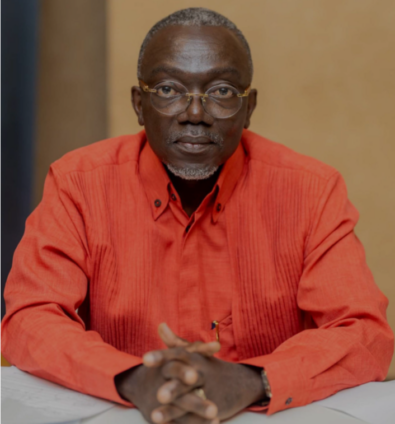
About Ing. Professor Douglas Boateng
Ing. Professor Douglas Boateng is a pioneering international industrial, manufacturing, and production systems engineer, governance strategist, and Pan-African thought leader whose work continues to shape boardroom thinking, supply chain transformation, and industrialisation across both the continent and globally. As Africa’s first appointed Professor Extraordinaire in Supply Chain Management, he has consistently championed the integration of procurement, value chain, industrialisation strategy, and governance into national and continental development agendas, aligning practice with purpose and long-term impact. An International Chartered Director and Chartered Engineer, he has received numerous lifetime achievement awards and authored several authoritative books. He is also the scribe of the globally acclaimed and widely followed daily NyansaKasa (Words of Wisdom), which continues to inspire reflection, accountability, and purposeful living among audiences worldwide. His work is driven by a simple yet powerful belief: Africa’s transformation will not come from rhetoric but from deliberate action, strong institutions, and leaders willing to build for future generations.
Latest Stories
-
Oil hits over 1-week low on hopes of boost to diplomacy in Iran war
1 hour -
They take GH¢100, sometimes GH¢200 – Okada riders allege police extortion in Accra
1 hour -
NACOC: We’ve found no presidential escort among suspects in €225m France cocaine case
1 hour -
Don’t turn students away over trunks and chop boxes – GES
2 hours -
Italian Apple store employees strike on iPhone 18 Pro launch day
2 hours -
Apple’s Tim Cook sees Australia’s social media curbs as ‘world-leading’, PM says
2 hours -
Amazon raises minimum hourly pay by $1 to $20 for US operations workers
2 hours -
Insurance cost has largely remained stable – NPA boss on transport fare pressure
2 hours -
Multiple unions threaten strikes at Barrick’s flagship Mali gold mine, documents show
3 hours -
Infantino invited to African summit as he faces challenge to FIFA leadership
3 hours -
NPA boss flags ‘recalcitrant’ transport operators raising fares arbitrarily
3 hours -
GPRTU fare hike put on ice after talks with government – NPA boss reveals
3 hours -
I’m greatly worried – NPA boss on threat of higher transport fares
4 hours -
We are largely import-dependent – NPA boss on Ghana’s fuel vulnerability
4 hours -
Ghana’s fuel market is built for turbulence – NPA’s Edudzi Tamakloe explains why
4 hours