

Audio By Carbonatix
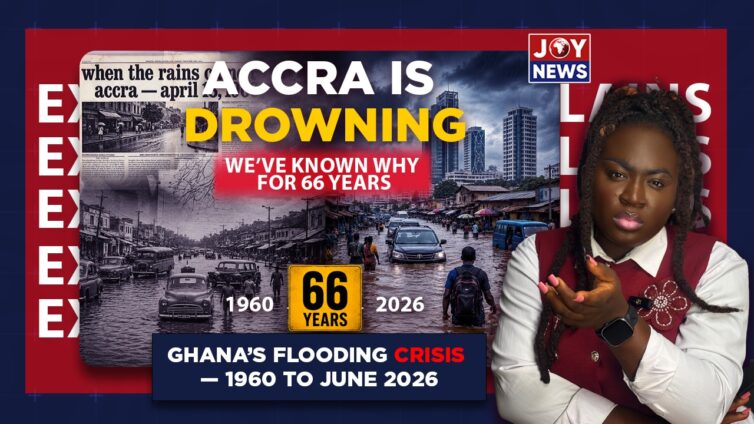
A body was found in the floods at Tetegu on 14th June 2026. It is, by now, a familiar kind of headline.
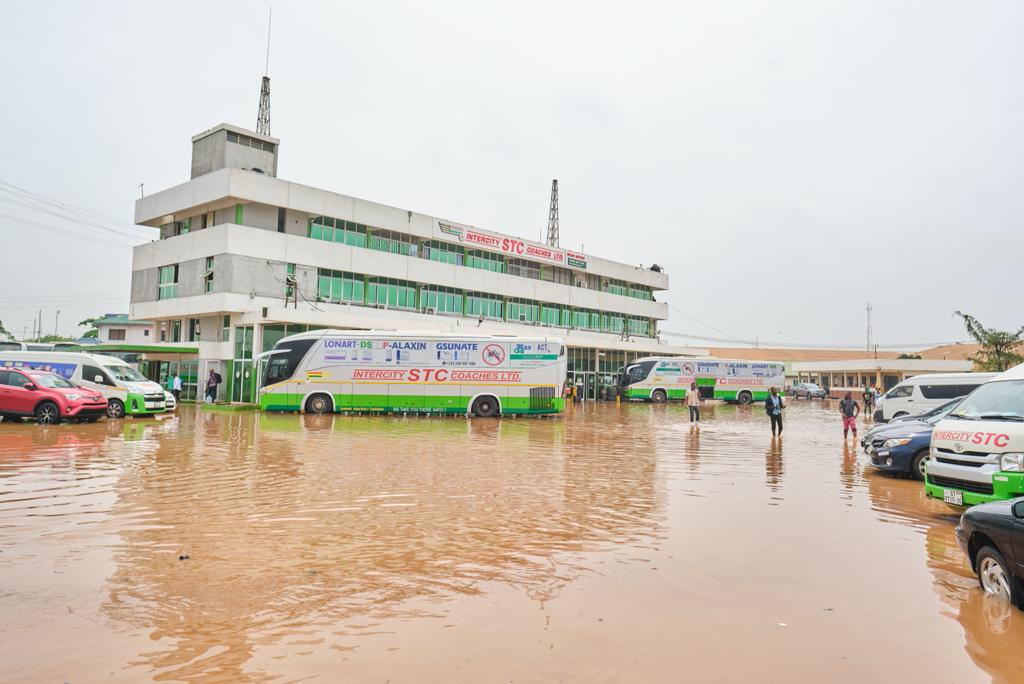
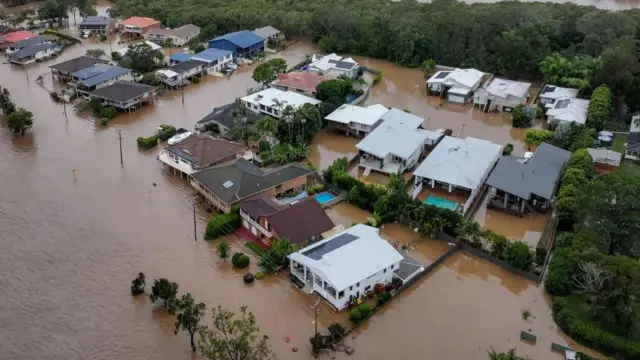
Weija. Parts of Kasoa. Dansoman. Ofankor Barrier. Lakeside. Major roads across the capital turned into rivers last week, trapping commuters and forcing families from their homes, the latest entry in a disaster log that stretches back further than most Ghanaians realise.
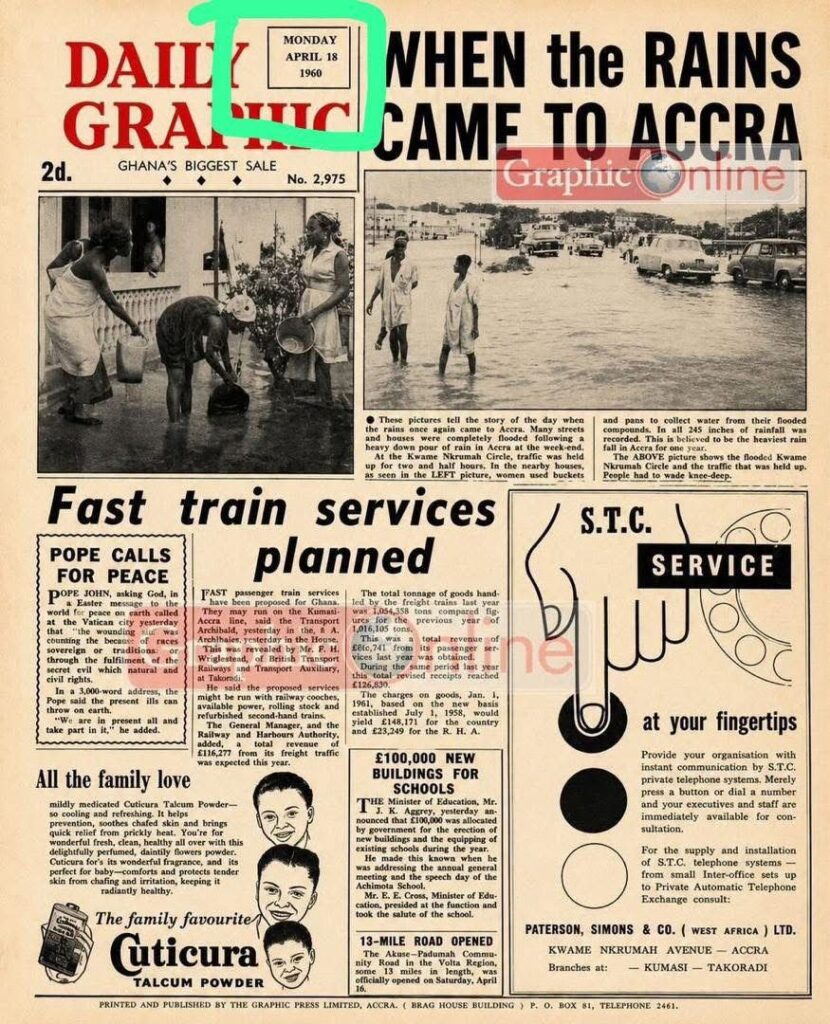
The Daily Graphic's front page on 18 April 1960 carried a headline that could be reprinted today with only the date changed: “WHEN THE RAINS CAME TO ACCRA.”
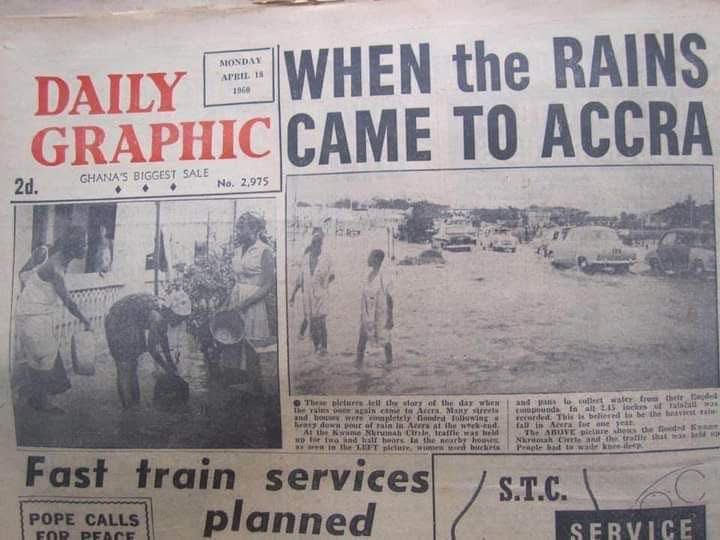
Sixty-six years later, the city is flooding in the same places, for largely the same reasons, and the people paying the heaviest price are, as ever, the poor.
The shape of the problem
Accra sits on a coastal plain drained by a handful of rivers and lagoons, the Odaw being the central one that empty into the sea through the Korle Lagoon. Nine major drainage basins carry the city's runoff, but the Odaw basin is where the worst disasters concentrate: low-lying, densely populated, ringed by informal settlements.
The causes are not mysterious. Every credible study points to the same five factors: the city's low-lying geography; homes and businesses built directly on floodplains and drainage channels; drains choked with plastic waste and sachet-water bags; drainage infrastructure designed for a much smaller city than today's Accra; and zoning and wetland-protection laws that exist on paper but are routinely ignored.
President John Mahama, speaking on 31 May 2026, described the flooding as “not an engineering problem”but “a problem of indiscipline,” pointing to plastic waste and construction on waterways. The framing is only half the story, the engineering deficit is real and decades deep but it captures a central, uncomfortable truth: Accra floods not because of how much it rains, but because of what has been done to the land the water needs to pass through.
One reporter's firsthand account
That truth was visible to this publication's Explains desk long before this month’s floods. While covering the demolition of illegal structures at the Sakumo Ramsar site one of Ghana's internationally protected wetlands, JoyNews’ Jacqueline Ansomah Yeboah witnessed the scale of encroachment firsthand.
“I saw it with my own eyes, how flooded that area was, how badly encroached,” she said. “But what struck me most was that the landowners were against the demolitions. People had built on a protected wetland, a site that exists specifically to absorb floodwater and they fought to keep those structures standing. That moment told me everything about why Accra keeps flooding.”
The casualty record
National flood data compiled from 1935 to 2023 records more than 3,000 flood-related deaths in Ghana and over 700,000 people displaced across that span. For most of the 20th century, the disasters were chronic rather than spectacular, annual inundations claiming lives in small numbers, displacing thousands, destroying property without producing a single galvanising catastrophe.
That changed on 3 June 2015. After hours of torrential rain submerged the Kwame Nkrumah Circle area, floodwaters carrying a film of fuel reached a GOIL filling station where hundreds had taken shelter. The station exploded. The combined flood-and-fire disaster killed an estimated 150 to 250-plus people, with around 25 deaths attributed directly to the flooding and the remainder to the inferno. The day is now commemorated annually as National Flood Disaster Day.
This year marks eleven years since that disaster. The official damage assessment that followed valued the destroyed property, five houses and the filling station at roughly GH¢1.66 million, then about US$428,000. That figure captured the buildings, not the lives, the lost trade, or the systemic cost. Eleven years on, a 2015 lawsuit brought by survivors and bereaved families remains undetermined.
The years since have brought a steady drumbeat of smaller, recurring tragedies. 2023 was, by recent count, the worst single year for frequency, with around 20 separate flooding incidents. On 18 May 2025, a three-hour downpour that dropped 132.2mm of rain killed four people including a child swept through gutters in Nima and displaced more than 3,000.
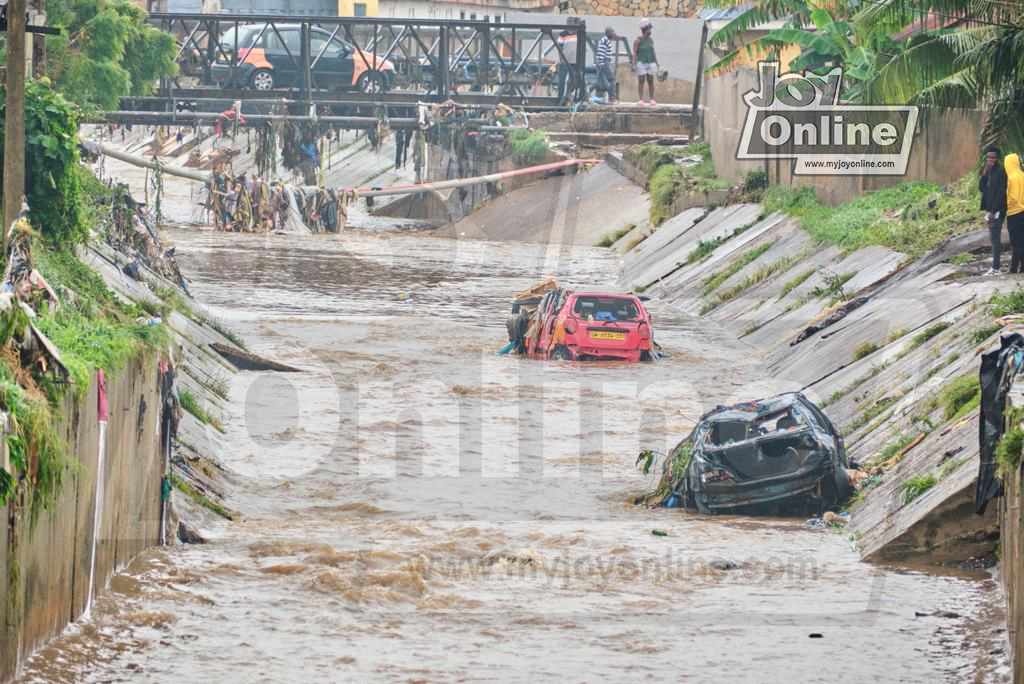
Days into June 2026, heavy rain again submerged Kaneshie, Odawna, Adabraka, the Circle enclave, Aboabo and Lapaz, with emergency responders working through the night to evacuate residents. The government activated emergency response measures on 6 June, again citing “human activities” as the major cause. The UNDP described the disaster days later under a headline that needed no embellishment: “Accra Under Water Again.”
What it has cost and what was promised
The economics of Accra's flooding are, in the words of one 2026 commentary, an exercise in paying repeatedly for a disaster that could have been prevented once.
A frequently cited World Bank estimate puts flood-related losses to the Ghanaian economy at roughly US$200 million per year about half a percent of GDP. A 2013–2023 impact study found floods affected at least 110,813 households and caused economic losses of US$1.7 billion over the decade. Around US$3.2 billion of economic assets in Greater Accra are exposed to flood risk, according to the World Bank's GARID appraisal significant given that Greater Accra generates more than 40 percent of Ghana's non-oil GDP.
Against those losses sit two major interventions, both falling well short of their promise. In 2012, Ghana signed what became known as the Conti project, commonly cited at around US$660 million with the US-based Conti Group, to dredge the Odaw, restore the Korle Lagoon and rebuild the city's drainage over five years. President Mahama cut the sod in January 2013. By 2015 and 2016, after the June 3 disaster, pressure groups were demanding the contract be abrogated and asking publicly where the money had gone. The promised transformation never arrived.
The World Bank's Greater Accra Resilient and Integrated Development project, GARID, was approved in May 2019 with US$200 million, later expanded to US$350 million, targeting 2.5 million residents in the Odaw basin. As of mid-2025, six years in cumulative disbursement stood at roughly US$127.1 million, about 36 percent of the total. The Odaw basin remains heavily encroached, storm-drain upgrades are incomplete or stalled, and at-risk communities have received no meaningful relocation support.
A 2024 assessment found that an enhanced Odaw flood-protection system, built to withstand a one-in-25-year event, would cost roughly US$675 million, more than triple GARID's original budget. The Bank of Ghana holds approximately US$14.4 billion in foreign reserves. A fraction of that reserve would fund a multi-year fix.
Why the fixes keep failing
According to research compiled by JoyNews' Explains desk, the interventions are not failing for lack of money on paper or lack of diagnosis. They fail for structural reasons that repeat across every administration.
Demolitions are routinely followed by reconstruction. In Ablekuma West in 2026, the Greater Accra NADMO director publicly urged President Mahama to dismiss the Municipal Chief Executive and planning officers after structures demolished the previous year at Lafah had simply been rebuilt.
Responsibility for flood prevention is fragmented across institutions. GARID alone spans four ministries, 17 local assemblies, the Hydrological Authority, NADMO, GMet, the Water Resources Commission and the Lands Commission, a diffusion that critics argue means responsibility belongs, in practice, to no one.
Financing remains reactive rather than preventive. The UNDP's June 2026 assessment noted that governments “continue to respond after disasters strike” rather than invest in systems that protect people beforehand. A proposed flood-insurance and disaster-risk-financing programme for Greater Accra sits ready but unoperationalised.
And the warnings that exist are largely accurate and routinely ignored. GMet's forecasts are often correct; communities along the Odaw move their belongings upstairs when the rains begin. The gap, researchers argue, is not a gap in knowledge but in the political will and capacity to act on it before disaster strikes.
The question of responsibility
The recurring official explanation most recently President Mahama's framing of the crisis as “indiscipline” locates the cause primarily in citizen behaviour: dumping plastic, building illegally. That explanation is not wrong.
But it is incomplete in a way that shifts responsibility away from the state's own failures to enforce, plan, resettle and build, and onto residents who have, in many cases, been offered no safe alternative. Telling a family living on a floodplain to move to higher ground is not a policy when higher ground is neither available nor affordable to them.
Lay the years end to end and the pattern is unmistakable. The vehicles changed from 1960s saloons to 2026 SUVs. The death toll spiked once, catastrophically, in 2015, and otherwise grinds on in the single digits and thousands displaced, year after year.
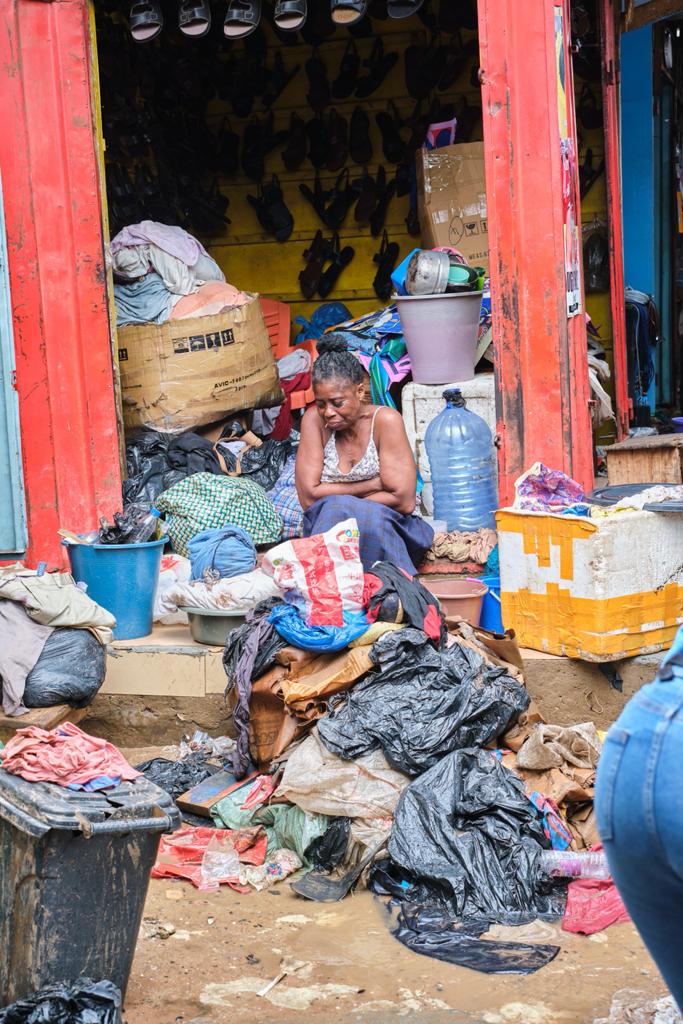
The money grew from colonial-era drains to a US$660 million contract to a US$350 million World Bank programme. And the water still comes to the same places Tetegu, Sampah Valley, Lakeside, Circle, Kaneshie, Odawna, Adabraka, Nima, Alajo at the same time of year, for the same reasons, claiming the same kinds of lives: the poor, the riverside trader, the child in the gutter.
The most damning fact is not that Accra floods. Coastal cities flood. It is that Accra knows precisely why it floods, knows precisely what would stop it, has been told the price, has signed the contracts, has buried the dead, and has held the memorials and when the rains came again in June 2026, the city was found almost exactly as unprepared as the one that made headlines in April 1960.
The rains are not finished this season.
Reported by Isaac Kofi Agyei, Head of Research, JoyNews, and Jacqueline Ansomah Yeboah, Team Lead, JoyNews Explains Desk.
Sources consulted include the Daily Graphic, World Bank GARID appraisal and project documents, UNDP Ghana, ReliefWeb, Pulse Ghana, GhanaWeb, MyJoyOnline, Citi Newsroom, FloodList, Ghanaian Times and Ghana Business News.
This story accompanies the full JoyNews Explains video investigation into Ghana's flooding crisis, available now on YouTube and across JoyNews platforms.
Latest Stories
-
I haven’t experienced any envy in the gospel music industry — Ohemaa Mercy
36 minutes -
Prayer does not solve everything — Ohemaa Mercy
47 minutes -
New PURC office symbolises stronger consumer protection – Dr Jinapor
1 hour -
Rev. Wengam re-elected Assemblies of God, Ghana General Superintendent
1 hour -
Less than 20km of clearing left to connect Accra-Kumasi Expressway to Kumasi – Agbodza
2 hours -
US judge strikes down policy suspending immigrant visa processing for 75 nations
2 hours -
MCEs collecting fees from galamseyers are facilitating illegality – Ken Ashigbey
2 hours -
Developer LMI Holdings commits to completing first 700 Saglemi housing units
2 hours -
Africa’s next chapter will be built by institution-builders, not idea-havers
2 hours -
Wenchi Traditional Council suspends Twafohene indefinitely
3 hours -
Kpassa-Merimeri road undergoes filling and levelling works to improve accessibility
3 hours -
9 Blue Water Guards arrested over alleged bribery, impersonation
3 hours -
Wildlife guard shot dead during Kakum patrol
3 hours -
‘I reject them without qualification’ — Afenyo-Markin hits back over Sammy Gyamfi’s claims
4 hours -
GoldBod must appear before a parliamentary inquiry to answer for gold-trade losses — Appiagyei
4 hours