

Audio By Carbonatix
Plastic pollution in Ghana begins long before waste enters gutters or drains, a plastic policy expert has said, calling for stronger accountability from manufacturers under Extended Producer Responsibility systems.
Manager of the Ghana National Plastic Action Partnership, Nii Noi Kofi Omaboe, says the country’s growing plastic waste challenge cannot be solved if responsibility continues to rest mainly on households and sanitation authorities.
Speaking during the second edition of the Loud and Green XSpace organised by JoyNews and Beyond the Science, Mr Omaboe said the origins of plastic pollution lie in product design and packaging decisions made by companies.
“Plastic pollution does not begin in the gutter. It begins at the point of design,” he said.
He explained that many companies continue to rely heavily on single-use plastics despite the availability of reusable and recyclable alternatives.
According to him, clean-up campaigns alone are not sufficient to address the scale of the problem.
“The accountability we want from companies cannot be reduced to sponsoring clean-ups after the pollution has already happened,” he said. “Companies must rethink their products and redesign their systems.”
Mr Omaboe called for the strict enforcement of Extended Producer Responsibility (EPR), a policy framework that requires manufacturers to bear part of the cost of collecting and recycling the packaging they introduce into the market.
He argued that companies profiting from plastic packaging, especially sachets and bottles, should also share responsibility for managing their environmental impact after consumption.
“If a company profits from sachets and bottles, then it must also carry part of the responsibility for what happens after the product inside is consumed,” he said.
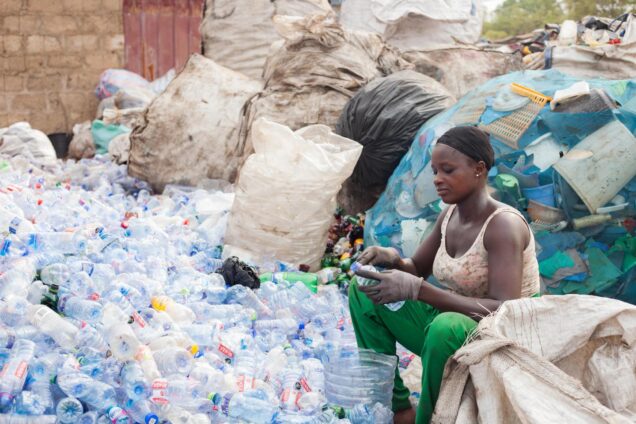
He further outlined key responsibilities for manufacturers, including reducing unnecessary plastic use, redesigning packaging, financing recycling systems, supporting waste collection networks and ensuring fair compensation for waste pickers.
Mr Omaboe stressed that solving Ghana’s plastic challenge requires changes not only in consumer behaviour but also in how products are designed and brought to market.
He maintained that meaningful progress will depend on shifting responsibility upstream, where production decisions are made, rather than focusing only on downstream clean-up efforts.
Latest Stories
-
Savio scores on debut as Spurs bounce back to beat Charlton
1 hour -
Uefa to push to remove Infantino after dropping boycott
2 hours -
GH¢1.7bn GoldBod loss misconstrued – IEA
2 hours -
Mahama unveils Bawku Revitalisation Fund Committee
2 hours -
Christians urged not to hide their gifts for church development
2 hours -
Deputy AG punches holes in Hannan’s counsels’ letters, medical reports
2 hours -
Field cashier of Cooperative Credit Union remanded for stealing
2 hours -
Ghana Armwrestling Federation engages Egyptian Ambassador over sports collaboration
3 hours -
NSMQ 2026: Augusco declared winners, book quarter-final spot after Anlo, Kumasi High walk off
3 hours -
Mourinho says hat-trick hero Mbappe hungry for Real Madrid history
3 hours -
Democracy Cup 2026: Winner to play in the United States in May 2027
3 hours -
NSMQ 2026: St. John’s Grammar knocks Mpraeso SHS off seeded spot, advances to quarter-finals
3 hours -
Rashid Pelpuo welcomes new role, thanks Mahama for keeping him in government
3 hours -
Mahama inaugurates committee to oversee GH¢1bn Bawku Revitalisation Fund
4 hours -
Berko’s US conviction does not automatically establish Ghana bribery claims – OSP
4 hours