

Audio By Carbonatix
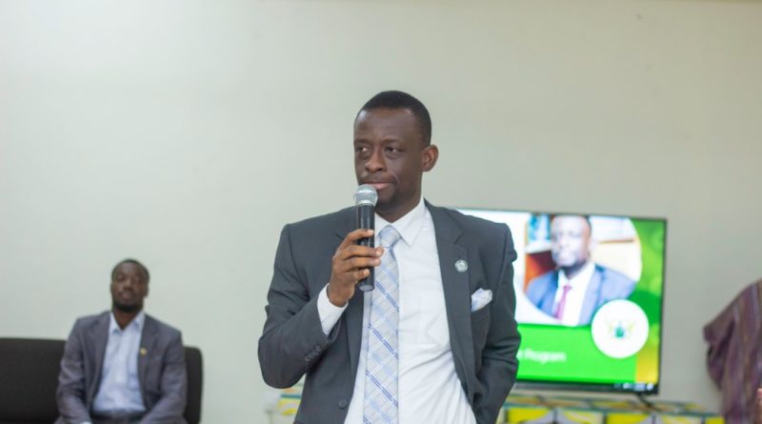
Kwabena Okyere Darko-Mensah, the Member of Parliament (MP) for Takoradi, has proposed consolidation policies to fundamentally restructure Ghana’s mining sector.
Presenting his proposals under the theme: “What Reset Are You Proposing?,” he outlined a comprehensive framework that sought to decentralise mining regulations to increase community participation and promote responsible and sustainable mining practices.
He noted that empowering local communities and decentralising decision-making were key to ending illegal mining (galamsey) and environmental destruction.
Mr Darko-Mensah said Ghana’s current approach to mining governance had failed to adequately address the challenges of galamsey, while also denying mining communities their fair share of benefits from the country’s vast mineral wealth.
He said: “At the heart of the proposal is the decentralisation of all mining licences to the district level with traditional authorities playing a central role through existing District Mining Committees established by laws, so that licence applications will begin and end at the district level to improve accountability and local ownership.”
The MP further proposed a new revenue-sharing formula from mining proceeds, with 18 per cent allocated to mining communities for development and investment, two per cent to district administrations, five per cent for reclamation, replanting and environmental restoration, another five per cent for royalties, and the remaining 70 per cent directed into the national coffers.
Mr Darko-Mensah argued that such a model was feasible, noting that large-scale mining companies already made significant contributions to the state through taxes, royalties, corporate social responsibility initiatives, and other statutory payments.
He also called for the introduction of a mobile licensing regime to regularise the activities of all miners, particularly rock miners, whom he described as generally causing less environmental damage compared to alluvial miners.
Again, he proposed that every mining licence holder should be assigned a qualified engineer to supervise operations and enforce standards relating to safety, water pollution prevention, land restoration, and the proper use of approved chemicals.
He said this would create employment opportunities for professionals, while helping Ghana establish a globally recognised and responsible gold mining brand.
To address pollution of water bodies, Mr Darko-Mensah advocated the establishment of centralised processing centres and tailing dams for alluvial miners.
He said a transportation cost-sharing mechanism, similar to systems used in the cocoa and fuel sectors, could make such facilities affordable to miners while, ensuring environmentally friendly processing methods.
The MP also proposed a major restructuring of the shareholding composition of GoldBod, suggesting that the government ownership should be reduced from 100 per cent to 40 per cent, saying; miners should own 25 per cent, traders 20 per cent, and traditional authorities 15 per cent.
Mr Darko-Mensah explained that broader stakeholder participation would improve upon policy implementation and promote collective responsibility in tackling environmental degradation, town planning, and responsible mineral sourcing.
On environmental restoration, he said local licensing committees should directly oversee reclamation and replanting programmes in partnership with local mining associations.
He cited global evidence indicating that investments in land reclamation projects generated significant economic returns and should be treated as viable development opportunities rather than mere expenditure.
The Takoradi MP further called for the establishment of a dedicated mining bank to provide legitimate financing for miners and reduce dependence on illicit funding sources often associated with environmentally destructive practices.
Mr Darko-Mensah also suggested that abandoned Mines sites and old shafts belonging to large-scale mining companies should be converted into community mining concessions under a tributer system to create jobs for young people and reduce the appeal of illegal mining.
He proposed a deliberate redevelopment and regeneration of mining towns through projects supervised by Regional Coordinating Councils with dedicated funding from central government.
To strengthen surveillance, he called for the deployment of solar-powered CCTV systems to support river guards monitoring Ghana’s major water bodies.
He also suggested the direct engagement and payment of community members to protect forest reserves from illegal miners using revenues generated from carbon credit schemes.
Mr Darko-Mensah said Ghana must shift from criminalising mining as an economic activity to creating systems that promoted responsible extraction, while protecting the environment and ensuring communities derived meaningful benefits from the country’s natural resources.
He argued that only a bold restructuring of the sector would deliver a sustainable balance between economic growth, environmental protection, and job creation.
Latest Stories
-
DVLA to end third-party number plates; begins local production
3 hours -
Shatta Wale: ‘I don’t have any best-performing Mahama appointee’
4 hours -
John Dumelo joins corporate Ghana at upcoming JoySports Invitational Tournament 2026
4 hours -
Preview: JoySports Invitational Tournament 2026 promises a day of sport, fitness and big prizes
4 hours -
Shatta Wale endorses Mahama’s vision, questions appointees
4 hours -
“Gov’t owes me GH¢5m” — Shatta Wale fumes over “total disrespect”
5 hours -
NSMQ 2026: Accra Academy books quarter-final spot, sends Holy Child packing after fierce battle
5 hours -
NSMQ 2026: University Practice stages late comeback to retain seed as Presby SHS, Adeiso suffer one-point heartbreak
5 hours -
The Luckiest CEO Adutwum eyes back-to-back CEO shootout crown at JoySports Invitational
5 hours -
NSMQ 2026: Tie-break agony as Bishop Herman steals quarter-final spot from Asanteman SHS
5 hours -
Ahmadiyya elders urged to lead moral crusade in digital age, warns against rising religious tensions
6 hours -
Baptist Church equips youth to navigate AI and digital era with Biblical values
6 hours -
When giving life becomes a matter of life and death: Ghana’s maternal mortality crisis
6 hours -
SankofaFresh uses technology to cut post-harvest losses and connect farmers to markets
7 hours -
Democracy Is Not For Sale: EC Deputy Director warns against money, bribery in elections
7 hours