

Audio By Carbonatix
The Finance Ministry has made a strong economic case for increased investment in healthcare, arguing that Ghana's greatest national asset is not its currency or natural resources but the health and productivity of its people.
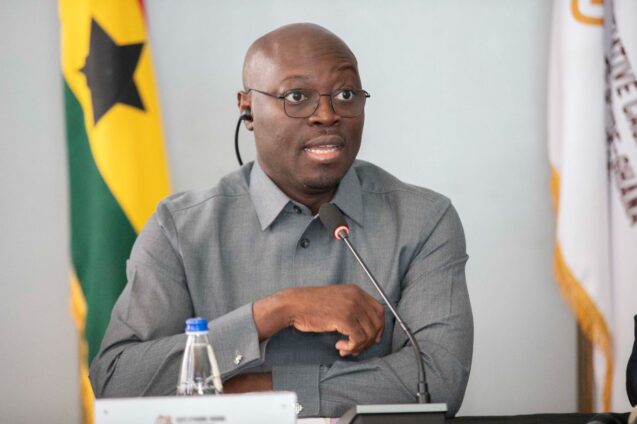
Delivering remarks on behalf of Finance Minister Dr Cassiel Ato Forson at the 2026 Annual Conference of the Christian Health Association of Ghana (CHAG) in Koforidua, Technical Advisor at the Ministry of Finance, Dr Theo Acheampong, said the government now views healthcare as economic infrastructure essential to national development rather than merely a social service.

"You may ask why the Ministry of Finance is so deeply interested in primary healthcare. For us, the answer is simple.
"Health is not merely a social service. Health is economic infrastructure. Investing in healthcare expands access to services, improves productivity and ultimately contributes to national prosperity. A healthy workforce is essential for economic growth.
"The strongest currency of any nation is not simply its money - it is the health, productivity and resilience of its people. That is why the Ministry of Finance is fully committed to supporting the Free Primary Healthcare initiative. We particularly welcome its emphasis on preventive healthcare," Dr Acheampong said.
He explained that investing in healthcare expands access to services, improves workforce productivity and ultimately drives economic growth.
His remarks come as government rolls out the Free Primary Healthcare programme, one of its flagship health reforms aimed at expanding access to preventive healthcare services and accelerating Ghana's progress towards Universal Health Coverage.
According to Dr Acheampong, the programme represents a strategic investment that will reduce the long-term economic cost of disease while improving the population's well-being.
He argued that the country's healthcare financing has, for years, been disproportionately focused on treating illness rather than preventing it.
Citing government expenditure data, he said that approximately 52 per cent of current health spending goes to curative care, while only about 12 per cent is invested in preventive healthcare.
"In practical terms, for every one cedi spent on preventing illness, about four to five cedis are spent treating diseases after they occur. We believe this imbalance must change," he said.
He noted that shifting investment towards prevention would improve health outcomes, reduce pressure on health facilities and lower future healthcare costs.
Dr Acheampong said the Ministry of Finance fully supports the Free Primary Healthcare initiative because of its emphasis on disease prevention, health promotion and early detection.
He stressed that stronger primary healthcare systems would help keep Ghanaians healthy and economically productive while reducing avoidable hospital admissions and expensive treatments.
The Finance Ministry also reaffirmed government's commitment to strengthening healthcare financing.
Dr Acheampong disclosed that Parliament approved GH¢10.7 billion for the National Health Insurance Scheme this year, with GH¢6.5 billion allocated specifically for claims payments to health service providers.
He said the objective is to ensure that health facilities spend more time treating patients rather than pursuing delayed reimbursements.
The Ministry also acknowledged the Christian Health Association of Ghana's contribution to national healthcare delivery, describing the association as a strategic partner whose facilities continue to serve many rural and underserved communities where access to healthcare remains limited.
According to Dr Acheampong, achieving Universal Health Coverage will require sustained collaboration between government, faith-based health institutions and development partners.
He said government would continue investing in primary healthcare infrastructure, health workers and innovative financing while strengthening partnerships that improve access to quality healthcare for all Ghanaians.
"The President's vision is to build a Ghana where quality healthcare is available to every citizen regardless of income, geography or social status," he said.
Dr Acheampong urged stakeholders to view healthcare not simply as public expenditure but as an investment in Ghana's long-term economic transformation, insisting that a healthy population remains the country's most valuable resource.
Latest Stories
-
The Mother’s secret: How Eni Akonobea turned motherhood into a philosophy for flourishing
8 minutes -
JoySports Invitational 2026: Corporate Ghana wraps up a day of thrilling sporting action at Legon
1 hour -
Rotary Club of Accra-Airport, SCEF donate school supplies to over 200 street-connected children
2 hours -
NPP begins vetting of 47 national officer aspirants Monday
2 hours -
BoG inaugurates committee to probe seized foreign currency at Ghana’s borders
2 hours -
NPP internal elections: 47 out of 50 aspirants file nominations; three bow out
2 hours -
Fix Tema Port, roads to cut logistics costs and boost trade — Oro Oil CEO, Maxwell Commey
2 hours -
Undeclared forex undermines financial intelligence, formal market – BoG Governor
2 hours -
GIPA CEO calls for stronger coordination to provide a clearer picture of investment activity
3 hours -
Afenyo-Markin’s lawyers reject claims he is avoiding service on Sammy Gyamfi
3 hours -
Photos: Mahama swears in Ayariga, Zanetor as new Ministers
4 hours -
Check out the list of 100 universities not recognised by GTEC as of August 2026
4 hours -
Mahama in Luanda for 21st AU Extraordinary Session on conflict resolution
4 hours -
Mahama tasks Zanetor with pursuing job creation without harming environment
4 hours -
We will deliver on government’s commitments to Ghanaians — Ayariga assures Mahama
4 hours