

Audio By Carbonatix
Introduction
In Accra, Ghana, a stroll through bustling neighbourhoods like East Legon, Osu Oxford Street, Madina, Ablekuma, Spintex or a journey up north to Tamale, Kumasi, or move to the Western city of Takoradi reveals a striking trend: gleaming storefronts and social media adverts promising “perfect curves,” “pink skin,” “shiny teeth,” and “Hollywood smiles’ Flat tummies” . Beauty clinics and spas are multiplying at an unprecedented rate, offering everything from buttock and breast enhancements to flat tummies and fashion braces. Yet beneath these glossy advertisements and seemingly glamourous appearances lies a public health crisis that experts warn is fuelling a surging rate of cancer, kidney disease, hypertension, and other non-communicable diseases (NCDs) across the country (Amoako et al., 2021).
Who Is Watching?
Regulatory oversight remains alarmingly weak. The Food and Drugs Authority (FDA) Ghana is mandated to regulate cosmetic products, while the Health Facilities Regulatory Agency (HeFRA) licenses health facilities. However, enforcement is inconsistent, and many so-called “beauty clinics” operate under the guise of salons, exploiting legal loopholes (FDA Ghana, 2020). This regulatory gap allows untrained individuals often self-proclaimed beauticians to administer intravenous infusions, inject skin-lightening agents, and perform invasive procedures without medical training or accountability.
These practitioners frequently source skin-bleaching creams and injectables from unverified international suppliers, including online marketplaces. Many of these products contain dangerous levels of mercury, hydroquinone, and corticosteroids substances banned or strictly regulated in other countries due to their toxic effects (Nkemngong et al., 2022). Mercury, for instance, is a known nephrotoxin linked to chronic kidney disease, while prolonged hydroquinone use increases the risk of ochronosis and skin malignancies (WHO, 2020).
The “Figure 8” Body: A Dangerous Ideal
The pursuit of the so-called “figure 8” body characterized by a narrow waist and exaggerated hips has become a global obsession. Women are resorting to extreme measures: starvation, unregulated slimming teas, herbal pills, and topical creams promising rapid fat reduction or localised weight gain for specific parts of the body. Many apply unknown oils and chemical mixtures to enhance buttock size, often without understanding the ingredients or potential health consequences.
Home-based vendors, operating with little to no regulation, produce all kinds of oral and topical beauty products like soaps, hips, butts and breast enhancement creams/oils from the comfort of their kitchens and backyards and then sell openly via social media platforms. These high demand products are sold in unlabelled containers with no ingredient list, production and expiry dates, FDA certification details; talk less of dosages or instructions for use. Others are importing weight loss or gain products and openly bragging of having the most affordable and potent products while comparing themselves to each other. The rise of “okada” (motorbike) delivery services has made access easier than ever. Influencers with idealized physiques promote these products, creating a cycle of demand driven by appearance rather than safety or science. Interestingly, many of these influencers never use the products and services they advertise.
This obsession ignores biological realities: body shape is influenced by genetics, hormonal balance, metabolism, and nutrition not by miracle creams or dangerous concoctions (Addo et al., 2020). Yet, the pressure to conform to an increasingly narrow beauty standard continues to grow.
Fashion Braces: When Aesthetics Override Health
One of the most concerning trends is the rise of “fashion braces” cosmetic dental appliances marketed solely for aesthetic enhancement, not orthodontic correction. These cheap, unregulated devices are often imported from dubious online sources and installed in beauty salons and spas by unlicensed personnel.
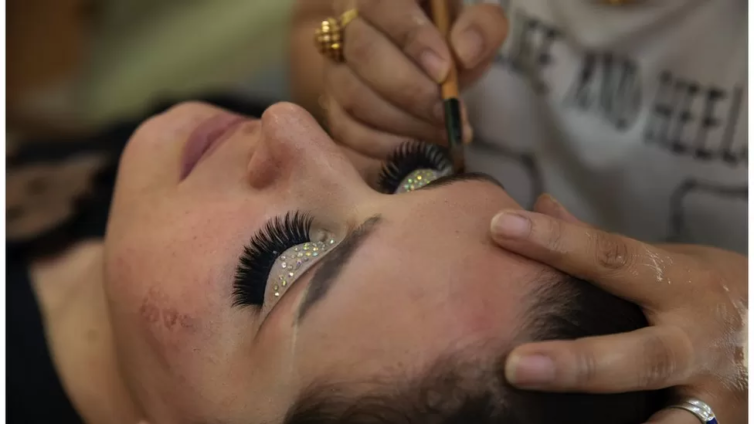
I recently witnessed a disturbing scene: a woman reclining on a salon bench typically used for eyelash extensions receiving braces installation from a beautician who, I later learned, was national service personnel with no dental training and operates a beauty salon as a side hustle. Two other young ladies waited their turn. This normalization of medical procedures in non-clinical settings is a public health red flag.
Certified orthodontists warn that improperly fitted braces can cause irreversible damage, including tooth root resorption, periodontal disease, enamel erosion, and even tooth loss (Opoku et al., 2023). Yet, the desire for a “perfect smile” for TikTok, Facebook, and Instagram reels overrides caution. The aestheticization of health interventions turns critical medical care into a fashion accessory with potentially lifelong consequences.
Skincare as Social Currency
Skincare routines have evolved into a social status symbol. Women are bombarded with messages that not having a multi-step regimen equates to being “laid back” or irresponsible. Influencers promote complex routines involving toners, serums, exfoliants, and bleaching agents often without disclosing ingredients or risks.
More troubling is the practice of mixing multiple products sometimes from different brands and chemical compositions into custom “toning” or “brightening” blends. I once observed a vendor in a cosmetic shop advertising a “bridal glow package” promising “caramel, mulatto, and half-cast” skin tones days before weddings. These mixtures, created without regard for chemical interactions, are sold with glowing testimonials audio and video “proof” of transformation yet their long-term effects remain unknown.
Even more alarming is the bleaching of infants and toddlers. Some parents apply skin-lightening creams on newborns, believing lighter skin offers social and economic advantages (Boakye, 2022). This practice reflects deep-seated colorism rooted in colonial legacies and perpetuated by media and advertising.
Meanwhile, natural, safe, and effective alternatives like raw shea butter, cocoa butter, cold-pressed coconut oil, and olive oil ingredients foundational to many commercial products are being abandoned in favor of branded, chemically-laden alternatives. Ghanaian-owned brands like *Skin Gourmet*, which prioritize natural formulations, offer a healthier, culturally rooted alternative, a brand I have personally used for years.
Why Are Women Risking Their Lives?
Is this merely low self-esteem? The answer is more complex. Body shaming is rampant in Ghanaian society. From family gatherings where relatives comment on a woman’s flat chest or dark skin, to university campuses where skin tone dictates social inclusion, the psychological pressure is relentless. Social media amplifies this, with anonymous users dissecting women’s bodies in comment sections.
Influencers many of whom use filters, editing tools, or even undergo undisclosed procedures promote unattainable beauty standards. The advertising industry profits from this insecurity, turning women’s bodies into projects to be “fixed.” As one young woman confided, “If I don’t enhance my body, no man will want me.” This belief, though deeply personal, is structurally reinforced by cultural norms, media narratives, and economic incentives.
The Cost of “Pretty”
The human cost of this beauty war is staggering:
Skin lightening (“toning”) is linked to chronic kidney disease, mercury poisoning, and skin cancers (Nkemngong et al., 2022).
Unregulated butt injections, often using industrial silicone or unsterile fillers, have caused pulmonary embolisms, infections, and deaths (Amoako et al., 2021).
Herbal “detox” drips administered by untrained hands can lead to septic shock, air embolisms, and IV site infections.
Fashion braces and DIY teeth whitening are destroying healthy dentition.
Despite these risks, clinics continue to multiply, and customers keep coming driven by a culture that equates beauty with worth.
A Way Forward
1. Strengthen Regulation
The FDA and HeFRA must be empowered with clearer mandates, increased staffing, and greater enforcement capacity. A publicly accessible registry of licensed beauty and cosmetic practitioners should be established to enable consumer verification. Customs agencies must intensify screening of imported cosmetic products, particularly those shipped via informal channels.
2. Public Education Campaigns
The Ministry of Health, Ghana Health Service, and National Commission for Civic Education should launch nationwide campaigns on the dangers of unregulated cosmetic procedures, skin bleaching, and DIY treatments. These should include school curricula, community outreach, and media partnerships.
3. Hold Influencers Accountable
Social media influencers who promote cosmetic products must disclose whether they use them and whether they are certified by health authorities. Platforms like Instagram and TikTok could be pressured to remove content promoting dangerous practices.
4. Cultural Shift
Change must also be cultural. Family and friends must stop body-shaming. Men must learn to celebrate women as they are. Women must reclaim agency over their bodies not as projects to be perfected, but as sites of strength, identity, and pride.
My Body, My Pride
Pride is not the rejection of self-improvement. It is the rejection of shame as a marketing tool. It is the courage to ask, *“What’s in this cream?” or “Are you licensed to inject me?”. It is understanding that real beauty does not require dialysis, reconstructive surgery, or a visit to the oncology ward.
Pretty hurts. But it doesn’t have to kill you. Your health is not a trend.
References
Addo, P. C., Osei, K., & Boateng, A. (2020). Body image perception and its determinants among young women in urban Ghana. *Ghana Medical Journal, 54*(3), 167–174. https://doi.org/10.4314/gmj.v54i3.5
Amoako, A. A., Asamoah, B. O., & Frimpong, J. B. (2021). The rising trend of cosmetic surgery and its implications for public health in Ghana. *BMC Public Health, 21*(1), 1–9. https://doi.org/10.1186/s12889-021-10945-4
Boakye, Y. (2022). *Colourism and skin bleaching in Ghana: Historical roots and contemporary realities*. African Studies Quarterly, 21(2), 45–60.
Food and Drugs Authority (FDA) Ghana. (2020). *Guidelines for the regulation of cosmetic products in Ghana*. FDA Ghana.
Nkemngong, M. A., Umoh, A. S., & Ajoke, C. A. (2022). Mercury and hydroquinone levels in skin-lightening creams marketed in Ghana and Nigeria: Public health implications. *Journal of Environmental and Public Health, 2022*, 1–8. https://doi.org/10.1155/2022/9786543
Opoku, M. P., Nyako, E. A., & Ofori-Asenso, R. (2023). Orthodontic tourism and the rise of “fashion braces” in urban Ghana: A call for regulation. *BMC Oral Health, 23*(1), 1–7. https://doi.org/10.1186/s12903-023-03058-5
World Health Organization (WHO). (2020). *Mercury in skin lightening products: A global review of legislation and enforcement*. WHO Press. https://www.who.int/publications/i/item/9789240014748
Note: All names and specific locations used in personal observations are based on the author’s lived experience and are not intended to identify individuals or businesses for legal action.
Written by Dorcas Zenabu Seidu
Program Manager – Public Health Nursing – Office of Director Nursing and Midwifery – GHS
Executive Assistant - DNMS
Latest Stories
-
Isak nets winner as Liverpool edge Bournemouth
19 minutes -
I dare gov’t of Ghana to extradite me; they can never do it – ‘Ghana Jollof’ speaks
21 minutes -
Semenyo scores twice as Manchester City beat Sunderland 5-3 in eight-goal thriller
31 minutes -
Parliament calls for government-private sector collaboration to improve waste management
33 minutes -
Volta Region described as cleanest so far in Parliament’s nationwide sanitation monitoring
43 minutes -
Parliament urges MMDAs to enforce sanitation bylaws to curb indiscriminate waste disposal
48 minutes -
Mohammed Kudus drops out of Ghana squad for AFCON 2027 qualifiers against Côte d’Ivoire and Gambia
1 hour -
Africa World Airlines unveils first Embraer E190 as part of 10-aircraft fleet expansion
3 hours -
Civilian hospitalised after alleged machete attack by prison officers, inmates
3 hours -
Toobu rejects calls to recall Parliament over 3.9-tonne cocaine shipment
3 hours -
Residents in 5 Northern Regions warned of approaching rainstorm
4 hours -
Constituency Games still a work in progress – Sports Minister
4 hours -
Team Ghana set for historic Karting Africa Showrun in Angola
4 hours -
52-year-old South African arrested with suspected heroin after arriving from Accra
4 hours -
Shatta Wale challenges UPSA students to build entrepreneurial mindsets
5 hours