

Audio By Carbonatix
Africa has endured colonialism, conflict and extraction. It possesses minerals, land and the world's youngest population. And still the question persists, quietly and without mercy: what are we choosing to do with what we have?
At Some Point, The Explanation Becomes The Prison
Perhaps no continent has endured more genuine historical adversity than Africa. Colonialism disrupted societies, arbitrarily drawn borders fragmented communities, slavery robbed millions of their dignity and global inequalities continue to distort trade and development. These facts must never be minimised or forgotten.
And yet. There is another truth, far less comfortable to acknowledge, that sits beside those facts and refuses to leave. History may explain where we started. It cannot permanently excuse where we choose to remain.
Across Africa, it has become common to attribute almost every contemporary challenge to circumstances beyond our control. When institutions fail, we blame history. When infrastructure deteriorates, we blame previous governments. When corruption flourishes, we blame politics. When cities flood, we blame climate change. Many of these explanations contain truth. But explanations are not solutions. And at some point, which few of us are brave enough to name precisely, explanations become excuses. Circumstances become hiding places for choices we simply refuse to make.
That is the question this article will not look away from. What is wrong with us?
“Circumstances introduce us to life. Choices introduce us to history.”
NyansaKasa — Words of Wisdom
Sit with that for a moment. We rarely control how the story begins. But we are never without agency in how it continues. Every society that has ever transformed itself understood, at some point, that waiting for circumstances to improve was itself a choice, and one of the most expensive a nation can make. The question is not what happened to us. It is what we are doing, right now, with what remains.
When Circumstances Become Convenient Excuses
No nation chooses whether rain falls. But every nation chooses whether drains are maintained. No country chooses global commodity prices. But every country chooses whether to diversify its economy. No government chooses where minerals are located. But every government chooses how transparently those resources are managed. No community chooses every disease outbreak. But every community chooses whether refuse is dumped into gutters or whether sanitation becomes a daily non-negotiable.
The distinction matters because too often Africa confuses unavoidable circumstances with entirely avoidable decisions. When plastic waste blocks drainage systems, rainfall is not the primary problem. When roads deteriorate because overloaded vehicles repeatedly destroy them, weather is not the principal issue. When schools fall into disrepair despite substantial investments in their construction, time is not the enemy. Neglect is. Choice is. Circumstances present challenges. Choices determine outcomes. That sentence deserves to be read again slowly, and then applied to every institution, every community and every individual on this continent.
“History rarely rewards those who waited for perfect circumstances. It remembers those who created better ones.”
NyansaKasa — Words of Wisdom
Japan rose from the ruins of a world war. Singapore built a global economy from a city with almost nothing beneath its soil. South Korea was once poorer than many African nations and chose, in the space of two generations, to become a technological powerhouse. Rwanda emerged from the darkest hour a people can endure and chose, deliberately and consistently, to rebuild. None of them had perfect circumstances. They had something rarer and more powerful: the collective decision to stop waiting for permission from history to move forward.
Africa's Greatest Resource Is Not Beneath the Ground
Africa holds approximately 30% of the world's known mineral reserves. It has vast arable land, immense renewable energy potential and the youngest population of any continent on earth. By 2050, Africa's population will approach 2.5 billion people, one of the greatest concentrations of human potential anywhere in human history. And yet natural wealth has never, in the whole of recorded history, guaranteed national prosperity.
Because resources are circumstances. Institutions are choices. Minerals do not govern themselves. Rivers do not educate children. Sunlight does not eliminate corruption. Population growth alone creates not prosperity but pressure, unless it is met by the deliberate choices of governance, education, investment and accountability that convert human potential into lasting human progress.
‘Resources are circumstances. Institutions are choices.’
“Natural resources may enrich a nation temporarily. Wise choices enrich generations.”
NyansaKasa — Words of Wisdom
Botswana has no ocean. It has no strategic port. It sits landlocked in southern Africa, blessed with diamonds and governed, crucially, with a seriousness of purpose that most resource-rich nations have failed to sustain. Mauritius has even fewer natural endowments and has nonetheless built one of Africa's strongest and most diversified economies through precisely that quality: the consistent, unglamorous, deeply disciplined choice to govern well when it would have been so much easier not to.
The Cost of Choosing Convenience Over Responsibility
Many of Africa's greatest challenges are not the product of insufficient knowledge. They are the product of insufficient discipline. We know that dumping refuse into gutters contributes to flooding, yet many continue. We know that routine maintenance costs far less than replacing destroyed infrastructure, yet maintenance budgets are routinely sacrificed. We know that corruption diverts scarce public resources from schools, hospitals and roads, yet many continue to participate in it whenever it appears personally convenient. None of these outcomes result primarily from ignorance. They result from choices. And that is the most uncomfortable truth of all, because it means the solution does not lie elsewhere. It lies with us.
Africa's children are watching. They are learning not only from speeches but from behaviour. They observe how we respond to adversity, how we treat public property, how seriously we take our responsibilities as citizens. One day they will inherit our institutions. More importantly, they will inherit our habits. And habits, unlike policies, do not change because an election was held.
“Wisdom is not measured by what we know. It is measured by what we consistently choose to do.”
NyansaKasa — Words of Wisdom
That distinction should stop every one of us cold. We have attended the conferences. We have written the reports. We have delivered eloquent speeches about transformation and the Africa we want. And then, in the car on the way home, some of us have thrown plastic out of the window. Knowledge tells us what is right. Wisdom is what happens when we choose it anyway, even when no one is watching, even when it costs something.
The Choice That Still Belongs To Us
Africa's story is not finished. It is not predetermined. It is not imprisoned by colonial history, economic inequality or global competition, however real and however painful those realities remain. The next chapter will be determined not by what was done to Africa but by what Africa chooses to do next. Every road properly maintained instead of neglected. Every river protected instead of poisoned. Every young person inspired instead of abandoned. Every act of honesty chosen over corruption. Every citizen who decides that integrity matters even when no one is watching. These choices may appear small in isolation. Together, they are the only force in human history that has ever genuinely changed a nation.
History will record that Africa possessed minerals, land, brilliant young people, extraordinary resilience and immense potential. But history will ask one question that no continent can escape: what choices did we make with the gifts we were given? Circumstances may explain where we are today. They do not determine where we must be tomorrow. That decision, still, belongs to us.
“Your circumstances may influence your journey, but your choices determine your destination.”
NyansaKasa — Words of Wisdom
Before we blame history, geography, politics or fate, perhaps we owe ourselves one moment of genuine reflection. Not the comfortable kind, performed in public, in eloquent language, to an admiring audience. The uncomfortable kind. The private kind. The kind that asks, without flinching, what we have personally chosen today that made this continent even slightly better than it was yesterday. And if the answer is nothing, then perhaps that is precisely what is wrong with us. And perhaps, more importantly, it is exactly where the healing begins.
ABOUT THE AUTHOR
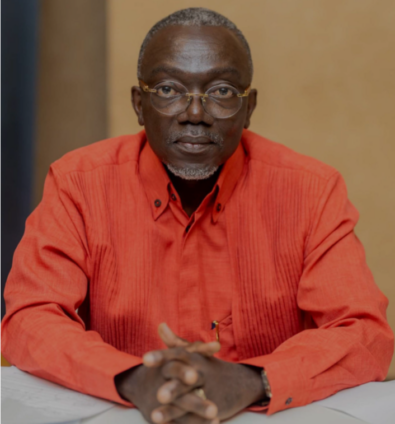
Ing. Professor Douglas Boateng is a pioneering international industrial engineer, governance strategist and Pan-African thought leader whose work continues to shape boardroom thinking, supply chain transformation and industrialisation across the continent and globally. Africa's first Professor Extraordinaire in Supply Chain Management, he is an International Chartered Director and Chartered Engineer, a recipient of numerous lifetime achievement awards, and the author of several authoritative books. He is also the founder and scriber of NyansaKasa (Words of Wisdom), whose daily reflections on leadership, accountability and purposeful living have reached one million readers worldwide. His driving conviction: Africa's transformation is not waiting for better rhetoric. It is waiting for better choices, made by leaders willing to serve something larger than themselves.
Latest Stories
-
Côte d’Ivoire 2-0 Ghana: Sibo earns lowest mark as Boakye takes opportunity – Black Stars ratings
21 minutes -
Stance considering autonomy under Moroccan sovereignty ‘could constitute most feasible solution’
42 minutes -
AFCON 2027Q: Black Stars open campaign with defeat to Ivory Coast in Bouaké
1 hour -
From construction site to top of class: Daniel Doe emerges Legon’s best Computer Engineering student
1 hour -
Mahama: Peaceful political transitions prove democracy can work in Africa
2 hours -
“The law must work” – NDC rejects claims Salomey Baffoe’s bail denial is diversion from cocaine scandal
2 hours -
Police arrest two suspects over murder of Senegalese goalkeeper
2 hours -
TVET Service, Bank of Ghana explore partnership to boost skills development
3 hours -
Ghana TVET Service, OR Foundation partner to promote sustainable fashion
3 hours -
Achimota, Accra Academy, PRESEC Osu qualify for next stage of National Public Speaking Event
3 hours -
NCPTA challenges GES directive on PTA dues, cites High Court injunction
3 hours -
Majority opposes parliamentary probe into cocaine busts while investigations continue
3 hours -
Salomey Baffoe detention is a facade to divert attention from cocaine scandal – Weija-Gbawe MP
3 hours -
Francis-Xavier Sosu is doing well after GIMPA incident – Office
3 hours -
Deputy Minority Leader appeals to First Lady, Vice President over Salomey Baffoe’s detention
3 hours