

Audio By Carbonatix
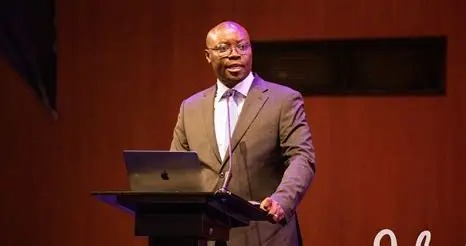
Finance Minister Dr Cassiel Ato Forson says Ghana can generate more sustainable revenue through better tax policies, stronger compliance, and efficient administration rather than imposing higher taxes on citizens and businesses.
Presenting the 2026 Mid-Year Budget Review in Parliament on Thursday, July 23, Dr. Forson argued that the government's recent tax reforms demonstrate that increasing tax rates is not the only way to improve domestic revenue mobilisation.
"The lesson here is simple. Better policy, stronger compliance, and smarter administration will always deliver more sustainable revenue than higher taxes," he stated.
According to the Finance Minister, the government's approach has focused on modernising Ghana's tax system to restore investor confidence, revive private enterprise, provide relief to households and businesses, and increase domestic revenue without introducing additional tax burdens.
As part of the reforms, he noted that the government abolished what it described as "nuisance taxes," including the Electronic Transfer Levy (E-Levy), Betting Tax, COVID-19 Health Recovery Levy, Emissions Tax and VAT on motor insurance.
Dr Forson also highlighted comprehensive Value Added Tax (VAT) reforms, describing them as the first major overhaul of the system since 2015.
He said the reforms have removed distortions in the tax regime, improved efficiency, strengthened compliance and left businesses with more working capital to invest, expand operations and create jobs.
On customs administration, the Finance Minister said the introduction of artificial intelligence-powered systems has significantly improved compliance, reduced leakages and enhanced revenue collection.
"Since the introduction of the AI-powered customs reforms, monthly customs revenue has increased by approximately 17%, reflecting stronger compliance, more effective enforcement and significantly reduced leakages," he said.
Dr Forson further revealed that the government has amended the management of the Tax Refund Account to prevent its misuse and ensure resources are used solely for legitimate tax refunds.
Despite scrapping several taxes and introducing no new tax measures, the Finance Minister said non-oil tax revenue rose from 12.6 per cent of GDP in 2024 to 13.1 per cent of GDP in 2025.
"In simple terms, the government collected more taxes in 2025 even after abolishing the nuisance taxes, including the E-Levy," he told Parliament.
He maintained that the results validate the government's strategy of prioritising policy reforms, improved compliance and smarter tax administration over increasing tax rates.
Latest Stories
-
Prof. Kwofie urges publishers to use indigenous knowledge systems to decolonise AI
3 hours -
NDC’s two years of economic gains not enough to establish stability – Alan Kyerematen
3 hours -
AFCON 2027Q: Nine new call-up for Cote, The Gambia matches
3 hours -
Ghana’s MSMEs: Burdened by regulation and overtaxed; why the system isn’t working
3 hours -
Patience Akyianu, former Barclays Bank Ghana MD and Hollard Group CEO, reported dead
3 hours -
Mahama pushes ‘health sovereignty’ agenda, says Global South needs control over resources
3 hours -
Mahama: We are reforming systems, fighting corruption and improving use of public funds
4 hours -
Catholic Bishops welcome task force to tackle drug menace, acknowledge inter-agency efforts
4 hours -
Ghana Catholic Bishops demand urgent action against drug trafficking
4 hours -
Tamale: 5 arrested over suspected drug activities; police seize pistols, narcotics
4 hours -
We have lost a great developer – Mankranso residents pay tribute to late DCE
4 hours -
Ghana Law Society sets September 30 for maiden Bar Conference on legal reforms
4 hours -
GPL Week 3: Port City’s Gyetuah bags a brace as 9 outstanding players named NASCO Players of the Match
5 hours -
Visibility without substance is just noise; I don’t seek popularity—Dr Oppong-Fosu
5 hours -
The late Abubakar Sedik was an exceptional DCE – Ashanti Regional Minister
5 hours