

Audio By Carbonatix
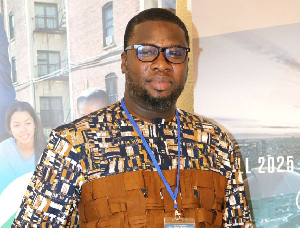
Africa’s ability to address its growing environmental challenges will depend significantly on empowering girls and young women to participate in science, technology, engineering and mathematics (STEM), a climate policy advocate has said.
Mr Gabriel Nii Kommey Adams said investing in girls’ education, innovation and leadership opportunities is critical to building a sustainable and climate-resilient continent.
He made the remarks at the Environmental Education and Lifelong Learning Conference organised by the Pan African Centre for Climate Policy (PACCP) in Ghana, under the theme: “Unlocking Africa’s Green Future: The Power of Girls in STEM, Environmental Stewardship, and Social Innovation.”
According to him, Africa’s environmental challenges, including climate change, illegal mining, deforestation, land degradation, poor waste management and declining biodiversity, require innovative solutions driven by local talent.
“Africa’s green future is already present in the dreams, intelligence and creativity of its girls. Our responsibility is to unlock it,” he said.
Mr Adams argued that girls should not be viewed merely as beneficiaries of climate interventions but as potential scientists, engineers, entrepreneurs and policymakers capable of developing solutions to Africa’s environmental challenges.
He highlighted the story of a young girl in a rural African community who, despite facing challenges such as poor sanitation, unreliable electricity, flooding and declining agricultural productivity, could become the innovator behind solutions to those problems if given the right opportunities.
STEM as a tool for transformation
Mr Adams said STEM education goes beyond academic achievement, describing it as a tool for solving practical challenges facing communities.
He explained that young women equipped with STEM skills could contribute to areas such as renewable energy development, climate-smart agriculture, flood prediction systems, waste management and environmental monitoring.
However, he noted that gender stereotypes, limited access to digital tools, inadequate mentorship and unequal opportunities continue to discourage many girls from pursuing careers in technical fields.
“We must replace these barriers with a new message: You belong in science. You belong in engineering. You belong in technology. You belong wherever Africa’s future is being designed,” he said.
He called for deliberate efforts by governments, schools, businesses and development partners to create pathways for girls to access STEM education, mentorship and innovation opportunities.
Environmental education beyond classrooms
The climate advocate stressed that environmental protection must not depend only on laws and enforcement but should begin through education and lifelong learning.
He encouraged schools to become practical centres for sustainability by introducing activities such as tree planting, recycling, water conservation, clean energy projects and climate-smart agriculture.
“Education must not simply prepare young people to pass examinations. It must prepare them to protect life, serve society and sustain the planet,” he said.
Mr Adams also called for stronger links between schools, universities, communities, industry and government to ensure that promising ideas developed by young innovators receive mentorship, funding and opportunities for implementation.
Call for investment and partnerships
He urged policymakers to translate commitments into investments through gender-responsive STEM policies, scholarships, infrastructure and training programmes.
Businesses, he said, must support green skills development, invest in female-led enterprises and create opportunities for young innovators.
Development partners, he added, should provide long-term financing for community-based environmental solutions.
“Talent is equally distributed, but opportunity is not. Our duty is to close that gap,” he said.
Mr Adams encouraged young girls to embrace science and innovation, reminding them that their ideas and experiences could become the foundation for solutions to Africa’s environmental problems.
He concluded that Africa’s green transformation would not be achieved by technology alone but through empowered people, responsible leadership and communities committed to protecting natural resources.
“The future is green. The future is inclusive. The future is African. And our girls must be at the heart of it,” he said.
Latest Stories
-
Ghana links Afghan heroin and Brazilian cocaine to global drug markets – Global Organised Crime Index
2 minutes -
NHIA launches nationwide inter-school quiz to deepen students’ knowledge of NHIS
9 minutes -
Political protection could be masking Ghana’s cocaine trade – Global Organised Crime Index
14 minutes -
AFCON 2027Q: ‘We have to dissolve the GFA’ – Effia MP after Black Stars lose to Gambia
16 minutes -
NPP announces voting schedule and ID requirements for October 3 national elections
18 minutes -
Lupus can mimic HIV symptoms and damage kidneys if untreated – KNUST expert
21 minutes -
Focus on Sickle Cell Foundation seeks to introduce sickle cell education through comics in Ghanaian schools
27 minutes -
NPP rewrites the campaign playbok as opposition reality shapes National Executive contest
28 minutes -
Road safety education will fail without enforcement – NRSA boss
29 minutes -
Daily Insight for CEOs: Finishing Q3 strong and entering Q4 with purpose
30 minutes -
National Ambulance Service begins ‘Operation Restore Fleet’ to restore grounded ambulances
31 minutes -
GNFS rescues 35-year-old driver trapped in overturned tipper truck in Upper East
32 minutes -
Unlicensed fuel trucks endanger Ghanaians – Transparency International Ghana
33 minutes -
Akyem Hemang residents demand justice for man shot and killed at mining site by suspected military men
34 minutes -
Okada riders must belong to registered unions or companies from 2027 – NRSA
34 minutes