

Audio By Carbonatix
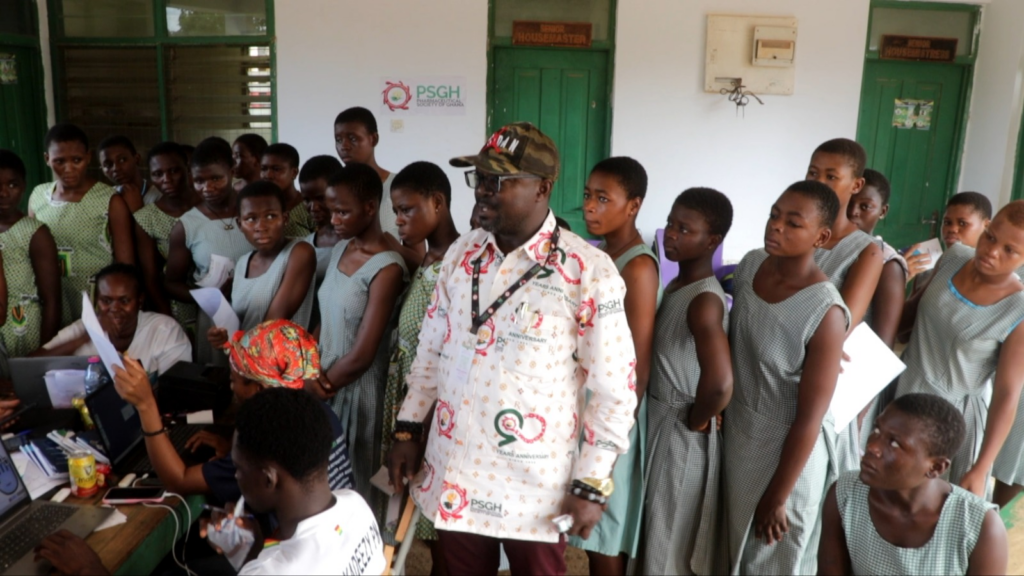
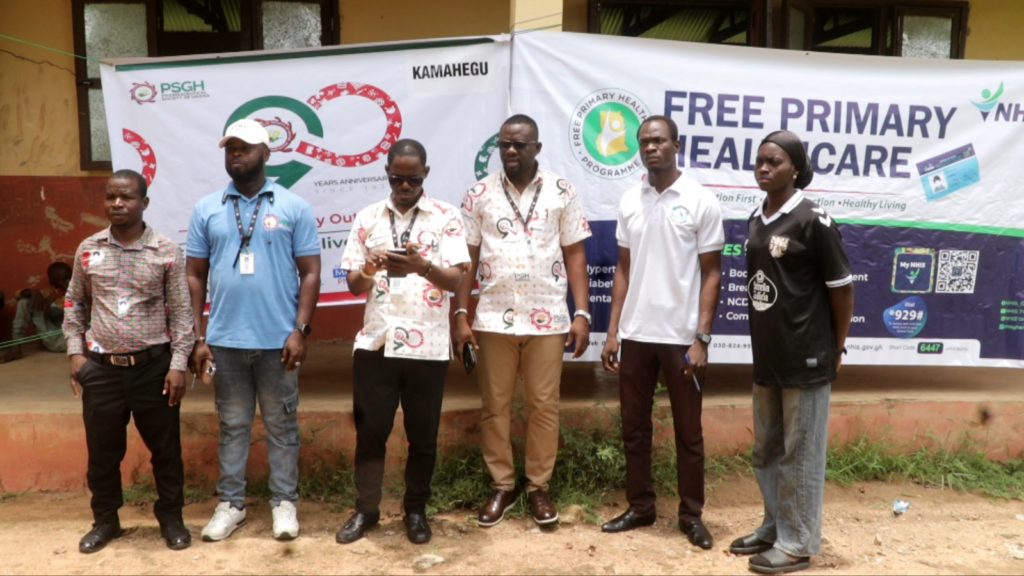
A total of 343 people, comprising 225 students severely affected by recent natural disasters and 118 vulnerable residents from Kamahegu, have received free National Health Insurance Scheme (NHIS) registrations and renewals.
The health outreach, solely organized by the Pharmaceutical Society of Ghana (PSGH), enlisted the National Health Insurance Authority specifically to facilitate the registration exercise.
This initiative vastly exceeded the regional target of 100 people and contributed toward the broader national PSGH@90 target of over 900 beneficiaries across the country.
The intervention, which covered Kamahegu in the Daffiama Bussie Issa (DBI) District and Jirapa Senior High School in the Jirapa Municipality, forms a core part of the PSGH’s 90th-anniversary celebrations under the theme, "Science, Impact, Legacy."
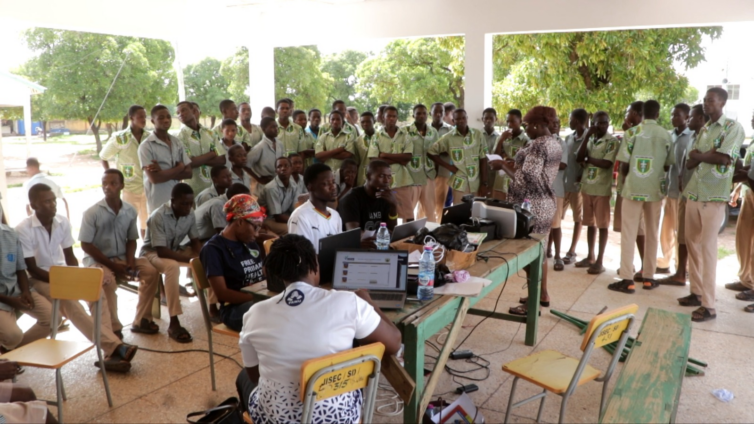
At Jirapa Senior High School, the exercise served as a critical lifeline for the 225 students who lost their NHIS cards and personal belongings to a recent rainstorm and a severe fire outbreak that gutted six boys' dormitory rooms.
The Headteacher of Jirapa Senior High School, Abdul Mumuni Adams, expressed profound gratitude for the gesture, emphasising the financial relief it would provide as the school recovers from the two disasters.
“It is not a bowl of gari, but with this gesture, it is more than a million Ghana cedis. It will help us and shy away the possibility of being asked to put money down before our students are treated at the hospital,” Mr Adams said.
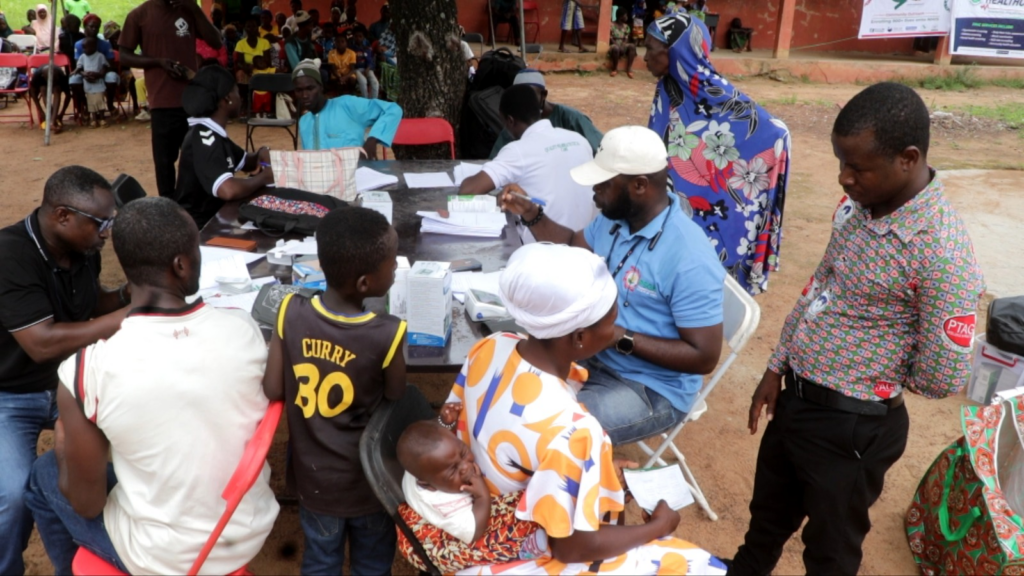
In Kamahegu, a rural farming community that routinely faces geographical and financial barriers to healthcare, the exercise provided dozens of free new registrations and NHIS card renewals.
The District Manager of the NHIS, Nasiru Abass, revealed that logistical constraints had prevented his team from visiting the community for nearly three months, making the PSGH partnership particularly timely.
A teacher at Kamahegu, Majeed Gafaru, corroborated this situation, noting that the high cost of travelling to the district capital had previously left many vulnerable residents without active NHIS coverage.
The Regional Chairman of the Pharmaceutical Society of Ghana, Dr Maxwell Mwinzumah, said the initiative was designed to complement the government’s Free Primary Health Care policy.
He stressed that no one should be denied healthcare because of cost, adding that active NHIS cards enable vulnerable people to access higher-level medical facilities when they are referred from local Community-based Health Planning and Services (CHPS) compounds.
Beyond the insurance registrations and renewals, the medical team provided free health screenings for blood pressure, blood sugar and malaria. Suspected cases of hypertension were referred to local health facilities for further monitoring and care.
Dr Mwinzumah, who is also the Director of University Health Services at SDD-UBIDS, used the opportunity to caution the public, particularly young people, against lifestyle choices that could lead to chronic and life-threatening illnesses.
He linked the reported rise in acute kidney injuries among teenagers to the inappropriate use and abuse of painkillers, and warned students against skipping meals, which he said could contribute to severe peptic ulcer disease.
“If you consume painkillers anyhow, know that the side effect is chronic kidney issues. By the time it occurs, you will have forgotten what you did and start blaming a witch,” Dr Mwinzumah said.
He also advised residents to reduce their salt intake significantly to help prevent hypertension, which he described as a “silent killer”.
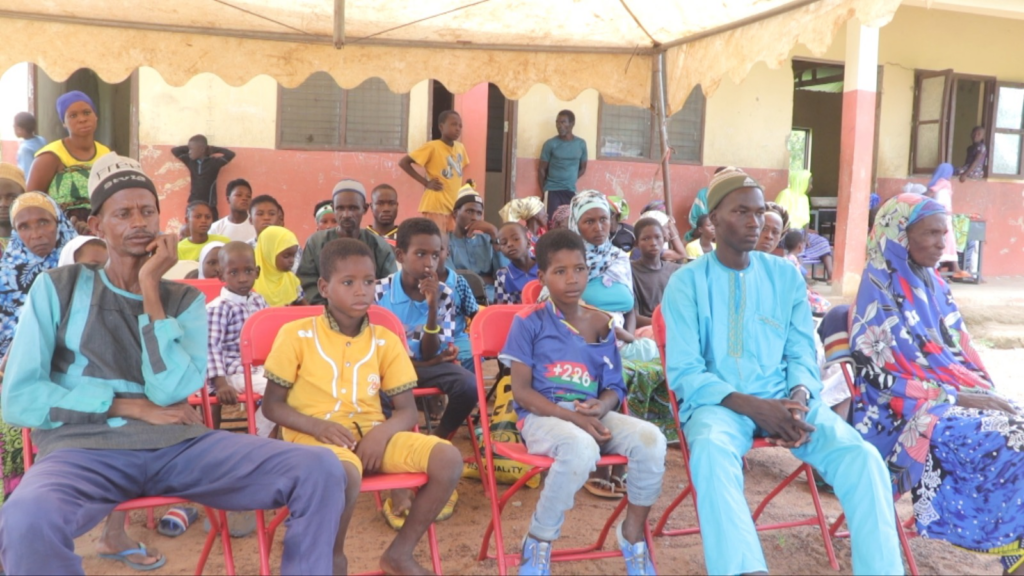
To help beneficiaries understand the changing healthcare system, the Regional Operations Officer of the NHIS, Lily Yendaw, educated participants on a proposed three-tier healthcare framework aimed at reducing financial barriers to treatment.
She explained that patients would first access free primary healthcare at CHPS compounds and health centres.
Where a patient's condition requires further treatment, the active NHIS card would be used to access services at major hospitals.
For severe and chronic non-communicable diseases (NCDs) that fall outside standard NHIS coverage, she introduced the Ghana Medical Trust Fund, popularly known as “Mahama Care”, which is intended to cover specific high-cost treatments.
Following the outreach exercises in Kamahegu and Jirapa, the PSGH and NHIS leadership, including Chief Pharmacist Dr Chum, announced plans for a special follow-up mission to address similar healthcare access challenges in the Wa East District.
Latest Stories
-
Free SHS suffering under NDC gov’t- Dr Bawumia
14 minutes -
NSA cannot manage all Ghana’s sports facilities alone – Ampofo Ankrah
16 minutes -
MoH announces mop-up recruitment for health professionals
18 minutes -
Turn Saltpond history into economic opportunity – Stakeholders
19 minutes -
Ampofo Ankrah opens up on ‘constant and unrelenting’ pressure at NSA
32 minutes -
I expect to win NPP Vice Chairman race – Nana B
38 minutes -
NDC’s failed 24-Hour Economy has become 24-Hour demolition – Dr. Bawumia
50 minutes -
Stampede at NPP conference leaves three injured in Kumasi
1 hour -
Use power to serve Ghanaians, not to intimidate – Okoe Boye to NDC
1 hour -
“I’ll have no honour if your arrears are not paid by October 30,” Haruna Iddrisu tells teachers
1 hour -
Billboard collapses at NPP delegates conference, 4 vehicles damaged
1 hour -
NPP Delegates Congress: The 14 approved constitutional amendments
1 hour -
EOCO’s handling of arrests could cost NDC power – Kpebu
2 hours -
Health sovereignty a priority for 1.4b Africans – President Mahama declares
2 hours -
NACOC begins pre-screening checks at Accra International Airport
2 hours