

Audio By Carbonatix
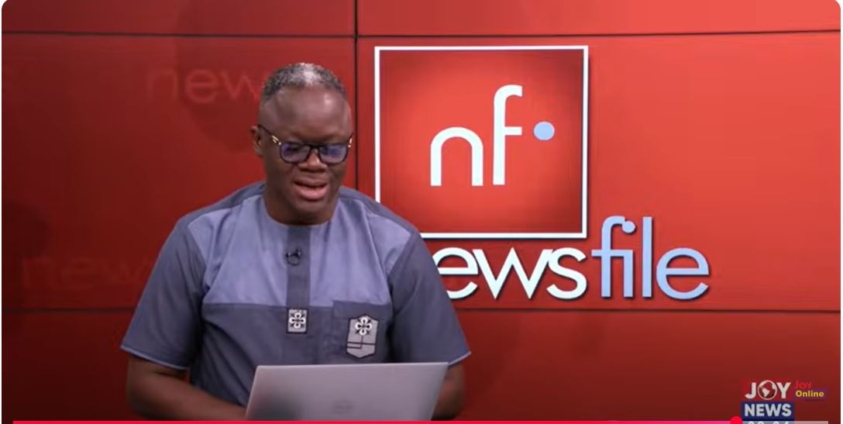
This Saturday on Newsfile, we put Ghana’s State-Owned Enterprises under the microscope as questions of performance, accountability, political control and institutional independence take centre stage.
State-owned enterprises have reportedly swung from a GH¢2.2 billion loss in 2024 to a remarkable GH¢19.8 billion net profit in 2025. Government says the figures point to a significant turnaround in the fortunes of SOEs, with higher revenues, lower finance costs and improved foreign-exchange performance.
But is this really the transformation the numbers suggest? If state enterprises generated almost GH¢20 billion in profit, why did government receive only a fraction of that in dividends?
Are a few exceptionally strong performers driving the headline figure while others remain chronically loss-making? And what has really changed in the management of Ghana’s state enterprises?
Then, just as the impressive figures are being celebrated, President Mahama has dissolved the governing boards of nine major state institutions, including BOST, VALCO, CBG, GNPC, Ghana Post, TDC and the National Sports Authority, with indications that changes involving some SOE chief executives could follow.
Is this a necessary governance reset to improve performance and accountability, or is it another cycle of political appointments and changes at the top? If SOEs are finally turning around, why dismantle their boards now? And what should determine who stays, who goes, and who takes charge of these strategic national assets?
Meanwhile, the performance of Ghana’s public institutions has dragged the Chief Justice into an unexpected political controversy.
During engagements with institutions including MIIF and SSNIT, Chief Justice Paul Baffoe-Bonnie praised improvements in some state entities and questioned what Ghana had been doing over the previous eight years.
His comments have drawn sharp criticism from the NPP, which says the Chief Justice has entered partisan political territory and should resign, while others argue that praising institutional performance cannot, by itself, amount to political campaigning.
But does a Chief Justice have a greater responsibility to avoid statements that could create even the perception of political alignment?
And from Parliament, a memorandum circulating in the media has raised questions about the integrity of the parliamentary vetting process.
The memorandum indicated that Asokwa MP and Deputy Minority Leader Patricia Appiagyei had received GH¢70,000 in connection with the vetting of ministerial and Supreme Court nominees. But Patricia Appiagyei has since denied the allegations and distanced herself from the contents of the document.
The controversy has now attracted the attention of the Office of the Special Prosecutor, which has begun a preliminary investigation into the alleged payment, the authenticity of the memorandum, its source, and the circumstances surrounding the claims.
So, who authored the memorandum? Was any money actually paid, and if so, for what purpose? Why was Patricia Appiagyei named in the document? And what does the controversy tell us about the integrity and transparency of Parliament’s vetting process?
As the OSP seeks answers, will its investigation finally establish what happened, who is behind the memorandum, and whether there is any substance to the allegations?
Where exactly is the line between legitimate public commentary and political commentary from the head of the Judiciary? And when public confidence in judicial neutrality is at stake, does perception matter as much as intention?
Three developments, but one bigger question: Are Ghana’s state institutions genuinely becoming more efficient and accountable, or are we simply changing the people at the top and celebrating headline numbers?
And as government reshapes the leadership of major state enterprises, while the Judiciary faces questions over its public commentary, who is watching the watchers?
This Saturday on Newsfile, we interrogate the numbers, examine the politics behind the appointments, and confront the difficult questions about institutional independence, performance, and accountability.
Newsfile airs live on the JoyNews channel on digital satellite channels 421 on DSTV and 144 on GoTV, and streams on JoyNews’ Facebook or YouTube channels on Saturdays from 9 am to noon.
Viewers can also follow the discussion by tuning in to Joy 99.7 FM or Luv 99.5 FM on the radio or stream the discussion live on either Google or Apple Podcasts.
If it's Saturday, it's Newsfile.
Newsfile is your most authoritative news analysis programme.
Latest Stories
-
This is an attempt to break the Minority caucus – Patricia Appiagyei on alleged GH¢70k payment
16 minutes -
‘OSP hasn’t contacted me’ – Patricia Appiagyei assures cooporation if invited
30 minutes -
I find it strange that this memo was purportedly written by me – Patricia Appiagyei
40 minutes -
Ayariga calls for stronger church partnership to tackle sanitation, environmental challenges
52 minutes -
I don’t think we have an industry – Patchbay Band manager
1 hour -
Patchbay Band questions recognition of live bands in Ghana’s music industry
1 hour -
Newsfile to discuss SOEs’ GH¢19.8bn profit, dissolution of 9 boards, CJ’s visits to SOEs, GH¢70k gift rejection
1 hour -
BoG warns against spraying, defacing and using cedi notes for decorations
2 hours -
Adwumawura: Selected applicants to receive notifications from today – NEIP CEO
2 hours -
‘Fake memo’ fabricated to smear me – Patricia Appiagyei
2 hours -
ATLF206: Culture, investment and tourism take centre stage as Africa’s tourism leaders gather in Polokwane
2 hours -
TI-Ghana and GACC demand full disclosure over alleged GH¢70,000 Appointments Committee payment
3 hours -
UN approves resolution in support of map that shows Africa’s true size
3 hours -
Spring Agro Industries urges Ghanaians to choose local rice as imports dominate market
3 hours -
Youths in Oti push for stronger policies on SRHR and gender-based violence
3 hours