

Audio By Carbonatix
Accra, the capital city of Ghana, has undergone rapid urbanisation and commercialisation, leading to significant changes in land use and a loss of indigenous spaces, particularly for the Ga people, the city’s original inhabitants.
The expansion of Accra’s central business district (CBD) and the commercialisation of key areas have led to a situation where many Ga communities now face the risk of losing all their traditional lands.
This urban expansion, while necessary for economic growth, presents severe socioeconomic risks to the Ga people in terms of accommodation and long-term economic sustainability.
The ongoing land mismanagement, particularly in the central areas of Accra, has resulted in a dire space crisis. Many residents of Ga communities, such as those in the CBD, now find themselves living in overcrowded conditions. A growing number of people are forced to sleep in shifts, on the streets, and in informal spaces, with inadequate sanitation facilities due to the acute shortage of land for building homes and essential infrastructure like toilets.
This crisis is further exacerbated by the mismanagement of land by local leaders who have sold land indiscriminately, contributing to the loss of valuable space and disrupting the socioeconomic fabric of the community.
To address these challenges, it is imperative that the government intervene through strategic urban planning and land engineering initiatives that specifically account for the needs and rights of the Ga people. This should be done with an eye toward sustainable development, ensuring that urban growth does not come at the expense of the city’s indigenous populations.
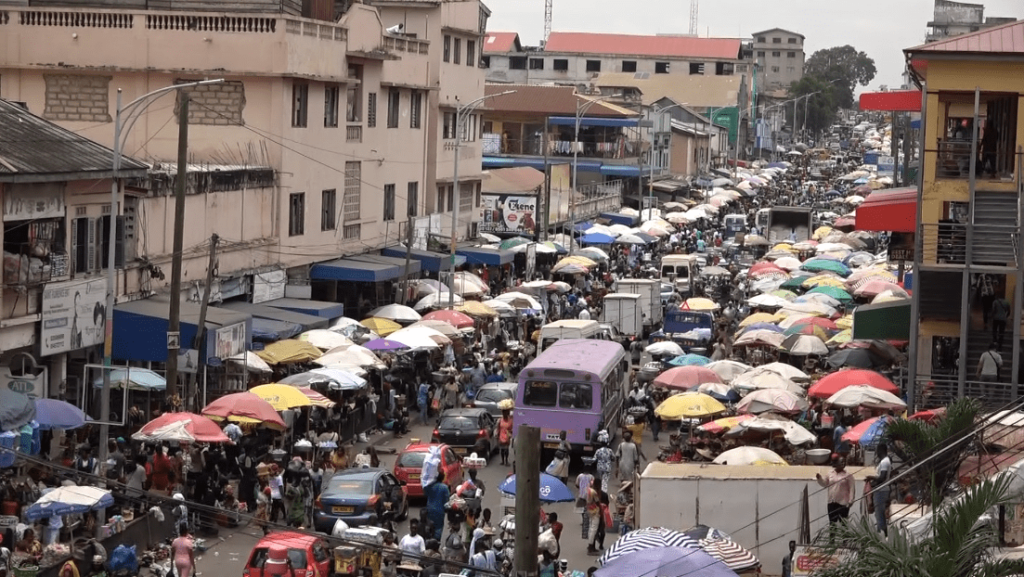
Currently, several areas in the CBD—Timber Market, Mokola, Agbogbloshie, Kantamanto, and high-street developments—are no longer fit for purpose. These areas, once vital hubs of economic activity, are now plagued by congestion, inadequate infrastructure, and informal trading. Many formal businesses, including financial institutions, have relocated to better-planned areas, highlighting the unsustainable nature of the current urban setup.
Read also: Accra: Traders take over bus stops
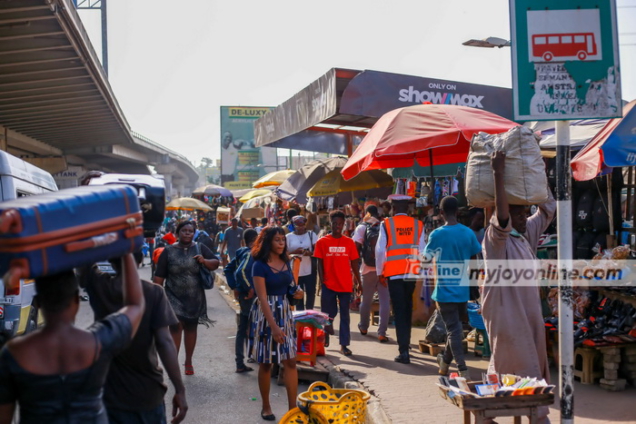
Visiting the city centre, or even attempting to take foreign guests to experience the heart of Accra, has become an increasingly tedious, uncomfortable, and embarrassing experience. The combination of choking traffic, disorganized street vendors, overcrowded sidewalks, and informal markets spilling into roads makes navigating the city a nightmare.
Visitors are often forced to witness the stark contrast between the chaotic, unkempt streets and the modern infrastructure that is slowly abandoning the area. For those unfamiliar with the city, finding a parking space or avoiding the litter and filth that often adorns the city centre can quickly turn a pleasant outing into a frustrating, sometimes disgusting, ordeal. Foreign guests, expecting to see the vibrant, thriving centre of a bustling city, often find themselves questioning what has become of Accra’s urban core.
The stark realities of overcrowding, inadequate sanitation, and the ever-present risks of fire hazards and accidents paint a disheartening picture for both locals and visitors alike.
The recent fire outbreak in Kantamanto, which devastated traders’ investments and caused significant distress, underscores the urgent need for comprehensive redevelopment. These informal markets, characterized by overcrowding and high fire risk, must be relocated to newly developed commercial zones on the outskirts of Accra. This will not only reduce city-centre congestion but also create modern commercial spaces capable of meeting today’s economic demands.
At the same time, key government properties—such as the burnt Ministry of Foreign Affairs building and other state-owned assets—should be repurposed with the Ga people’s rights and needs in mind. These properties could become mixed-use spaces that preserve cultural and historical identity while integrating the Ga community into Accra’s modern economic landscape.
A crucial aspect of this redevelopment process should be the introduction of Heritage Impact Assessments (HIA) as a mandatory component in urban planning and development.
A Heritage Impact Assessment is an evaluative tool that assesses the potential impact of proposed developments on cultural heritage sites, practices, and values. In the case of Accra, this would not only involve the preservation of tangible heritage sites but also the intangible cultural practices and values that form the core of the Ga identity.
The incorporation of HIA into urban planning would ensure that new developments do not infringe upon the historical and cultural fabric of the Ga people, but rather celebrate and integrate their heritage into the city's modern development.
The value of conducting HIAs lies in their ability to safeguard both historical and tourism assets. Many of Accra’s landmarks, including traditional Ga settlements, sacred sites, and cultural practices, are of immense historical and tourism significance. Properly integrated heritage management can attract global interest and contribute to the sustainable development of cultural tourism.
Preserving these elements would not only benefit the Ga people but also enhance Accra's international reputation as a city that respects its history and offers a rich cultural experience for visitors. The city’s rich cultural heritage, if carefully protected, has the potential to become a key pillar of its tourism strategy, offering opportunities for sustainable income, job creation, and cultural exchange.
Critically, any space vacated by relocating informal markets must be reallocated fairly and transparently, free from political influence or favoritism. This equitable distribution of land for housing, commerce, and community projects would restore a sense of ownership and security among Ga residents, ensuring the sustainability and vitality of their communities.
Such strategic relocation and repurposing, coupled with the introduction of Heritage Impact Assessments, would yield multiple benefits. It would decongest the city, improve living conditions and public health, foster economic growth through well-organized markets, and resolve longstanding social challenges faced by Ga communities.
Moreover, it would provide a clear framework for ensuring that the Ga heritage is protected and enhanced amidst urban growth. Through careful, inclusive planning, Accra can remain both a thriving capital and a place where its original inhabitants retain their heritage, dignity, and future prospects.
Written by Kwame Sowu, Entrepreneur & Project Management Expert
Latest Stories
-
Journalists look back on a decade of breast cancer reporting in Ghana
28 minutes -
President Mahama ends Resetting Ghana tour of Ahafo Region
2 hours -
African negotiators seek delivery of climate commitments at COP31
2 hours -
BoG develops AI rules for financial sector
2 hours -
‘Big Push’: Government assures contractors of prompt payments
2 hours -
Court fines miner for breaking into gold buying shop
3 hours -
Tarkwa court jails labourer for three years over GH¢123,000 theft
4 hours -
GAEC must retain nuclear scientists for Ghana’s nuclear ambitions – Minister
4 hours -
Man reportedly mistaken for game and shot by hunter dead in forest
4 hours -
19-year-old mason jailed 15 years for defiling seven-year-old pupil
4 hours -
Ghana’s banking sector assets rise 20.47% to GH¢500.2bn – BoG Governor
4 hours -
22 injured as Sprinter bus overturns at Sege after tyre burst
4 hours -
UN housing expert urges Ghana to strengthen Rent Control Department amid housing affordability concerns
4 hours -
Delta-BCI partnership reaches 166,000 people with breast cancer education
5 hours -
Power restoration fault suspected in Kumasi Central Market fire
10 hours