

Audio By Carbonatix
Goodwill Sports Ambassador Ray Quarcoo has once again underscored the urgent need for higher standards of officiating, particularly across Africa.
The former President of the Ghana Boxing Federation has been a long-standing advocate for improved officiating, citing what he describes as a steady decline in standards in recent years—most notably in boxing and football.
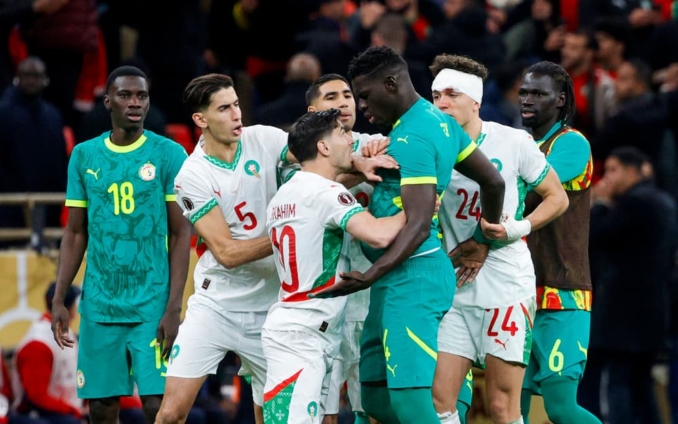
Ambassador Quarcoo pointed to the recently concluded Africa Cup of Nations (AFCON) in Morocco, where the performance of some match officials sparked widespread debate, as a clear example of the problem.
According to him, concerns persist because the same basic errors continue to reappear across tournaments, including poor foul recognition, inconsistent application of disciplinary sanctions, and questionable use of the Video Assistant Referee (VAR).
He warned that these lapses erode players’ confidence in fair play and leave fans questioning the credibility of African competitions.
He further cautioned that substandard officiating at the continental level has wider implications, noting that African teams are often disadvantaged at global competitions such as the FIFA World Cup and the Olympic Games, where refereeing standards are significantly higher.
Speaking after the tournament, the former Black Stars management committee member said:
“You know I have been preaching about good officiating in all sporting disciplines for many years, but we keep nursing the same mistakes by some referees.”
Ambassador Quarcoo believes that despite repeated exposure to international competitions, some referees are failing to learn or improve. He has therefore called on CAF and FIFA to take firm action against errant officials to protect the integrity and reputation of African sport.
“The continent will be the loser in the end, especially on the world stage,” he warned.
He identified key risks associated with poor officiating, including the loss of credibility of CAF tournaments, declining fan confidence, reduced sponsorship interest, and competitive disadvantages for African teams globally.
To address the situation, Ambassador Quarcoo recommended continuous referee education, stronger accountability measures, including suspensions or demotions for repeat offenders, standardised and transparent VAR protocols, and structured mentorship programmes pairing senior referees with younger officials.
He stressed that improvement is critical if African teams are to compete confidently beyond the continent.
“When our referees live up to expectation, then our teams do not have to struggle when they get to the world stage,” he said.
The 2025 Africa Cup of Nations was won by Senegal’s Teranga Lions, who defeated host nation Morocco’s Atlas Lions 1–0 in extra time.
Latest Stories
-
Imprisonment should be rehabilitative, not punitive – Ghana Prisons boss at UNGA
10 minutes -
Ga Adangbe traditional priests petition Mahama over McDan aviation licence revocation
21 minutes -
Anti-LGBTQ Bill: NDC’s arrogance is worrying – Hassan Tampuli
32 minutes -
Let’s give OSP time to mature, not to scrap it – Hassan Tampuli
36 minutes -
Nigeria convicts 386 Islamist militants in mass trials
41 minutes -
Djibouti president wins election with 97.8% of vote, state media says
45 minutes -
We don’t have mandate to deduct tax from rent allowance of security services personnel – Interior Ministry clarifies
59 minutes -
Ablakwa receives Presidential Special Envoy on Reparations to advance global agenda
1 hour -
Christina Koch becomes first woman to travel around the moon on Artemis II
1 hour -
Epstein survivors’ calls to meet King Charles and Queen harder to ignore as US visit approaches
2 hours -
UN Secretary-General names Ghana’s Anita Kiki Gbeho as South Sudan envoy
2 hours -
Mali withdraws recognition of Sahrawi Republic, backs Morocco’s autonomy plan
2 hours -
Gov’t distributes over 8,500 laptops to One Million Coders project
2 hours -
Julius Debrah, ‘man to beat’ as NDC’s James Agbey dismisses Musah Dankwah’s polls
2 hours -
GPRTU in Savannah Region to protest alleged eviction in Damongo
2 hours