


Audio By Carbonatix
The Chairperson of the African Union (AU) Commission, Mahmoud Ali Youssouf, has renewed Africa’s call for permanent representation on the United Nations Security Council.
He insisted that the continent’s exclusion from the body represents a longstanding historical injustice that must be corrected.
Speaking at a Ministerial Meeting on the Reform of the UN Security Council held on the margins of the Africa–France Summit in Nairobi on Monday, Mr Youssouf reaffirmed Africa’s unified position on the issue and called for urgent reforms to make the Council more representative of modern global realities.
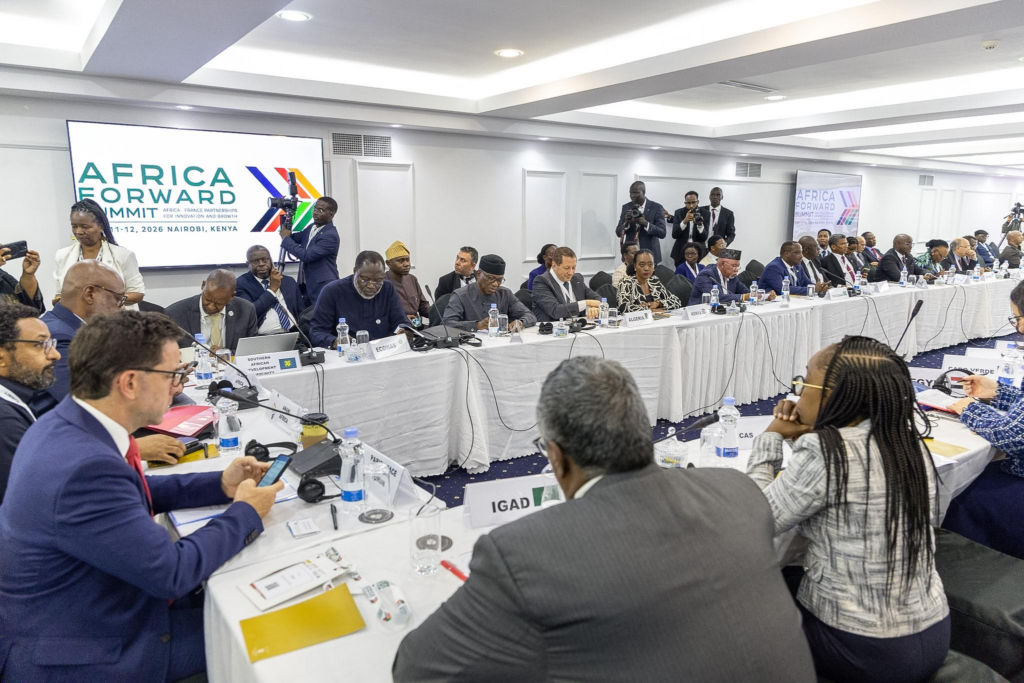
According to the AU Commission Chairperson, Africa’s demand for permanent seats on the Security Council is not a request for special treatment, but a legitimate call for fairness and equity within the international governance system.
“Africa is not asking for a favour; Africa is demanding the correction of a historical injustice,” he stated, stressing that the continent can no longer remain excluded from permanent representation despite its demographic, political, and economic significance.
Guided by the Ezulwini Consensus and the Sirte Declaration, Mr Youssouf reiterated Africa’s long-standing proposal for no fewer than two permanent seats with full prerogatives, including veto powers while such powers continue to exist, as well as five non-permanent seats in an expanded Security Council.

The Ezulwini Consensus, adopted by the African Union in 2005, outlines the continent’s common position on the reform of the United Nations system, particularly the Security Council, which many African leaders argue no longer reflects present-day geopolitical realities.
Mr Youssouf welcomed the support shown by France, Kenya, and Sierra Leone towards the African model for reform, describing their backing as an important step in building a broader international consensus around the issue.
He further called for stronger political coordination among African states, strategic diplomatic alliances, and practical measures aimed at translating international support into meaningful institutional reform.
“The credibility and legitimacy of the Security Council depend on its ability to reflect the realities of today’s world, not the geopolitical order of 1945,” he said.
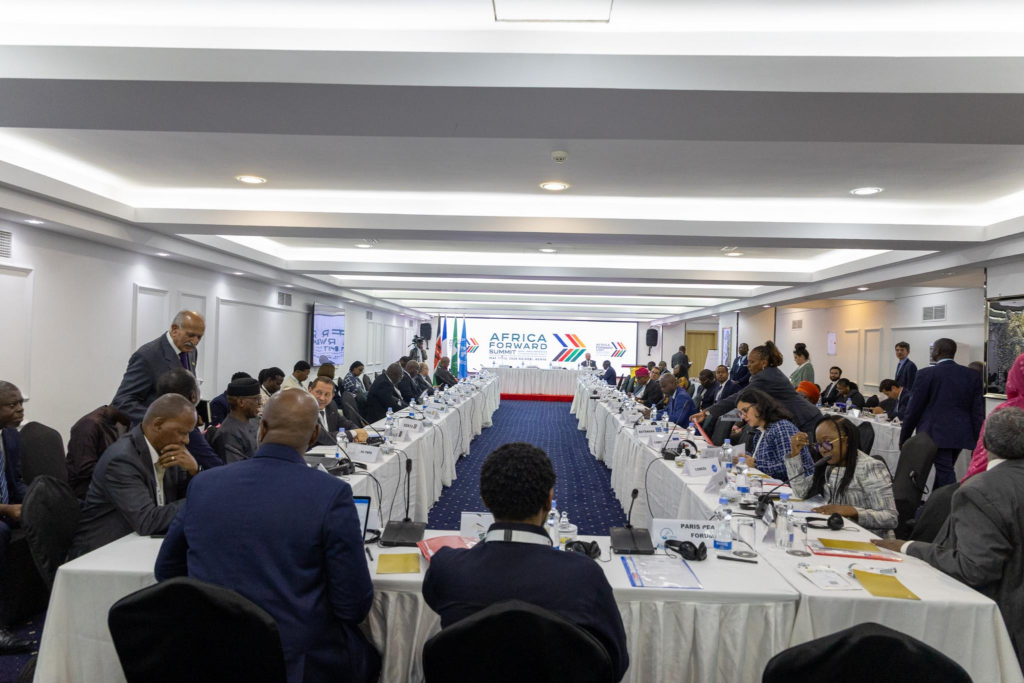
The AU Chairperson also pointed to Africa’s recent inclusion in the G20 as evidence that global governance institutions are capable of evolving to become more representative and responsive to contemporary challenges.
He argued that the African Union’s permanent membership in the G20 demonstrates growing recognition of Africa’s role in global affairs and should serve as a model for broader reforms within the United Nations system.
Latest Stories
-
NPP’s new executives will not alter our 2028 preparations – Tanko-Computer
30 minutes -
Tema East MP urges men to take active role in breast cancer awareness
35 minutes -
Hawa Koomson vows to bring experience and maturity to NPP women’s wing
39 minutes -
Opare Addo cautions NDC against adopting NPP’s aggressive politics
41 minutes -
NPP has 35 months to prepare for 2028 after early reorganisation – Political strategist
46 minutes -
All six passengers presumed dead after plane went missing off US coast
57 minutes -
Teachers’ promotion arrears to be paid by Oct. 30 – Education Minister
1 hour -
Stop talking too much on stage – Kafui Dey warns MCs
1 hour -
Government has Ho, Volta Region at Heart — Warlord of Asogli
1 hour -
Mahama reaffirms commitment to Volta development at Asogli Te Za
1 hour -
REGSEC orders immediate demolition of fire-ravaged building at Koforidua Jackson Park
2 hours -
Ambassador Boateng congratulates new NPP leadership, urges reconciliation, rebuilding
2 hours -
50 vetted to contest Effutu NDC executive positions
2 hours -
GACL enhances security screening at Accra International Airport
2 hours -
COCOBOD raises GH¢3.39bn at 11% in first Commercial Paper tranche
2 hours